
Complete Guide to Why Read Short Mysteries

Every american reader craves a story that delivers both intrigue and satisfaction in record time. With over 60 percent of busy adults choosing short stories for quick entertainment, the appeal of short mysteries has never been clearer. These compact tales pack all the suspense, twists, and intellectual puzzles of full-length mysteries into a format that fits any schedule. Discover how short mysteries provide swift, thought-provoking escapes perfect for modern american lifestyles.
Table of Contents
- Short Mysteries Defined and Demystified
- Major Types of Short Mystery Fiction
- Unique Appeal and Key Benefits Explained
- Short Mysteries for Busy and Reluctant Readers
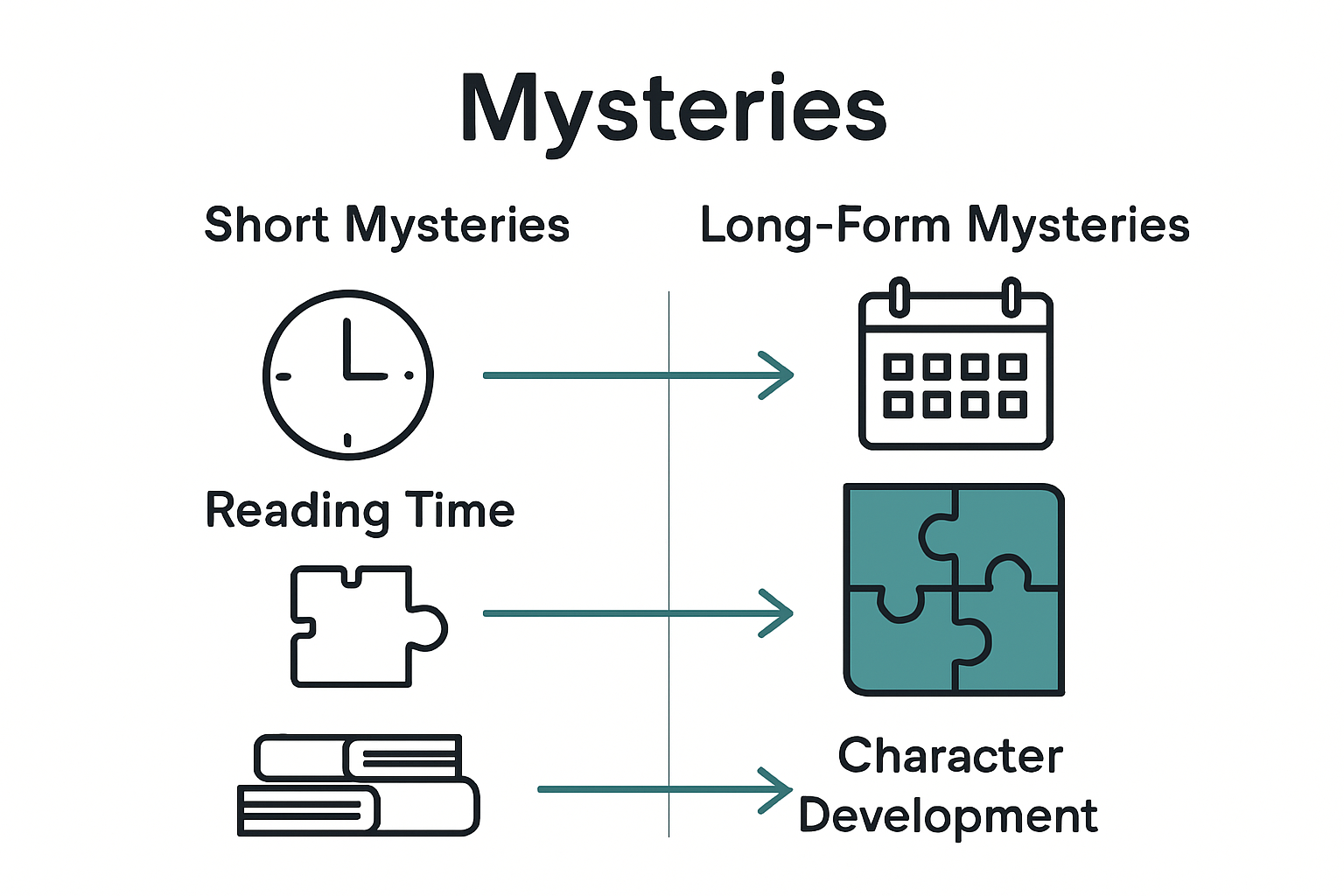
- Comparing Short and Long-Form Mysteries
Key Takeaways
| Point | Details |
|---|---|
| Short Mysteries Offer Concise Storytelling | These narratives encapsulate complex plots into brief formats, making them engaging for readers with limited time. |
| Diverse Subgenres Enhance Reader Experience | Different styles such as detective, cozy, and supernatural mysteries cater to various reader preferences and experiences. |
| Ideal for Busy Lifestyles | Short mysteries provide quick resolutions, making them accessible for readers seeking intellectual engagement without a long-term commitment. |
| Comparative Brevity vs. Complexity | Short mysteries deliver immediate satisfaction and sharp puzzles, while long-form mysteries develop deeper character arcs and intricate plots over time. |
Short Mysteries Defined and Demystified
Mystery fiction represents a captivating literary genre that transforms the unknown into an intellectual puzzle for readers. According to Britannica, mystery stories are narratives that revolve around the unknown, typically involving crimes or supernatural events with a resolution strategically revealed at the conclusion. Unlike sprawling novels, short mysteries condense these intricate narrative arcs into compact, concentrated storytelling formats.
At its core, short mysteries follow a precise structural blueprint. Wikipedia explains that mystery fiction centers around an event, frequently a crime, where the circumstances remain deliberately obscured until the narrative’s final moments. The central character most often functions as a detective who methodically unravels the mystery through logical deduction, creating an engaging intellectual journey for readers. These compact narratives differ significantly from traditional detective stories by prioritizing intellectual challenge over extended action sequences.
Short mysteries offer distinct advantages for modern readers. They provide:
- Quick, immersive storytelling experiences
- Complete narrative arcs within limited page counts
- Intellectual stimulation without significant time investment
- Portable entertainment perfect for busy lifestyles
Whether you’re a seasoned reader or someone seeking bite sized narratives, mystery fiction terminology guide can help you better understand and appreciate these compact literary gems. Short mysteries transform complex investigations into precise, engaging storytelling experiences that challenge and entertain readers in remarkably efficient formats.

Major Types of Short Mystery Fiction
Mystery fiction offers a fascinating landscape of narrative styles, each bringing unique approaches to storytelling. According to LibGuides, mystery fiction encompasses several compelling subgenres that cater to diverse reader preferences, including detective stories, capers, and animal/environmental mysteries. Each subgenre brings its own distinctive flavor to the narrative, transforming how readers experience investigative storytelling.
Docs Barton Community College reveals additional fascinating mystery fiction categories that challenge traditional narrative structures. Inverted detective stories, for instance, reveal the crime and perpetrator at the beginning, reversing the traditional mystery reveal. Locked room mysteries represent another intriguing subtype, presenting crimes committed in seemingly impossible circumstances that challenge readers’ logical reasoning and detective skills.
The primary types of short mystery fiction include:
- Detective Mysteries: Traditional investigations led by professional or amateur sleuths
- Cozy Mysteries: Lighter narratives typically set in small communities with minimal violence
- Hardboiled Mysteries: Gritty, realistic stories focusing on tough, unsentimental characters
- Procedural Mysteries: Emphasizing investigative processes and forensic details
- Supernatural Mysteries: Incorporating paranormal or unexplained elements into crime narratives
For readers eager to explore these diverse narrative landscapes, 6 Must-Know Mystery Short Stories Examples offers an excellent introduction to the rich tapestry of short mystery fiction. Each subgenre provides a unique lens through which readers can explore human psychology, social dynamics, and the intricate puzzles of human behavior.
Unique Appeal and Key Benefits Explained
Short mysteries represent a literary form that masterfully condenses complex narratives into bite sized experiences with remarkable psychological impact. According to ArXiv, suspense is a crucial narrative element that engages readers by systematically reducing uncertainty throughout the story’s progression, making these compact narratives profoundly compelling and memorable.
Britannica highlights that mystery stories fundamentally captivate readers by presenting intellectual enigmas that simultaneously entertain and challenge logical reasoning. These narratives offer more than mere entertainment—they become cognitive puzzles that stimulate mental agility, critical thinking, and analytical skills through carefully constructed narrative frameworks.
The key benefits of short mystery fiction include:
- Rapid Intellectual Engagement: Complete narrative arcs in minimal time
- Mental Stimulation: Challenges readers’ problem solving capabilities
- Portable Entertainment: Perfect for busy lifestyles and limited reading windows
- Low Time Investment: Delivers satisfying storytelling without extensive commitment
- Diverse Narrative Exploration: Allows sampling of different writing styles and mystery approaches
For readers seeking concise yet intellectually rich storytelling experiences, understanding mystery fiction terminology can unlock deeper appreciation of these compact narrative gems. Short mysteries transform complex investigative journeys into precise, engaging experiences that challenge and entertain readers with remarkable efficiency.
Short Mysteries for Busy and Reluctant Readers
Reading doesn’t have to be a time-consuming commitment, especially for those with packed schedules or limited attention spans. According to Plexways, short stories, including mysteries, are concise narratives designed to be read quickly, making them the perfect solution for readers with limited time who still crave engaging storytelling experiences.
LibGuides highlights that mystery fiction offers diverse subgenres like capers and detective stories, providing accessible entry points for readers who might feel intimidated by longer, more complex narratives. These compact stories serve as ideal introductions for reluctant readers, offering bite-sized intellectual challenges without overwhelming time investments or complex plot structures.
Key advantages for busy and reluctant readers include:
- Rapid Reading: Complete stories in 30-60 minutes
- Low Commitment: No long-term reading obligations
- Instant Gratification: Quick narrative resolution
- Skill Building: Develops reading confidence and comprehension
- Diverse Exploration: Easy sampling of different writing styles
For readers seeking efficient yet compelling reading experiences, quick mystery reads provide the perfect balance between entertainment and time management. Short mysteries transform reading from a potentially daunting task into an accessible, enjoyable activity that fits seamlessly into busy lifestyles.
Comparing Short and Long-Form Mysteries
Mystery fiction offers readers diverse narrative experiences through different story lengths, each with unique storytelling approaches. According to Britannica, short mystery stories focus on concise, engaging narratives that resolve enigmas quickly, while long-form mysteries develop complex plots and character arcs over extended narratives, providing fundamentally different reading experiences.
Wikipedia further illuminates the nuanced differences between short and long-form mystery fiction, highlighting how story length dramatically impacts narrative depth and reader engagement. Short mysteries deliver immediate intellectual stimulation through rapid plot resolution, whereas novels offer intricate character development and more elaborate investigative journeys.
Key comparative elements between short and long-form mysteries include:
- Narrative Complexity: Short stories prioritize single plot threads; novels explore multiple interconnected storylines
- Character Development: Short mysteries feature quick character sketches; novels provide extensive psychological exploration
- Reading Time: Short mysteries consume 30-60 minutes; novels require hours or days
- Plot Resolution: Short stories offer immediate satisfaction; novels build suspense over extended periods
- Intellectual Challenge: Short mysteries provide sharp, concentrated puzzles; novels present multi-layered investigative experiences
For readers interested in exploring diverse mystery narrative styles, fast-paced mysteries offer an excellent starting point for understanding the rich spectrum of mystery fiction storytelling. Whether preferring quick intellectual jolts or immersive long-form investigations, readers can find compelling narratives that match their specific reading preferences.
Discover the Power of Short Mysteries for Busy Readers
If you find yourself craving thrilling, intellectually stimulating stories but struggle to find the time for long novels the article’s insights highlight the perfect solution. Short mysteries offer rapid mental engagement and portable entertainment that fit seamlessly into hectic schedules. They address common pain points such as limited reading time and the challenge of sustaining interest in longer plots by delivering complete, compelling narratives quickly. With terms like “cozy mysteries” and “detective stories” providing varied tones and styles short mysteries satisfy diverse tastes while offering the cognitive challenge readers want.
Experience the excitement firsthand with our curated selections of mystery fiction short reads featuring cozy mysteries, action thrillers, and psychological suspense.

Start transforming your reading routine today by exploring our Weekend Mystery Bundle for carefully crafted stories that fit your busy life. Dive into bite-sized mysteries that sharpen your detective skills while keeping entertainment close at hand. Visit The Short Reads now and unlock the power of short mysteries designed just for you.
Frequently Asked Questions
What are short mysteries?
Short mysteries are concise narratives within the mystery fiction genre that center on a crime or an unknown event, resolving the mystery in a compact storytelling format, typically offering an intellectual puzzle for readers.
What are the benefits of reading short mysteries?
Reading short mysteries provides rapid intellectual engagement, mental stimulation, portable entertainment, low time investment, and a diverse narrative exploration without overwhelming readers with lengthy plots.
How do short mysteries differ from long-form mysteries?
Short mysteries typically focus on immediate plot resolution and concise character sketches, while long-form mysteries allow for complex character development and multi-layered storylines, requiring significantly more reading time.
What types of subgenres exist within short mystery fiction?
Short mystery fiction includes various subgenres such as detective mysteries, cozy mysteries, hardboiled mysteries, procedural mysteries, and supernatural mysteries, each offering unique approaches to storytelling.
Recommended
- How to Enjoy Mystery Fiction Short Reads for Lasting Fun – TheShortReads.com
- 6 Must-Know Mystery Short Stories Examples for Everyone – TheShortReads.com
- How to Enjoy Short Reads for Busy Mystery Lovers – TheShortReads.com


