
What Defines a Novella: Key Traits and Appeal

Most American readers have likely encountered a story that feels richer than a short tale but shorter than a novel, yet the true nature of a novella remains misunderstood. Although novellas originated in Italy, they have made a lasting impact on the American literary scene, captivating readers with their compact intensity. With many American publishers reporting a renewed interest in this unique format, understanding what defines a novella—and clearing up common misconceptions—helps readers and writers better appreciate its storytelling power.
Table of Contents
- Defining A Novella And Common Misconceptions
- Typical Novella Length And Structural Features
- How Novellas Differ From Novels And Short Stories
- Genres, Popular Themes, And Audience Appeal
- Common Pitfalls And Reader Expectations
Key Takeaways
| Point | Details |
|---|---|
| Definition of Novella | A novella is a narrative prose fiction typically ranging from 20,000 to 50,000 words, offering a unique storytelling experience between short stories and novels. |
| Structural Characteristics | Novellas focus on single events or interconnected moments, requiring authors to maintain narrative efficiency and precision. |
| Genre Versatility | Novellas are flexible across genres, appealing to readers interested in concentrated storytelling without the lengthy commitment of novels. |
| Reader Expectations | Readers anticipate a well-developed, immersive experience in novellas, necessitating careful construction of characters and themes within a compact format. |
Defining a Novella and Common Misconceptions
A novella represents a fascinating literary form that sits elegantly between short stories and full-length novels. Originating in Italy during the Middle Ages, these narrative works have a rich historical background that continues to intrigue readers and writers alike. Unlike traditional novels or short stories, novellas offer a unique storytelling experience that demands precision and narrative efficiency.
The technical definition of a novella centers on length and complexity. Most literary experts consider a novella to be a narrative prose fiction typically ranging between 20,000 to 50,000 words – longer than a short story but shorter than a traditional novel. This compact format requires authors to be exceptionally strategic, developing complex characters and engaging plotlines within a more concentrated narrative space.
Common misconceptions about novellas often stem from misunderstanding their distinctive characteristics. Many readers assume novellas are simply truncated novels or extended short stories, when in reality, they represent a unique literary form with their own aesthetic and structural integrity. These works are not simply shorter versions of longer narratives, but carefully crafted stories that demand a different approach to storytelling. Narrative techniques in novellas often require more concentrated character development, tighter plot progression, and a more focused thematic exploration compared to full-length novels.
Understanding novellas requires appreciating their nuanced position in literature. They provide readers with a rich, immersive experience that can be consumed in a single sitting, offering depth without the time commitment of a traditional novel. Whether you are a casual reader or a literature enthusiast, novellas represent an art form that continues to captivate audiences with their unique storytelling potential.
Typical Novella Length and Structural Features
Novellas occupy a unique space in literary form, distinguished by their precise length and distinctive structural characteristics. According to the Science Fiction and Fantasy Writers Association, these works typically range between 17,500 and 40,000 words, which translates to approximately 70 to 160 printed pages. This specific word count range allows authors to develop more complex narratives than short stories while maintaining a more concentrated storytelling approach compared to full-length novels.
Structural complexity is a defining feature of novellas. Unlike broader narrative forms, these works often focus on a single critical event or a short series of interconnected moments. The Science Fiction and Fantasy Writers Association’s definition highlights how this format demands exceptional narrative precision, requiring authors to craft intricate storylines within a condensed literary framework.

The limited word count of novellas necessitates a strategic approach to storytelling. Writers must balance character development, plot progression, and thematic exploration with remarkable efficiency. Each narrative element becomes more intentional, with no room for unnecessary exposition or tangential storylines. This constraint often results in novellas that are tightly constructed, featuring crisp dialogue, vivid character interactions, and focused narrative arcs that deliver powerful emotional and intellectual experiences in a compact literary package.
Understanding novella length involves recognizing the nuanced art of compression. These works are not simply abbreviated novels, but carefully calibrated narrative experiences that challenge writers to distill complex human experiences into their most potent, essential form. Whether exploring a pivotal life moment, diving deep into a character’s psychological landscape, or presenting a concentrated social commentary, novellas represent a sophisticated literary form that rewards both writers and readers with their unique storytelling potential.
How Novellas Differ From Novels and Short Stories
Novels, short stories, and novellas represent distinct literary forms, each with unique narrative characteristics that set them apart. According to literary experts, novellas occupy a nuanced middle ground, offering more depth than short stories while maintaining a more focused narrative approach compared to full-length novels. This distinctive positioning allows novellas to explore complex themes and characters with remarkable narrative efficiency.
Conflict complexity is a key differentiator among these literary forms. Wikipedia highlights that novellas typically feature fewer conflicts than novels, but these conflicts are more intricate and developed compared to short stories. Unlike short stories, which often capture a single moment or brief interaction, novellas provide sufficient narrative space to explore deeper emotional landscapes and more sophisticated plot developments. Novels, by contrast, can accommodate multiple subplots and extensive character arcs that would feel overwhelming in the more compact novella format.
The structural differences become even more pronounced when examining character development. Short stories often introduce characters through quick, impressionistic sketches, while novels can extensively explore entire life histories. Novellas strike a remarkable balance, allowing writers to develop multidimensional characters with meaningful backstories and psychological depth without the expansive scope of a full novel. This narrative approach enables readers to form deep connections with characters in a more concentrated reading experience.
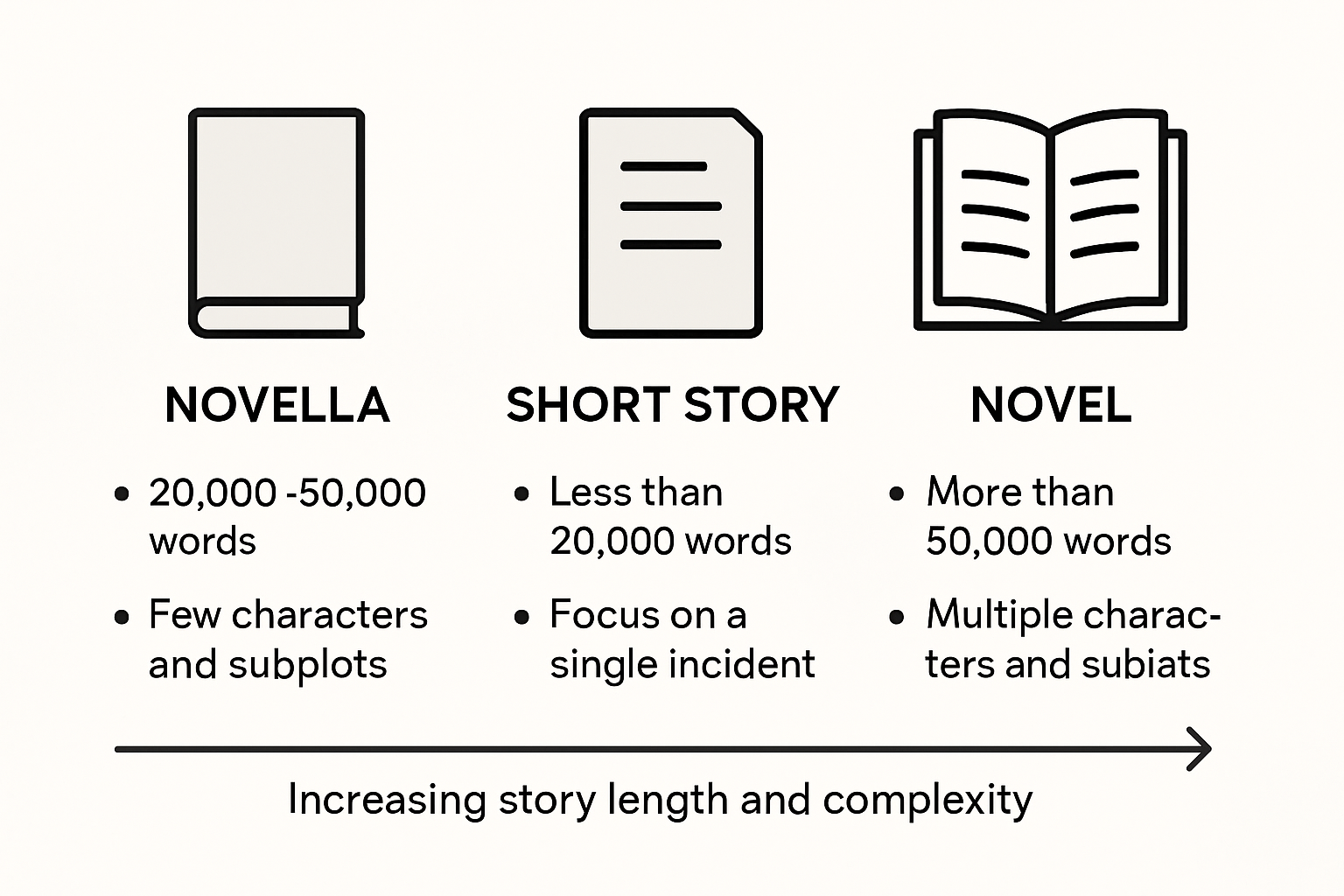
Ultimately, the distinctions between these literary forms are not rigid but fluid, representing different approaches to storytelling. Novellas offer a unique reading experience that combines the immediacy of short stories with the narrative complexity of novels. They invite readers into carefully crafted worlds where every word carries weight, every character interaction matters, and complex themes can be explored with remarkable precision and emotional intensity.
Genres, Popular Themes, and Audience Appeal
Literary traditions across Europe have long embraced novellas as a powerful storytelling medium, showcasing their remarkable versatility across multiple genres. These compact narratives excel in psychological thrillers, mystery fiction, and character-driven explorations that demand nuanced emotional landscapes. While traditionally associated with realistic and satiric themes, modern novellas have expanded to include genres ranging from speculative fiction to intense character studies, making them particularly appealing to readers seeking deep, concentrated storytelling experiences.
Genre flexibility allows novellas to tackle complex themes with remarkable precision. Psychological thrillers, in particular, benefit from the novella’s unique narrative structure, enabling writers to delve deeply into characters’ inner worlds without the sprawling complexity of full-length novels. Contemporary writers use the novella format to explore intricate human emotions, creating intense narratives that probe the darker corners of human psychology with surgical accuracy.
The audience for novellas spans diverse reader demographics, from busy professionals seeking immersive yet time-efficient reading experiences to literature enthusiasts who appreciate narrative complexity. Younger readers appreciate the novella’s ability to deliver profound storytelling in a compact format, while more experienced readers value the form’s sophisticated narrative techniques. Mystery and thriller fans especially gravitate toward novellas, appreciating how these works can create tension, develop intricate plots, and explore character motivations with exceptional depth in a relatively short number of pages.
Ultimately, novellas represent a unique literary sweet spot that bridges the gap between short stories and full-length novels. They invite readers into carefully constructed narrative worlds where every word carries weight, every character interaction reveals deeper truths, and complex themes can be explored with remarkable emotional intensity and intellectual precision. Whether capturing a single transformative moment or unraveling a tightly wound psychological mystery, novellas continue to offer readers a distinctive and compelling storytelling experience.
Common Pitfalls and Reader Expectations
Literary definitions can create surprising controversies within the world of fiction, particularly when it comes to novellas. The sometimes blurry boundaries between short novels and lengthy novellas have sparked ongoing debates among writers, publishers, and literary critics. British writer Ian McEwan’s ‘On Chesil Beach’ exemplifies this challenge, with the author describing the work as a novella while the Man Booker Prize panel classified it as a ‘short novel’, highlighting the nuanced nature of literary categorization.
Reader expectations play a crucial role in navigating these literary boundaries. Novellas are often designed to be consumed in a single reading session, creating a unique, immersive experience that differs significantly from longer novels. Readers approaching a novella typically anticipate a more concentrated narrative that delivers emotional depth and complex character development without the extended commitment required by traditional novels. This expectation demands that authors craft tightly constructed stories with minimal narrative excess.
Developing compelling short reads requires writers to avoid several common pitfalls. Many novella authors struggle with maintaining narrative tension within a compressed format, often either under-developing their characters or attempting to include too many plot elements. Successful novellas require a delicate balance: creating fully realized characters and exploring meaningful themes while maintaining the form’s inherent narrative efficiency. Readers expect a complete storytelling experience that feels intentional and carefully constructed, rather than a truncated novel or an overextended short story.
Ultimately, the art of writing a successful novella lies in understanding its unique narrative constraints and opportunities. The form demands precision, emotional intensity, and a laser-focused approach to storytelling. Writers must embrace the novella’s distinctive qualities, creating narratives that are simultaneously compact and expansive, intimate and profound. For readers, this means experiencing a literary form that offers the depth of a novel and the immediacy of a short story, delivered in a perfectly calibrated narrative package.
Discover the Power of Novellas with Our Curated Mystery and Thriller Short Reads
If you have ever found yourself drawn to the intense storytelling and focused narratives that novellas offer then exploring our selection of murder mystery novellas is the perfect next step. The article highlights how novellas deliver complex characters and gripping plots within a compact framework offering a unique emotional and intellectual experience in a limited time. This matches perfectly with the concise yet compelling nature of our cozy mystery, psychological thriller, and political thriller short reads.
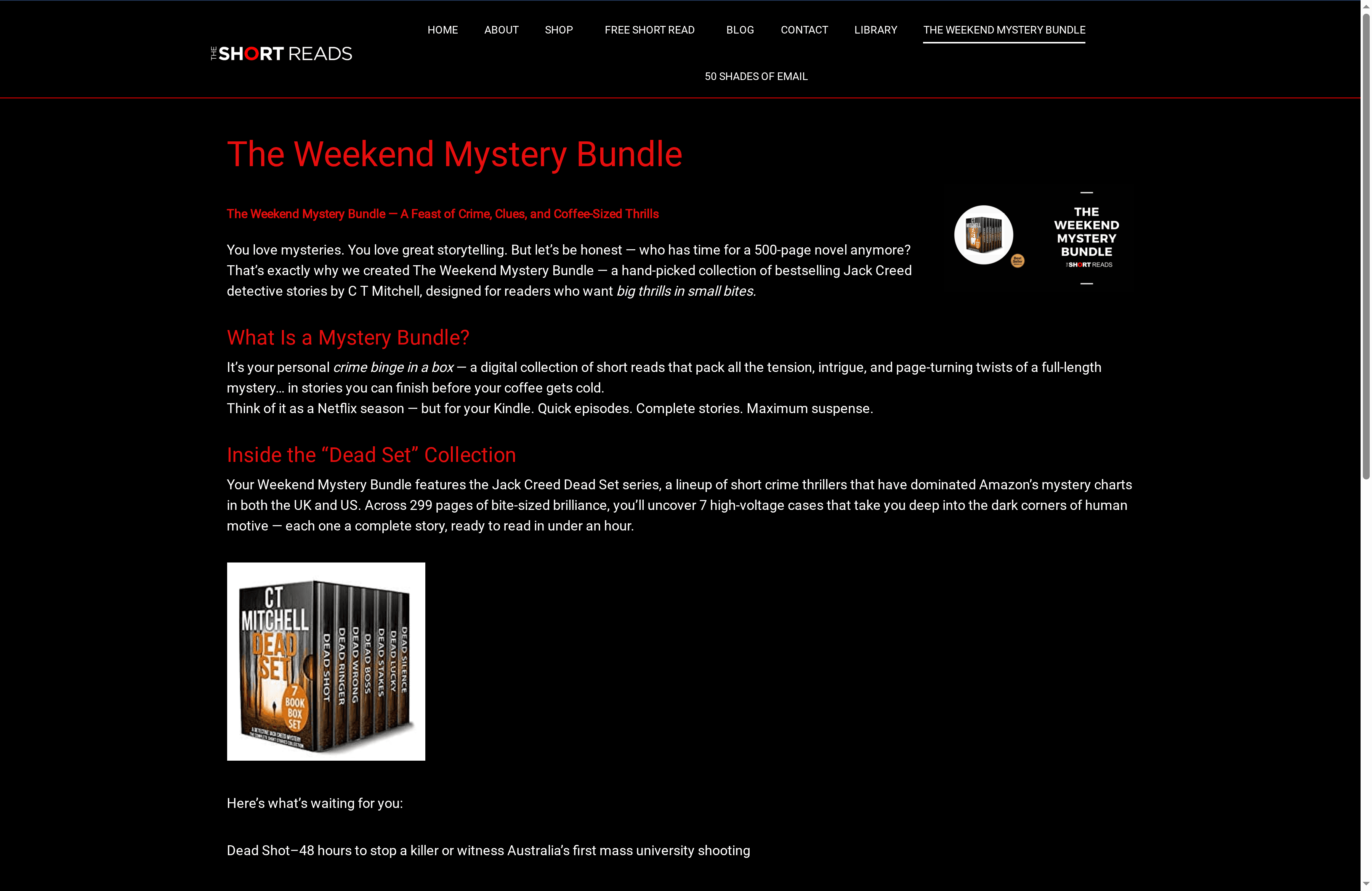
Embrace the novella’s art of precise storytelling and dive into our exclusive action thriller novellas collection crafted for readers who seek tightly woven narratives full of suspense and depth. Don’t wait to enjoy the perfect blend of rich character development and high stakes tension that only the novella form can provide. Start your immersive reading journey right now with The Weekend Mystery Bundle and experience story worlds where every word matters.
Frequently Asked Questions
What is a novella?
A novella is a narrative prose fiction typically ranging from 20,000 to 50,000 words, offering a unique storytelling experience that combines elements of both short stories and full-length novels.
How does a novella differ from a novel?
Novellas tend to have fewer conflicts and a more focused narrative than novels, allowing for complex themes and character development within a tighter storyline.
What are the common themes found in novellas?
Novellas often explore psychological thrillers, mysteries, and character-driven narratives, delving into intricate emotional landscapes and complex themes with remarkable precision.
What should I expect when reading a novella?
Readers can expect a concentrated narrative that provides emotional depth and character development in a compact format, usually designed to be consumed in a single reading session.
Recommended
- The Essential Guide to the Role of Novellas in Fiction – TheShortReads.com
- Novellas vs. Novels: Complete Guide to Key Differences – TheShortReads.com
- Why Novellas Are Popular: Complete Reader Guide – TheShortReads.com
- Novella Short Reads: Everything You Need to Know – TheShortReads.com


