
Tag Archives for " The Short Reads "
From I Never Finish Books to Bookworm: 3 Real Stories That’ll Change How You Think About Reading

Here’s a stat that might surprise you: According to reading research, roughly 57% of books started never get finished. That’s more than half of every book picked up with good intentions, abandoned somewhere between chapter three and “I’ll get back to it eventually.”
If you’ve ever felt that familiar guilt looking at the half-read books gathering dust on your nightstand, you’re not alone. Not even close.
Maybe you’ve sat quietly at a dinner party while friends discussed the latest bestseller, nodding along while internally panicking. Perhaps you’ve bought books with genuine excitement, only to watch them transform into expensive bookmarks. Or maybe you’ve just accepted the story you’ve been telling yourself for years: “Reading just isn’t for me.”
But what if that story is wrong? What if the problem was never you : it was the format?
Today, we’re sharing three real stories from real people who once said those exact words. And then everything changed.
Meet the Legends: Bek, Tina & Arjun
These aren’t book reviewers. They’re not literary critics or English teachers. They’re regular people with busy lives, limited time, and a history of abandoned books that could fill a small library.
They all shared one thing: the belief that they’d never be “readers.”
Then they discovered novellas : short books under 150 pages : and something clicked.

Bek’s Story: From Book Club Anxiety to First-Night Finisher
“I always felt left out at book clubs until I smashed my first novella in one night! Now I’m actually excited to read with friends.”
Bek knows the feeling of being the person who never finishes the book club pick. While everyone else discusses plot twists and character arcs, you’re quietly hoping nobody asks your opinion. The internal monologue is brutal: Am I just not smart enough? Do I not care enough? What’s wrong with me?
For years, Bek avoided book clubs entirely. The social anxiety wasn’t worth it. Big 400-page novels felt like homework assignments she was destined to fail.
The turning point? Someone recommended she try a novella : something under 150 pages, designed to be finished in one or two sittings.
She was skeptical. Could a short book really deliver the same satisfaction?
That night, Bek sat down with her first novella. She finished it before bed.
The rush was immediate. That feeling of turning the final page, of completing something : it was almost addictive. Suddenly, she wasn’t a “non-reader.” She was someone who finished books.
Now? Bek shows up to book club having actually read the selection. She has opinions. She’s engaged. She’s confident.
The psychology behind it: Completion creates momentum. Our brains are wired to crave finishing things : it’s called the completion bias. Once Bek experienced that first win, her entire relationship with reading transformed.
Tina’s Story: From Stressed Out to Unstoppable
“Big books used to stress me out, but Short Reads made finishing a book feel easy… and now I can’t stop!”

For Tina, thick novels weren’t exciting : they were intimidating. Every 500-page bestseller felt like a mountain she’d never climb. And here’s the thing about unfinished books: they don’t just sit there. They judge you.
That stack of abandoned reads becomes a monument to perceived failure. Reading stops being pleasure and starts being pressure.
Tina had essentially given up. She figured she just wasn’t built for building a reading habit.
Then she tried something different: a short, focused novella designed for people who don’t like reading (or think they don’t). No pressure. No marathon commitment. Just a tight, engaging story she could actually finish.
The transformation was immediate.
Without the intimidation factor, Tina could focus on what reading is actually about: the story. The characters. The escape. She finished her first novella and immediately wanted another.
Now she’s on a streak : multiple books finished, confidence building with each one. What changed? Not her intelligence. Not her attention span. Just the format.
The pattern: Small wins create big habits. Tina didn’t need to become a different person. She just needed beginner books that set her up for success rather than failure.
Arjun’s Story: One Win Changed Everything
“Novellas gave me my first win. Now I’m hooked!”
Sometimes, that’s all it takes. One finish line. One moment of “I actually did it.”
Arjun had spent years believing reading for beginners meant something was wrong with him. Real readers devoured massive epics. Real readers had overflowing bookshelves. Real readers didn’t struggle.
His first novella changed that narrative in a single evening.
One win. That’s what separated “reading isn’t for me” from “I’m hooked.”
The Common Thread: What All Three Discovered
Bek, Tina, and Arjun aren’t special cases. They’re proof of something powerful:
It’s not about intelligence or attention span. It’s about finding the right format for modern life.
Here’s what they all realised:
- Novellas under 150 pages are achievable : you can actually finish them
- Completion feels incredible : that “I did it” rush is real
- Short doesn’t mean shallow : it means focused, tight storytelling
- Success breeds success : one finished book leads to another
- The format was the barrier, not them
The real surprise? Once they started finishing books, they couldn’t stop. The confidence snowballed. Reading transformed from a source of shame into a source of joy.
Why This Actually Works: The Psychology
This isn’t just feel-good storytelling. There’s real science behind why easy to read books and novellas work for reluctant readers:
| Psychological Principle | How It Applies |
|---|---|
| Completion Bias | Our brains CRAVE finishing things : it releases dopamine |
| Small Wins Theory | Success breeds more success; confidence builds momentum |
| Reduced Cognitive Load | Less intimidation = less resistance to starting |
| Self-Efficacy | Achieving goals makes us believe we can achieve more |
When you remove the intimidation, you remove the resistance. When you experience completion, you crave more. It’s a positive cycle that transforms books for non readers into gateways to genuine reading habits.
Could This Be You? A Quick Check
You might be the next success story if:
- ✅ You’ve said “I never finish books” more times than you can count
- ✅ Book clubs make you anxious (or you avoid them entirely)
- ✅ Your TBR pile feels like judgment, not excitement
- ✅ You want to read but feel overwhelmed before you start
- ✅ You’ve wondered if reading “just isn’t your thing”
- ✅ Big novels feel like commitments you can’t keep
Sound familiar? You don’t need to change who you are. You just need the right starting point.
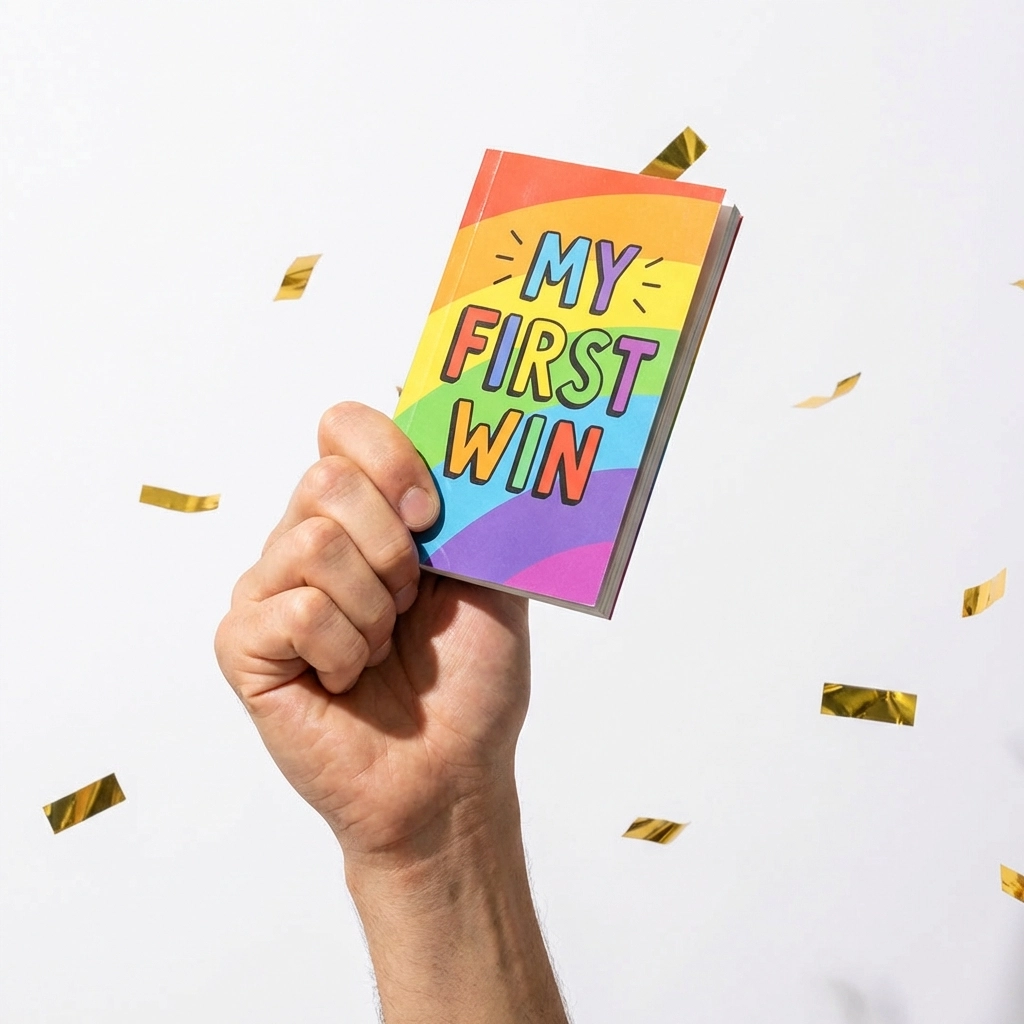
Your First Win Is Waiting
Bek, Tina, and Arjun aren’t extraordinary. They just found accessible books that worked with their lives instead of against them. Novellas removed the barriers while keeping all the magic : gripping stories, satisfying endings, and the confidence boost of actually finishing.
Ready to find your format? C T Mitchell’s novella series are perfect for getting started:
- Detective Jack Creed Series : Gritty crime mysteries that hook you from page one (perfect if you loved Arjun’s journey)
- Lady Margaret Turnbull Series : Charming cozy mysteries with wit and warmth (ideal for book club lovers like Bek)
- Selena Sharma Series : Psychological thrillers that keep you guessing (for anyone who relates to Tina’s need for engaging books)
Every book is under 150 pages. Every story is designed to be finished. Every ending delivers that completion high you’ve been missing.
Your “first win” is waiting. Give a novella a crack : you might just surprise yourself.
Got your own Short Reads story? We’d love to hear it. Drop a comment or reach out ( because every reader’s journey deserves to be celebrated.)
Share


Looking for Short Books on Kindle Unlimited? Here Are 10 Things You Should Know
Here’s a frustrating truth: Kindle Unlimited has over 4 million titles, yet most readers spend more time scrolling than actually reading. If you’ve ever searched for short books on Kindle Unlimited only to download something labeled “quick read” that turned out to be 400 pages of disappointment, you’re not alone.
The good news? Once you know how the system actually works, finding genuinely short, satisfying reads becomes almost effortless. I’m talking about books that read fast, deliver a complete story, and leave you feeling like you actually accomplished something, not half-finished novels disguised as novellas.
Here are the 10 insider tips that’ll transform your KU experience.
1. Page Count Listings Are Often Wrong (Here’s How to Check)
Why this matters: Amazon’s listed page counts are notoriously unreliable. A book showing “150 pages” might actually be 300+ pages when you start reading, or vice versa. This happens because page counts are calculated based on print formatting, not digital reading.
How to fix it: Look for the “Reading time” estimate instead of page count. You’ll find this in the product details section. Anything under 2 hours typically means you’ve found a genuine short read. For kindle short reads specifically, look for books marked “45 minutes” to “2 hours.”
Bonus tip: Check the Kindle file size. Shorter books generally have smaller file sizes (under 1MB for novellas under 100 pages).
2. Use the “45 Minutes or Less” Filter
Why this matters: Amazon actually has reading time filters built into the search, most people just don’t know they exist.
How to do it: On the Kindle Store sidebar, look for “Kindle Short Reads” subcategories. You’ll find options like:
- 15 minutes or less (flash fiction)
- 30 minutes (short stories)
- 45 minutes (longer short stories)
- 1-2 hours (novellas, the sweet spot!)
Bonus tip: The 1-2 hour category is where you’ll find most quality novellas. Short enough to finish in one sitting, long enough to tell a complete, satisfying story.
3. Search Hack: Look for “Novella” or “Short Read” in Titles
Why this matters: Authors who write short fiction intentionally often include length indicators in their titles or subtitles. This self-identification is a reliable quality signal.
How to do it: Try these search strings:
- “[genre] novella” (e.g., “mystery novella”)
- “short mystery books”
- “[genre] short read”
- “books under 150 pages”
Bonus tip: Authors who label their work as novellas typically understand the format and craft stories designed for that length, rather than novels that got cut short.
4. Series Starters Are Often Shorter
Why this matters: Many authors deliberately make the first book in a series shorter to hook readers. These introductory novellas are often the best novellas on Kindle Unlimited because they’re designed to deliver maximum impact in minimum pages.
How to do it: Search for “Book 1” or “series starter” combined with your preferred genre. Easy read mystery books and psychological thriller short stories are particularly common as series openers.
Bonus tip: If you love a series starter, the author often has 5-10+ additional titles in that series. One good find can fuel months of reading.
5. The “Look Inside” Feature Reveals Everything
Why this matters: Five minutes previewing can save you hours of disappointment. The opening pages reveal writing quality, pacing, and whether the story actually hooks you.
How to do it: Click “Look Inside” on any KU title. Read at least 2-3 pages. Ask yourself:
- Does the writing flow naturally?
- Am I already curious about what happens next?
- Is there dialogue, or just dense paragraphs?
Bonus tip: Page turners reveal themselves immediately. If you’re bored by page 3, you’ll be bored by page 100.
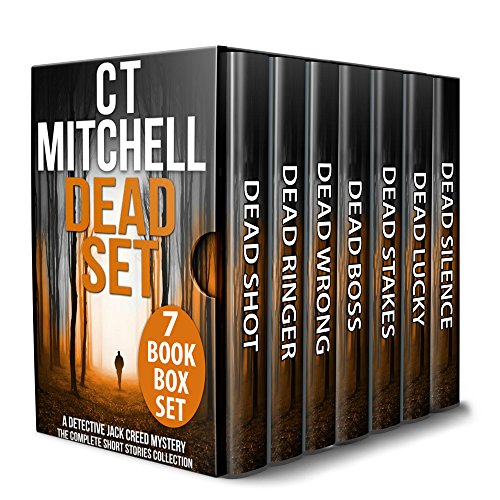
6. Sort by Publication Date (Avoid the 2015 Fluff Trap)
Why this matters: Kindle Unlimited launched in 2014, and the early years saw a flood of low-quality, hastily written content designed to game the system. Much of it still lurks in search results.
How to do it: Filter by “Publication Date” and select the last 1-2 years. Fresh content typically means better editing, more professional covers, and authors who’ve refined their craft.
Bonus tip: The exception? Established series from proven authors. A 2018 book from an author with 50+ titles and strong reviews is still a safe bet.
7. Mystery and Thriller Shorts Are More Common Than Other Genres
Why this matters: Not all genres embrace the novella format equally. Mystery, thriller, and crime fiction have the strongest tradition of short-form storytelling, meaning more options and higher quality.
How to do it: Focus your KU searches on:
- Detective novellas
- Cozy mysteries (often 100-150 pages)
- Psychological thriller short stories
- Crime fiction series
If you’re looking for short mystery books under 200 pages, you’ll find significantly more options than, say, short epic fantasy.
Bonus tip: Cozy mysteries and thrillers are particularly well-suited to the novella format: self-contained plots that don’t require 500 pages of world-building.
8. Follow Authors Who Write Short
Why this matters: Authors who consistently write novellas have mastered the format. One good discovery often means 10+ additional titles you’ll love.
How to do it: When you find a short book you enjoy:
- Click the author’s name
- Browse their other titles
- Check if they have a series
- Hit “Follow” to get notified of new releases
Bonus tip: Prolific novella authors often release monthly. Following 3-4 good ones means a constant stream of quick fiction reads.
9. Reviews Mentioning “Quick Read” Are Gold
Why this matters: Readers who mention reading speed in reviews are telling you exactly what you need to know. They’ve done the research for you.
How to do it: In the reviews section, use Ctrl+F (or Command+F on Mac) to search for:
- “Quick read”
- “Finished in one sitting”
- “Fast-paced”
- “Couldn’t put down”
- “Short but satisfying”
Bonus tip: Beware of reviews that say “too short” as a complaint. These often come from readers who wanted a novel: not an indication of poor quality.
10. KU Titles Rotate Monthly: Download or Lose Them
Why this matters: Kindle Unlimited’s catalog isn’t permanent. Books leave the program regularly, sometimes with no warning. That novella you saved to read “later” might vanish.
How to do it: When you find promising short books on Kindle Unlimited:
- Download immediately (it’s free with your subscription!)
- Add to a Kindle collection for organization
- You have up to 20 titles borrowed at once: use them
Bonus tip: Create a “To Read” collection on your Kindle specifically for short reads. Fill it with 10-15 novellas so you always have options.
Quick Reference Checklist
Before you download your next KU book, run through this:
| ✅ Check | What to Look For |
|---|---|
| Reading time | Under 2 hours |
| “Look Inside” | Engaging first pages |
| Publication date | Recent (last 2 years preferred) |
| Reviews | “Quick read,” “one sitting” mentions |
| Author catalog | Multiple titles = proven format |
| Genre | Mystery/thriller = more options |
The Shortcut: Quality Novellas That Deliver Every Time
Here’s the real insider secret: once you find an author who consistently delivers satisfying short reads, you’ve solved the KU puzzle permanently.
That’s exactly why The Short Reads exists. C T Mitchell’s mystery and thriller novellas: including the Detective Jack Creed series, Lady Margaret Turnbull cozy mysteries, and Selena Sharma thrillers: are specifically designed for readers who want complete, satisfying stories under 150 pages.
Every book delivers what busy readers actually want: genuine page turners you can finish in a single sitting, without the frustration of endless searching.
Ready to stop scrolling and start reading? Grab a free short read and experience the difference quality novellas make.
Share

The Proven Short Reads Framework: 5 Steps How to Build a Reading Habit and Boost Your Confidence (Easy Guide for Busy People)
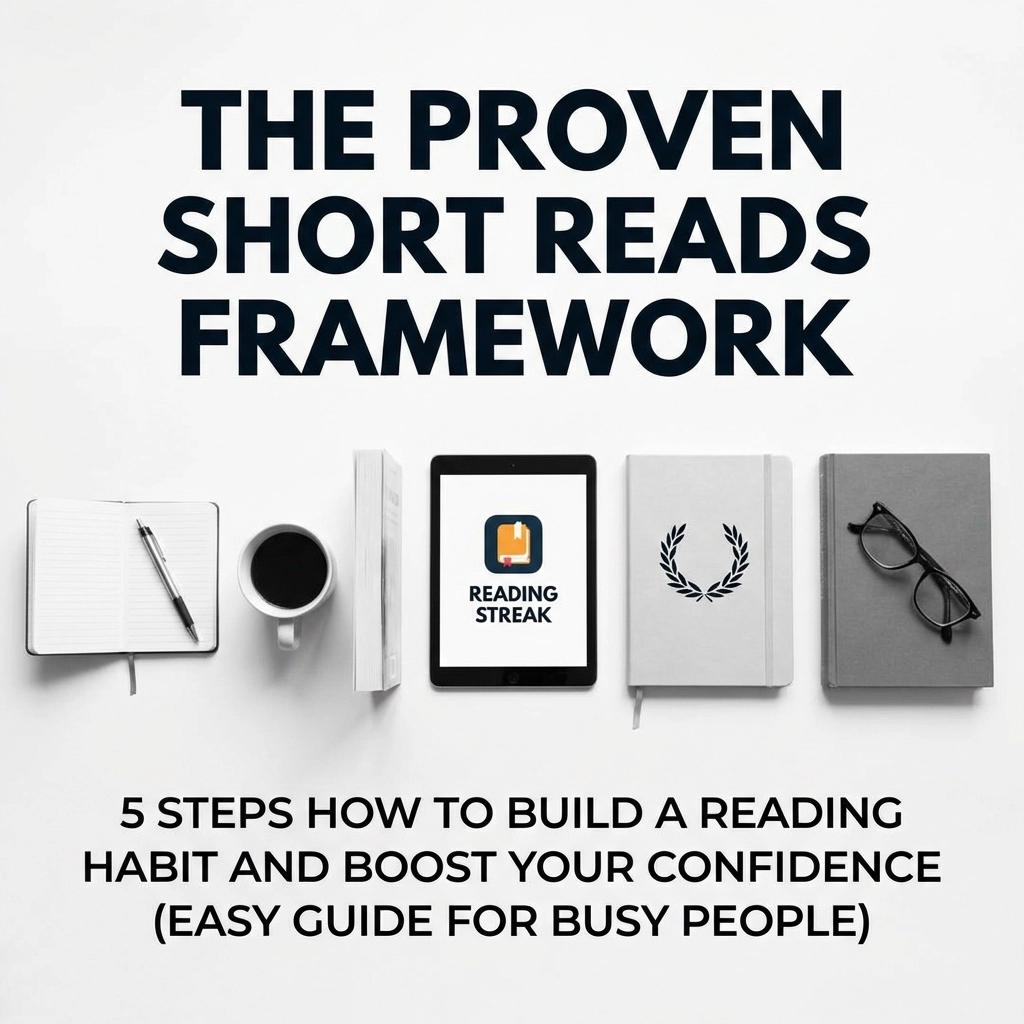
Here’s a shocking truth: 92% of people who try to build a reading habit quit within the first month. Not because they don’t want to read, but because they’re following advice that’s designed to fail.
You know the drill. “Just read 30 minutes a day!” they say. “Pick up that classic novel!” they suggest. Meanwhile, you’re staring at a 400-page book that’s been collecting dust for three months, feeling like a failure every time you see it.
If you’re a busy person who genuinely wants to read but keeps getting derailed, this isn’t your fault. Traditional reading advice is broken, and I’m going to show you exactly why: plus give you a proven framework that actually works for people with demanding schedules and short attention spans.
Why Traditional Reading Advice Sets You Up for Failure
Most reading advice treats books like vegetables: something you should consume because it’s “good for you.” The problem? This approach ignores basic human psychology.
Traditional advice tells you to:
- Start with “important” or “classic” books
- Read for 30-60 minutes daily
- Focus on page count goals
- Push through boring sections
But here’s what science tells us about habit formation: small wins create momentum, while early failures destroy motivation. When you abandon a 500-page novel after 50 pages, your brain doesn’t think “I’m learning my preferences.” It thinks “I’m bad at reading.”
The real surprise? People who succeed at building reading habits start with books under 150 pages and focus on completion psychology, not literary merit. This triggers what researchers call the “completion bias”: our brain’s powerful drive to finish what we start when the end feels achievable.
The Short Reads Framework: Your 5-Step System
This framework is built on one core principle: reading confidence comes from completion, not complexity. Each step is designed to hack your psychology and create unstoppable momentum.
Step 1: Start Ridiculously Small (Under 100 Pages)
Why It Works: Psychologist BJ Fogg’s research shows that habit formation requires three elements: motivation, ability, and trigger. Starting with books under 100 pages maximizes your ability while minimizing the motivation required.
How to Implement:
- Choose books between 50-100 pages maximum
- Look for novellas, short memoirs, or essay collections
- Prioritize engaging books over “important” ones
- Set your expectation to finish in 1-3 reading sessions
Common Mistake to Avoid: Don’t feel guilty about “easy” choices. A completed 80-page book beats an abandoned 300-page masterpiece every single time for building your reading habit.

Step 2: Choose Page-Turners, Not “Important” Books
Why It Works: Entertainment value creates what researchers call “intrinsic motivation”: you read because you want to, not because you should. This builds positive associations with reading that compound over time.
How to Implement:
- Pick mystery, thriller, or humor books initially
- Read reviews specifically mentioning “couldn’t put it down”
- Choose books for non readers rather than literary fiction
- Look for stories with strong narrative hooks in the first chapter
Common Mistake to Avoid: Resist the urge to read what you think you “should” read. Build the habit first, expand your taste later.
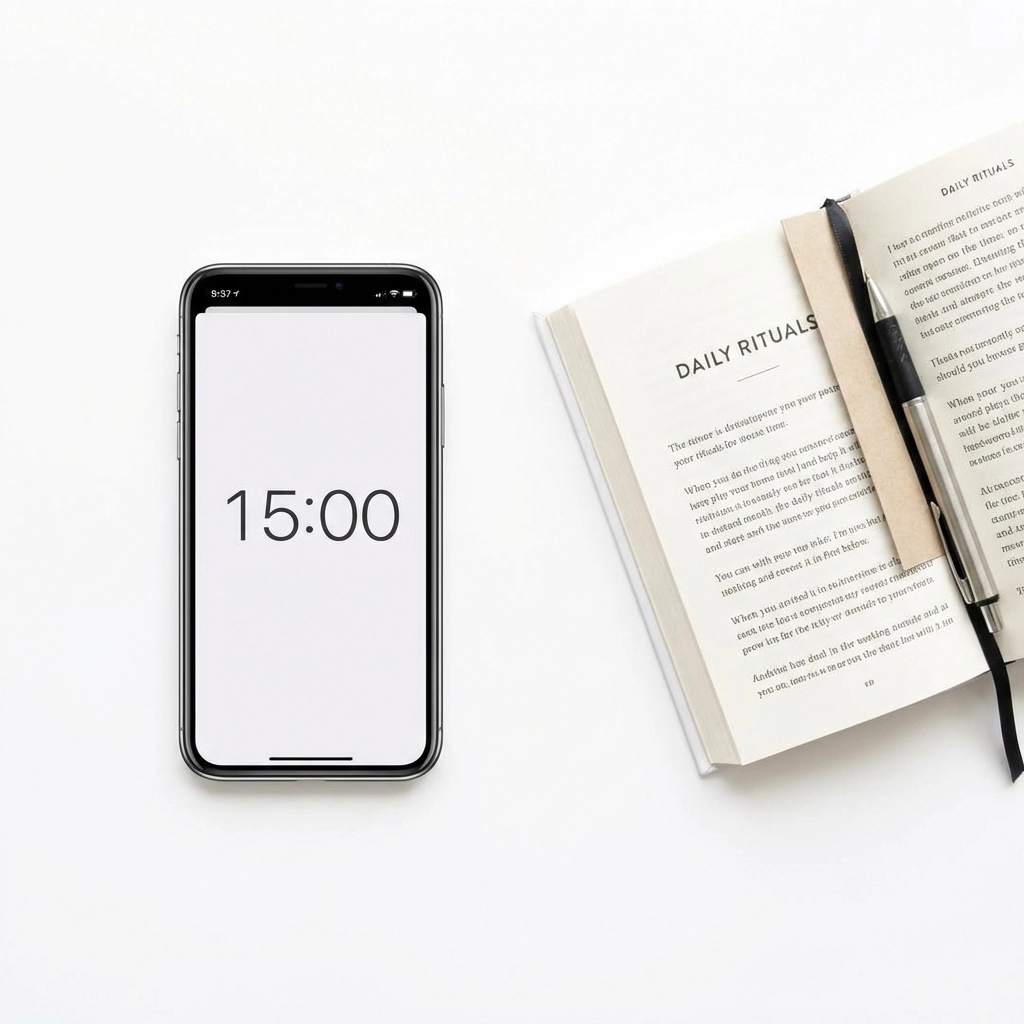
Step 3: Schedule Micro-Reading Sessions (15 Minutes)
Why It Works: James Clear’s “Atomic Habits” research shows that habits stick when they’re smaller than your resistance level. Fifteen minutes feels manageable even on your busiest days, creating consistency without overwhelm.
How to Implement:
- Block 15 minutes daily (same time if possible)
- Use transition moments: lunch breaks, before bed, during commute
- Set a timer: stop when it goes off, even mid-sentence
- Focus on consistency over duration
Common Mistake to Avoid: Don’t extend sessions because you’re “in the zone.” Stopping while engaged builds anticipation for tomorrow and prevents burnout.
Step 4: Track Completions, Not Pages
Why It Works: Completion tracking leverages the “progress principle”: visible progress in meaningful work boosts motivation more than any other factor. Each finished book becomes evidence that you’re “someone who reads.”
How to Implement:
- Use a simple checklist or reading app
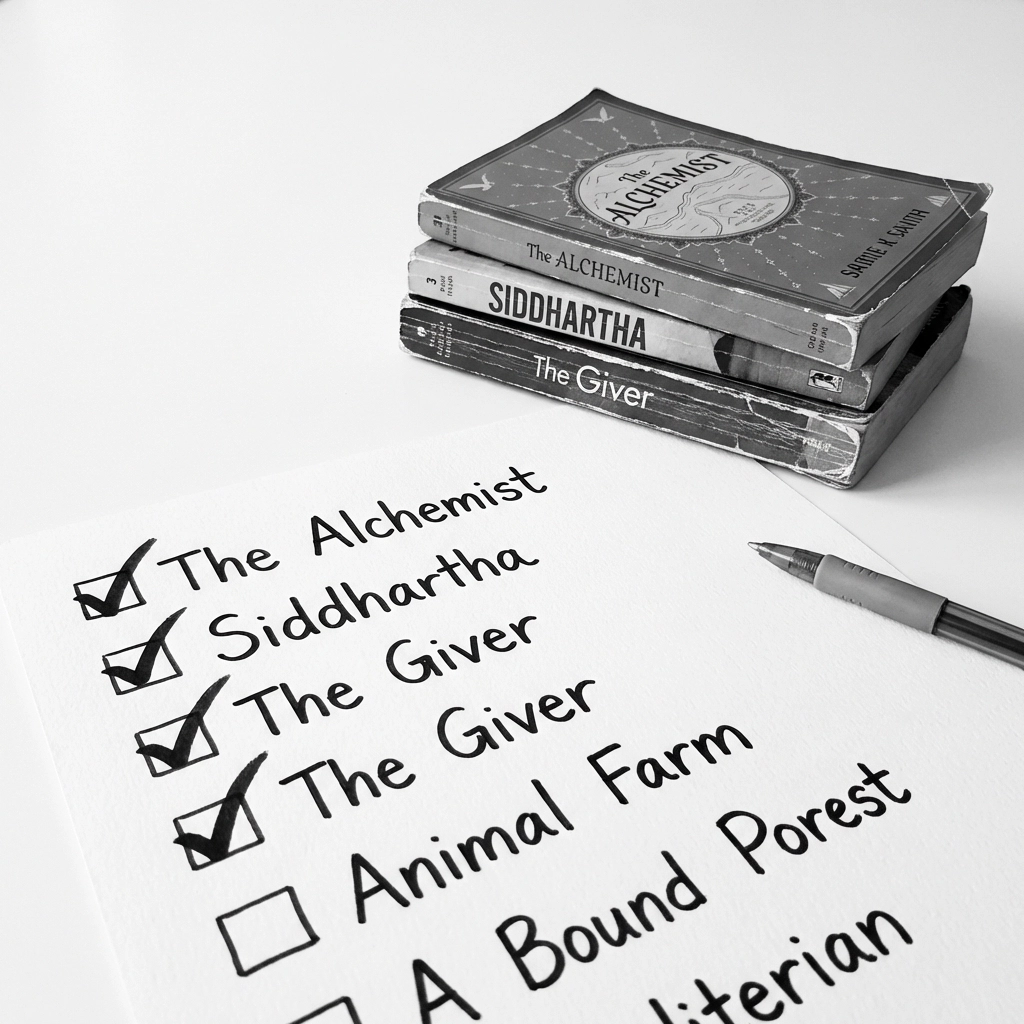
- Celebrate each completion (literally: do a small happy dance)
- Take a photo of finished books or keep a visual list
- Share completions with friends or social media
Common Mistake to Avoid: Don’t track pages read, time spent, or books started. Only completed books count: this reinforces the accomplishment psychology that builds confidence.
Step 5: Stack Wins Progressively (100 → 150 → 200 Pages)
Why It Works: This applies “progressive overload” from fitness to reading. Just like you gradually increase weights at the gym, you gradually increase book length as your reading muscle strengthens.
How to Implement:
- Complete 3-5 books under 100 pages first
- Move to 100-150 page books for your next 3-5 completions
- Only then consider 150-200 page books
- Return to shorter books anytime you feel overwhelmed
Common Mistake to Avoid: Don’t rush the progression. Your reading stamina needs time to develop, just like physical fitness.
The Psychology Behind Why This Framework Works
This system succeeds because it’s built on proven psychological principles:
Completion Bias: Our brains are wired to finish what we start when the endpoint feels achievable. Short books activate this powerful drive.
Small Wins Theory: Harvard’s Teresa Amabile discovered that small, frequent victories create more sustained motivation than occasional big achievements.
Habit Stacking: By linking reading to existing routines (lunch, bedtime), you leverage established neural pathways instead of creating entirely new ones.
Identity Shift: Each completed book reinforces the identity “I am someone who reads,” making future reading feel natural rather than forced.
You might think this approach is “dumbing down” reading, but research shows the opposite. People who build habits with accessible books ultimately read more diverse and challenging material than those who start with difficult texts and quit.
Ready to Build Your Reading Muscle?
The framework works, but you need the right books to implement it. This is where short reads under 150 pages become your secret weapon: they’re specifically designed for building reading confidence through completion psychology.
For page turners that perfectly fit this framework, consider starting with C T Mitchell’s series. The Detective Jack Creed mysteries, Lady Margaret Turnbull cozy mysteries, and Selena Sharma detective stories are all crafted to be under 150 pages, highly engaging, and designed for completion. They’re the literary equivalent of training wheels: except these wheels help you build genuine reading muscle that transfers to any genre.
Remember: every reader was once a non-reader who found the right system. The Short Reads Framework gives you that system. Start ridiculously small, choose entertainment over education, and watch your reading confidence soar.
Your reading habit starts with your next completed book, not your next started one. Make it count.
Share

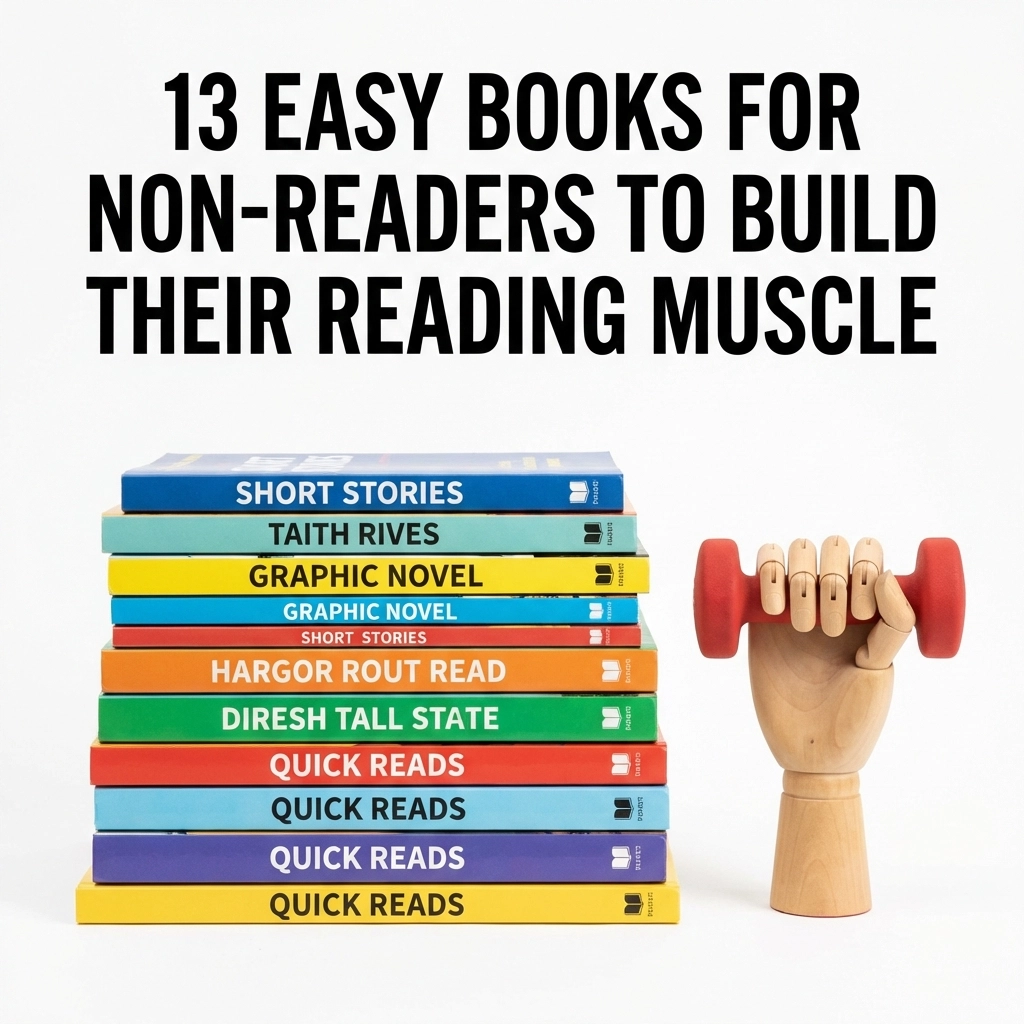
13 Easy Books For Non-Readers To Build Their Reading Muscle
Here’s a shocking truth: The average person spends 2.5 hours daily scrolling social media, yet claims they “don’t have time to read.” The real problem? You’ve been trying to bench press 300 pounds when you haven’t even learned to do a push-up.
Reading is like any other muscle, it needs to be built gradually. You wouldn’t walk into a gym and immediately attempt the heaviest weights, so why are you picking up 500-page novels when you haven’t flexed your reading muscle in years?
If you’re among the millions who think “reading just isn’t for me,” you’re about to discover something game-changing. The issue isn’t that you hate reading, it’s that you’ve been choosing the wrong books for your current reading fitness level.
Why These Books Work (And Others Don’t)
Most books for non readers fail because they’re either too long, too dense, or too boring. The books below are different. They’re page turners that respect your time, grab your attention immediately, and, most importantly, you can actually finish them.
The secret? Each book on this list is designed to give you quick wins that build confidence and momentum. Think of them as reading workouts that gradually strengthen your focus, comprehension, and, yes, your genuine enjoyment of books.

The 13 Books That Build Reading Muscle
1. The Alchemist by Paulo Coelho
“Most people see the world as a threatening place, and, because they do, the world turns out, indeed, to be a threatening place.”
Why it builds reading muscle: At just 163 pages, this is the perfect easy book to start with. You can finish it in one or two sittings, and you’ll walk away feeling inspired about life’s possibilities. The simple, clear prose makes it ideal for reading for beginners.
2. The House in the Cerulean Sea by TJ Klune
Why it builds reading muscle: This feel-good fantasy proves that engaging books don’t need to be intimidating. It’s warm, funny, and genuinely uplifting, exactly what reluctant readers need to remember why stories matter. The magical elements keep you hooked without being confusing.
3. And Then There Were None by Agatha Christie
Why it builds reading muscle: Christie’s masterpiece mystery is the ultimate page turner for people who hate reading. Short chapters, constant suspense, and a plot that moves so fast you won’t want to put it down. Perfect introduction to the mystery genre.
4. Tiny Beautiful Things by Cheryl Strayed
“Most things will be okay eventually, but not everything will be. Sometimes you’ll put up a good fight and lose.”
Why it builds reading muscle: This collection of essays is perfect for short attention span reading. You can read one piece at a time, making it ideal for dip-in dip-out reading. Strayed’s honest, compassionate advice about life’s challenges will keep you coming back.
5. Post Office by Charles Bukowski
“Food is good for the nerves and the spirit. Courage comes from the belly – all else is desperation.”
Why it builds reading muscle: If polished, traditional writing puts you to sleep, Bukowski’s raw honesty will wake you up. His unfiltered take on ordinary life as a postal worker is both hilarious and brutally real, perfect for readers who think books are “too proper.”

6. The Thursday Murder Club by Richard Osman
Why it builds reading muscle: This cozy mystery about retirement home residents solving cold cases is entertaining without being stressful. Short chapters, lovable characters, and just enough mystery to keep you guessing. Ideal for building your reading habit with pure enjoyment.
7. Fear and Loathing in Las Vegas by Hunter S. Thompson
“Every now and then when your life gets complicated and the weasels start closing in, the only cure is to load up on heinous chemicals and then drive like a bastard from Hollywood to Las Vegas.”
Why it builds reading muscle: Thompson’s wild, debaucherous adventure reads like the most insane road trip story ever told. The raw energy and bizarre situations will keep you glued to the page, perfect for readers who find traditional literature boring.
8. When Breath Becomes Air by Paul Kalanithi
“Science may provide the most useful way to organize empirical, reproducible data, but its power to do so is predicated on its inability to grasp the most central aspects of human life: hope, fear, love, hate, beauty, envy, honor, weakness, striving, suffering, virtue.”
Why it builds reading muscle: This memoir by a neurosurgeon facing terminal cancer is both heartbreaking and inspiring. Despite the heavy subject matter, it reads quickly and will change how you think about life and mortality.
9. Green Hills of Africa by Ernest Hemingway
“We have very primitive emotions. It’s impossible not to be competitive. Spoils everything, though.”
Why it builds reading muscle: Hemingway’s hunting memoir in East Africa showcases his famously clean, accessible prose. No complicated language or dense descriptions, just clear storytelling that puts you right in the African wilderness.
10. Surely You’re Joking, Mr. Feynman! by Richard Feynman and Ralph Leighton
“There were a lot of fools at that conference, pompous fools, and pompous fools drive me up the wall.”
Why it builds reading muscle: A Nobel Prize-winning physicist who writes like he’s your funniest friend? Feynman’s entertaining tales of curiosity and discovery prove that accessible books can be both smart and incredibly fun to read.

11. Barbarian Days: A Surfing Life by William Finnegan
“Being out in big surf is dreamlike. Terror and ecstasy ebb and flow around the edges of things, each threatening to overwhelm the dreamer.”
Why it builds reading muscle: Even if you’ve never surfed, Finnegan’s beautifully written memoir about chasing waves around the world is mesmerizing. His vivid descriptions and philosophical insights make this a perfect bridge to more literary writing.
12. 11/22/63 by Stephen King
“Life turns on a dime. Sometimes towards us, but more often it spins away, flirting and flashing as it goes: so long, honey, it was good while it lasted, wasn’t it?”
Why it builds reading muscle: Yes, it’s longer, but this time-travel story about preventing JFK’s assassination is so gripping you won’t notice the pages flying by. King’s masterful storytelling will have you reading “just one more chapter” until 3 AM.
13. Beneath a Scarlet Sky by Mark Sullivan
“Do what I sometimes do when I get scared: imagine you’re someone else, someone who’s far braver and smarter.”
Why it builds reading muscle: This WWII story about an Italian teenager saving lives during Nazi occupation reads like the most incredible action movie ever made. Despite its length, it’s a true page turner that builds serious reading endurance.
The Real Secret: Short Reads Build Reading Muscle Faster
Here’s what traditional reading advice gets wrong: they tell you to start with “classics” or “important literature.” That’s like telling someone to deadlift 400 pounds on their first day at the gym.
The fastest way to build genuine reading muscle is through short wins. When you complete a book: any book: your brain releases dopamine and builds positive associations with reading. Each completed book strengthens your confidence, focus, and hunger for the next story.
The psychology is simple: Finished books create momentum. Unfinished books create guilt and reinforce the “I’m not a reader” identity.
This is why novellas under 150 pages are the secret weapon for building reading muscle. They give you:
- ✅ Complete story satisfaction in just a few reading sessions
- ✅ Immediate sense of accomplishment that motivates continued reading
- ✅ Confidence boost that you CAN finish books
- ✅ Momentum to tackle slightly longer books
- ✅ Reading habit formation through frequent completion rewards
Your Next Step: C T Mitchell’s Reading Muscle Builders
Once you’ve conquered a few books from the list above, you’re ready for the next level of reading muscle building. C T Mitchell’s series are perfectly designed for new readers who want to maintain their momentum:
Detective Jack Creed Series: Fast-paced crime mysteries that hook you immediately and deliver satisfying conclusions in under 150 pages. Each book builds your mystery reading muscle while keeping you thoroughly entertained.
Lady Margaret Turnbull Series: Cozy mysteries that feel like visiting with a clever friend. Perfect for readers who want intrigue without violence, wrapped up in bite-sized, completely satisfying stories.
Selena Sharma Series: Psychological thrillers that prove short books can deliver serious suspense. These novellas build your tolerance for tension while rewarding you with quick, complete resolutions.
Each series proves that short read books aren’t inferior to longer novels: they’re precision-engineered reading experiences that respect your time while building genuine reading muscle.
Ready to start building your reading muscle? Pick one book from this list that sounds most interesting to you. Read it. Finish it. Feel that satisfaction of completing a story. Then pick another.
Before you know it, you’ll have built serious reading muscle: and discovered that you actually love books. You just needed the right training program.
Start your reading muscle journey today at The Short Reads and discover why thousands of former non-readers are now devouring books faster than ever.
Share

The Commuter’s Reading Revolution: Why Short Books Are Perfect for Your Train Ride

There’s a quiet Commuter’s Reading Revolution going on. Here’s a statistic that might surprise you: The average Australian commuter spends 208 hours per year traveling to and from work. That’s equivalent to more than five full work weeks of potential reading time that most people spend scrolling social media, staring out windows, or fighting off the urge to doze off.
You’ve probably tried bringing a book on your commute before. Maybe you grabbed that 400-page bestseller everyone was talking about, cracked it open on Monday morning, and by Wednesday you’d completely lost track of where you were in the story. Sound familiar? You’re not alone, and it’s not your fault – traditional novels simply weren’t designed for the reality of commuter reading.
Why Traditional Novels Fail the Commute Test
Let’s be honest about what commuting actually looks like. You’ve got 30 to 60 minutes of fragmented reading time, squeezed between getting on and off trains, dealing with crowds, and the mental transition between home and work life. Traditional novels demand sustained attention and long-term memory commitment that just doesn’t match this reality.
Here’s what typically happens with lengthy books on commutes:
• You lose your place in complex plots after weekend breaks
• Multiple character storylines become confusing when you only read in short bursts
• You feel guilty about the unfinished book sitting in your bag for weeks
• The intimidation factor kicks in – that thick spine feels like a commitment you can’t honor
• You abandon reading altogether rather than struggle through inappropriate formats
The psychology is working against you. When you can’t finish what you start, your brain interprets this as failure, making you less likely to pick up another book. It’s a cycle that turns potential readers away from one of life’s greatest pleasures.

The Short Book Solution: Perfect Commute Companions
Short books change everything. We’re talking about novellas, short story collections, and compact reads typically under 150 pages – exactly what busy commuters need. These aren’t “lesser” books; they’re purpose-built for modern reading habits and offer complete, satisfying stories in bite-sized packages.
Here’s why short reads are commuter gold:
Complete Stories in Realistic Timeframes
A typical 100-150 page novella fits perfectly into 3-5 commutes, depending on your reading speed and travel time. Instead of carrying around a half-finished door-stopper for months, you can start and finish an entire gripping mystery or thriller in just one week of regular commuting.
No Mental Overhead
Short books eliminate the cognitive burden of tracking complex plots and large cast of characters over extended periods. You can dive straight in without needing to remember what happened three weeks ago. This makes your commute reading time immediately productive rather than spent trying to orient yourself.
The Psychology of Completion
There’s real science behind why finishing books matters. Completing a story triggers dopamine release, the same neurotransmitter associated with achievement and satisfaction. When you finish a book every few days rather than every few months, you’re literally rewiring your brain to associate reading with success and pleasure.
The Mathematics of Commuter Reading Success
Let’s break down the numbers that will transform how you think about your travel time:
Average commute scenario:
• 45 minutes each way = 90 minutes daily
• 5 days per week = 7.5 hours weekly
• 50 working weeks annually = 375 hours of reading time
What this means for short books:
• Average reading speed: 200-300 words per minute
• Typical short book: 25,000-40,000 words
• You could finish 25-30 complete books per year just from commute reading
That’s more books than many avid readers complete in their spare time. You’re not “finding time to read” – you’re optimizing time you already have.
Building an Unbreakable Reading Habit
Short books create what psychologists call “positive feedback loops.” Each completed story reinforces your identity as “someone who reads,” making it easier to pick up the next book. This is the secret to building a reading habit that actually sticks.
The momentum effect works like this:
• Week 1: Finish your first commuter novella – feel accomplished
• Week 2: Eager to repeat that satisfaction, you start another
• Week 3: Reading on the train becomes automatic behavior
• Month 2: You’re choosing books based on your commute schedule
• Month 3: You’ve become “a reader” without changing anything else about your life
Unlike gym memberships or diet plans, this habit formation happens during time you’re already committed to spending. There’s no additional scheduling required.
Perfect Commute Reading Genres
Not all short books are created equal for train reading. The best commute reads offer immediate engagement and can withstand interruptions. Here are the genres that work best:
Mystery and Crime Novellas
Fast-paced plots with clear goals keep you engaged despite stops and starts. Easy read mystery books like detective stories provide that “just one more chapter” feeling that makes your commute fly by.
Thriller Short Reads
High-stakes action translates perfectly to short formats. The tension keeps you focused despite surrounding distractions, and you’ll actually look forward to your commute to see how the story resolves.
Cozy Mysteries
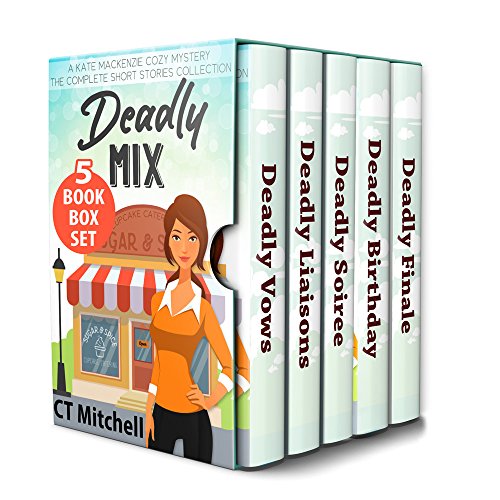
Perfect comfort reading that doesn’t require intense concentration. These gentle puzzles provide satisfying conclusions without overwhelming complexity – ideal for morning reading when your brain is still warming up. Read Deadly Mix
From Dead Time to Prime Time
The real transformation happens when you stop seeing your commute as something to endure and start viewing it as your personal reading sanctuary. That crowded train car becomes your mobile library. Those 45 minutes become the highlight of your day – dedicated time for pure escapism.
Benefits beyond books:
• Reduced stress – losing yourself in stories helps tension drain away
• Mental transition time – reading creates healthy boundaries between work and personal life
• Improved focus – 15-20 minutes of morning reading enhances concentration throughout your workday
• Genre exploration – short commitments let you experiment with new types of stories risk-free
Many commuters report that kindle short reads have completely changed their relationship with both reading and commuting. Instead of arriving at work already drained from a frustrating journey, they arrive energized from an engaging story.
The Digital Advantage
Modern technology makes commuter reading easier than ever. Short books on Kindle Unlimited give you access to thousands of novellas that download instantly to your phone or tablet. No more heavy bags, no more forgotten books – your entire library travels with you.
Practical benefits of digital short reads:
• Instant access – download new books during your morning coffee
• Adjustable text size – perfect for reading in varying light conditions
• Bookmark synchronization – seamlessly switch between devices
• Massive selection – thousands of titles under 150 pages
• Cost-effective – many platforms offer unlimited access for a monthly fee
Your Reading Revolution Starts Tomorrow
Stop treating your commute like lost time. Those hours represent one of the largest untapped reading opportunities in your life. With the right format – engaging, complete, satisfying short reads – you can transform dead travel time into a personal highlight.
The math is simple: shorter books + regular commute time = dramatically more reading in your life. The psychology is proven: completing stories regularly builds lasting reading habits. The technology exists: thousands of short reads are available instantly on your device.
Ready to join the commuter reading revolution? The Short Reads specializes in exactly what busy commuters need – compelling novellas under 150 pages that deliver complete, satisfying stories perfect for your journey to and from work. Start your transformation from frustrated commuter to accomplished reader right here.
Your train is waiting. Your books are too.
Share

Books for Non-Readers: 10 Short Stories That Will Turn You Into a Confident Reader in 30 Days
Books for Non-Readers produced a statistic that might surprise you: 67% of adults haven’t finished a book in the past year. But here’s what’s even more surprising: it’s not because they don’t want to read. It’s because they’ve convinced themselves they’re “not readers.”
If you’ve ever felt intimidated by thick novels, guilty about unfinished books gathering dust on your shelf, or embarrassed to admit you “don’t really read,” you’re about to discover something that changes everything. You’re not broken. You just haven’t found the right approach.
The secret weapon? Short stories under 150 pages that give you complete, satisfying reading experiences in bite-sized portions. And I’m about to show you exactly how 10 carefully selected novellas can transform you from someone who “doesn’t read” into a confident reader in just 30 days.
Why Most People Struggle to Build a Reading Habit (And It’s Not What You Think)
You might think non-readers struggle because they don’t have time or they’re not smart enough. The real culprit is something psychologists call “learned helplessness”: the belief that you’re simply “not a reader” based on past failed attempts with 400-page novels.
Here’s what typically happens:
- You pick up a popular 300+ page book
- You read 50-100 pages and lose momentum
- You abandon the book and feel like a failure
- You conclude you’re “not cut out for reading”
But what if the problem isn’t you: it’s the book length?
Short stories and novellas solve this by providing what researchers call “mastery experiences”: complete successes that build confidence and create positive associations with reading. When you finish a compelling 100-page story, your brain registers it as a win, not a failure.
The 30-Day Reading Confidence Challenge: Your Roadmap to Success
This isn’t about speed reading or cramming. This is about building genuine confidence through achievable wins. Over 30 days, you’ll read 10 short books that gradually build your reading stamina while keeping you engaged with compelling mysteries, thrillers, and cozy stories.
The psychology behind why this works:
- Week 1: Prove to yourself you can finish books
- Week 2: Build momentum and develop a routine
- Week 3: Tackle slightly longer stories with confidence
- Week 4: Solidify your identity as “someone who reads”
Let’s dive into your 10-book reading journey, carefully curated from C.T. Mitchell’s collection of page-turning novellas.
Your 10-Book Transformation Journey
Week 1: Building Confidence (Books 1-3)
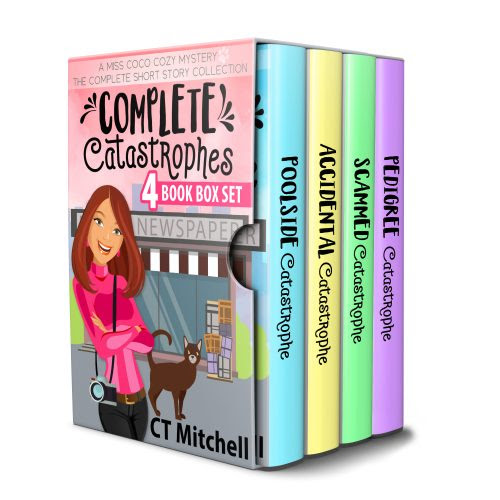
Book 1: Complete Catastrophes: A Miss Coco Cozy Mystery
Start with something light and fun. These cozy mysteries are designed to be quick, enjoyable reads that ease you into the reading habit. The cheerful covers and engaging characters make this perfect for building positive associations with reading.
Book 2: Murder and the Mechanic
A charming cozy mystery that proves reading doesn’t have to be intimidating. At under 100 pages, you’ll finish this in one or two sittings, giving you that crucial first “I finished a book!” moment.
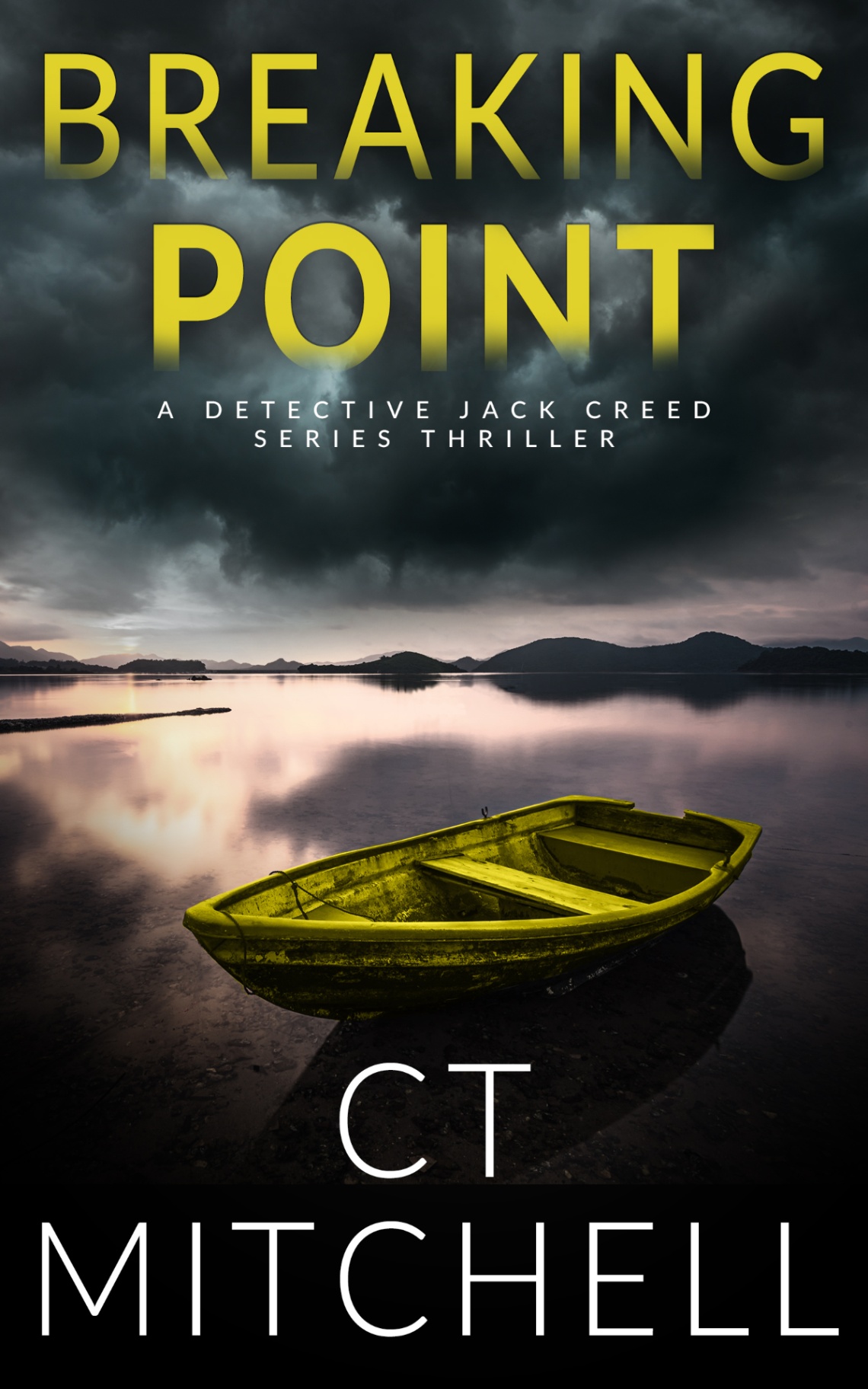
Book 3: Breaking Point
Your first thriller: short enough to finish quickly but engaging enough to keep you turning pages. This builds your confidence that you can handle different genres and more intense storylines.
Week 2: Building Momentum (Books 4-6)
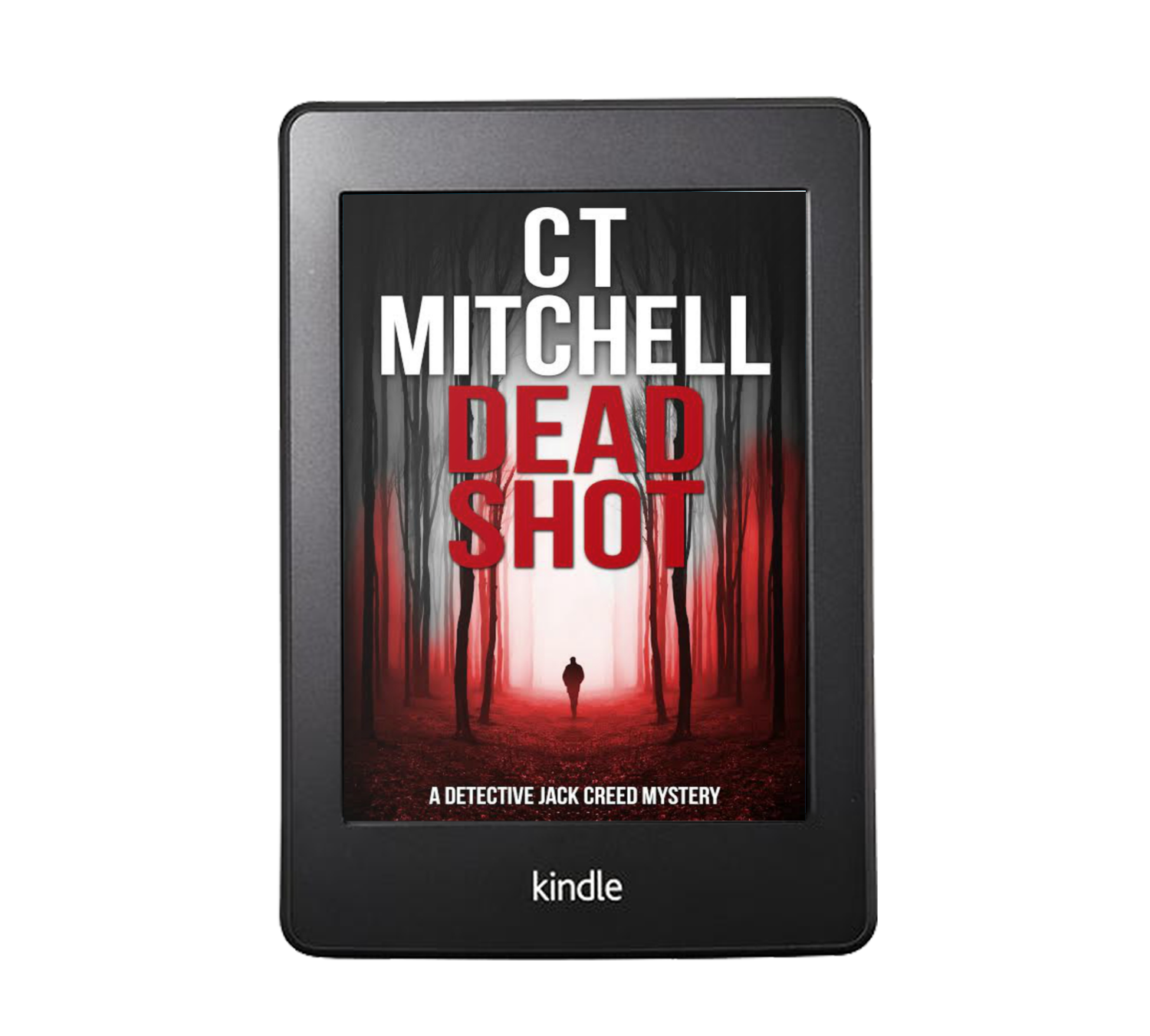
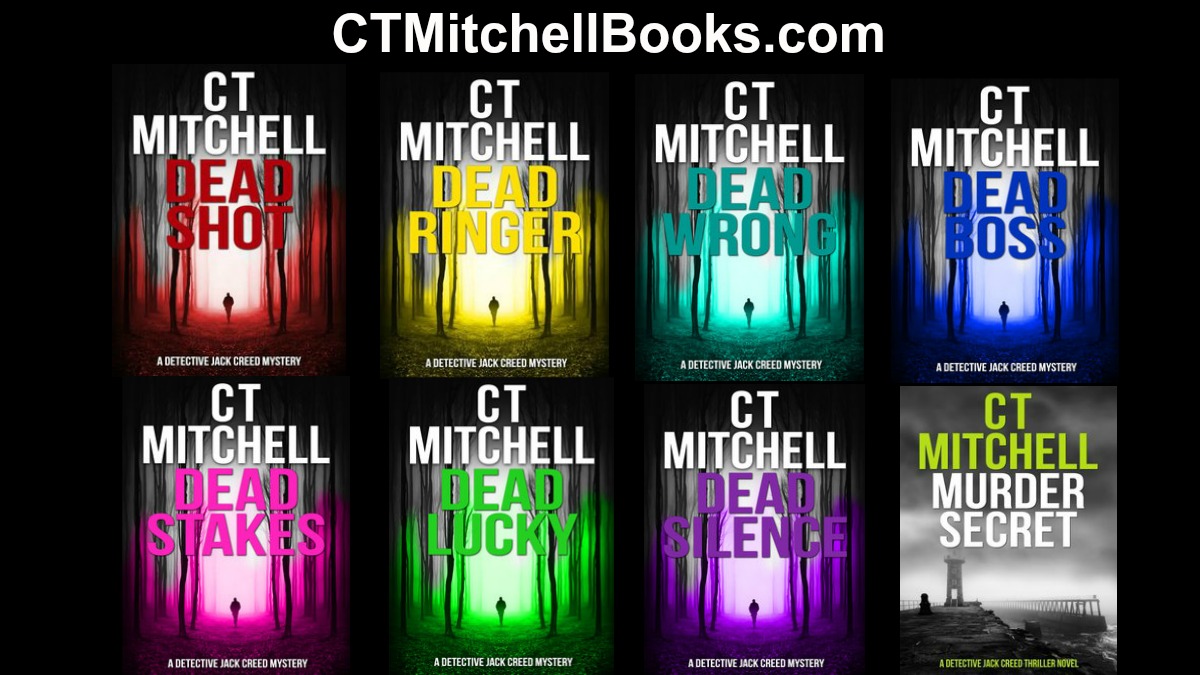
Book 4: Dead Shot (Detective Jack Creed #1) – FREE
Enter the world of Detective Jack Creed with this fast-paced mystery. Perfect length for building stamina while introducing you to series reading: something that will serve you well as you continue your reading journey.
Book 5: Murder and the Jewelry Box
Another cozy mystery that maintains your momentum while exploring different storytelling styles. You’re proving to yourself that you can consistently finish books.
Book 6: Dead Ringer (Detective Jack Creed #2)
Continue the Jack Creed series and experience the satisfaction of following character development across multiple books: a sign you’re becoming a “real reader.”
Week 3: Growing Confidence (Books 7-8)
Book 7: Dead Wrong (Detective Jack Creed #3)
By now, you’re comfortable with mystery series and ready for slightly more complex plots. This book challenges you just enough to build confidence without overwhelming you.
Book 8: Deadly Vows
Explore the cozy mystery subgenre with this engaging story. You’re no longer just “trying to read”: you’re actively choosing books you want to read.
Week 4: Solidifying Your Reader Identity (Books 9-10)
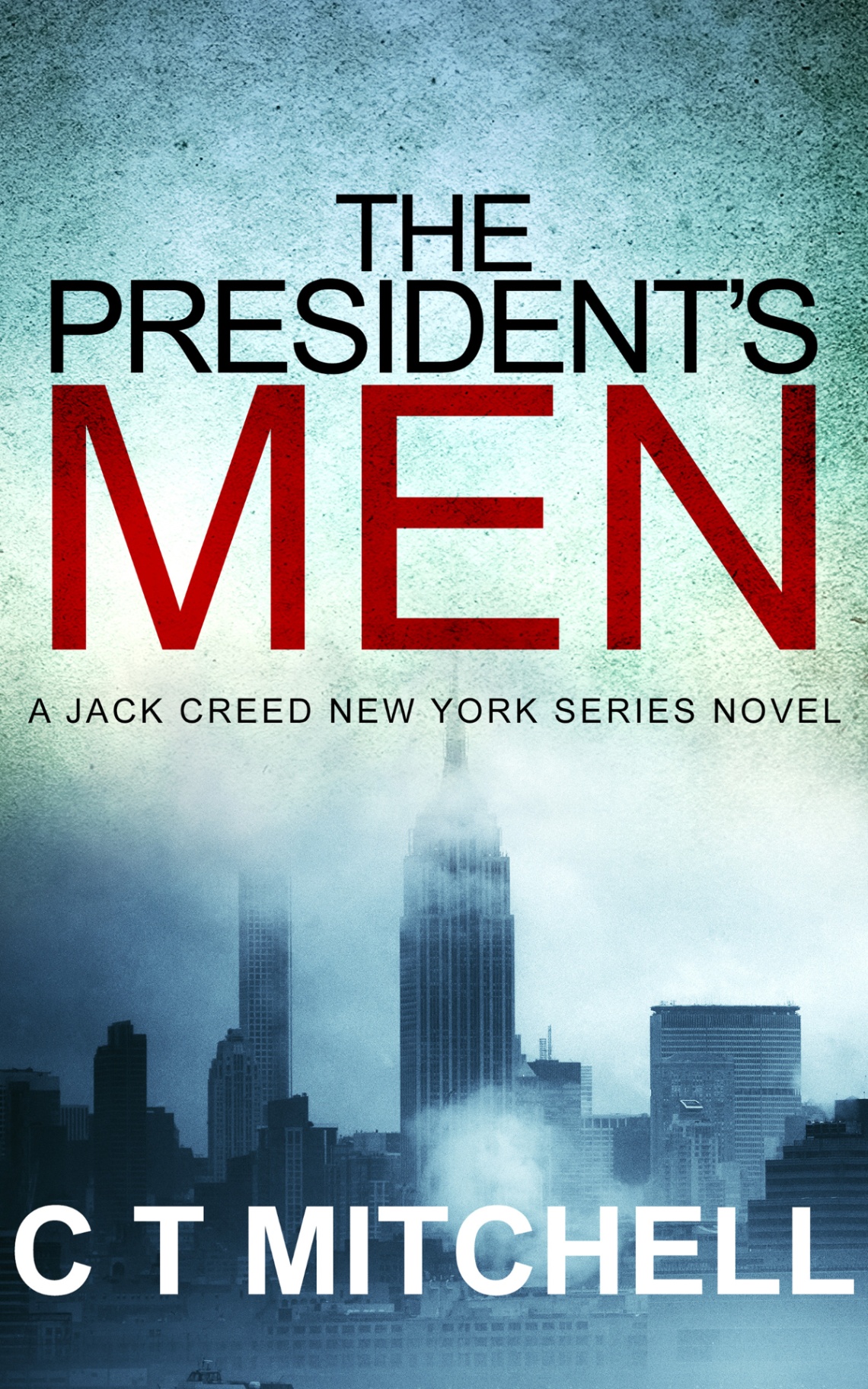
Book 9: The President’s Men (Jack Creed New York Series)
A slightly longer novella that proves you can handle more substantial stories. The New York setting adds sophistication to your reading repertoire.
Book 10: Murder and the Monk
End your challenge with this satisfying cozy mystery. By finishing this book, you’ll have read 10 complete stories in 30 days: something you might not have imagined possible when you started.
Your Week-by-Week Action Plan
Week 1: Foundation Building
- Read 15-20 minutes daily
- Focus on completing books, not speed
- Celebrate each finished book (seriously: do a little victory dance!)
Week 2: Routine Development
- Increase to 20-25 minutes daily
- Start noting what genres you prefer
- Join online reading communities for motivation
Week 3: Confidence Expansion
- Try reading in different locations
- Discuss books with friends or family
- Consider keeping a simple reading journal
Week 4: Identity Solidification
- Aim for 25-30 minutes daily
- Plan your next reading goals
- Realize you’ve become someone who reads regularly
What You’ll Gain Beyond Just Reading 10 Books
After 30 days, you won’t just have 10 books under your belt. You’ll have completely transformed your relationship with reading:
- Increased attention span: Short books gradually build your focus
- Genre awareness: You’ll know what you like (mysteries? thrillers? cozy stories?)
- Reading confidence: No more intimidation in bookstores or libraries
- Social benefits: You can participate in book conversations
- Mental stimulation: Regular reading exercises your brain
- Stress relief: Reading becomes your go-to relaxation activity
Most importantly, you’ll stop saying “I don’t read” and start saying “I’m working through a great mystery series.”
Your Reading Journey Starts Today
The difference between someone who “doesn’t read” and someone who “loves reading” isn’t talent or intelligence: it’s simply a series of successful reading experiences that build confidence and momentum.
These 10 C.T. Mitchell novellas are specifically chosen because they’re:
- Short enough to finish quickly (under 150 pages each)
- Engaging enough to keep you turning pages
- Varied enough to help you discover your preferences
- Complete stories that provide satisfaction
Don’t wait for the “perfect time” to start reading. Don’t worry about being a “slow reader” or not understanding everything. The only requirement is starting with one short book and finishing it.
Your transformation from non-reader to confident reader begins with turning the first page of Complete Catastrophes. In 30 days, you’ll look back amazed at how far you’ve come.
Ready to prove to yourself that you absolutely can be a reader? Start your 30-day challenge today with The Short Reads and discover the reader you’ve always been capable of becoming.
Your reading muscle is stronger than you think. You just need to start flexing it.
Share

7 Smart Ways to Discover Mystery Fiction for Men

Over 60 percent of busy readers say they are drawn to stories that keep them hooked without eating up their entire weekend. Mystery fiction stands out because it offers suspenseful escapes in every format, from quick novellas to intricate detective sagas. Whether you want a fast-paced adventure or an immersive puzzle to solve, there is a perfect mystery waiting for you. Discover practical ways to enjoy gripping mysteries that fit your lifestyle and reading taste.
Table of Contents
- 1. Try Short Mystery Novellas For Quick Reads
- 2. Explore Genres: Action, Cozy, And Detective Stories
- 3. Use Online Platforms For Easy Access
- 4. Pick Books With Strong Male Leads
- 5. Join Book Clubs For Shared Experiences
- 6. Choose Books With Simple, Fast-Paced Plots
- 7. Seek Recommendations From Mystery Lovers
Quick Summary
| Takeaway | Explanation |
|---|---|
| 1. Choose Short Mysteries for Quick Reads | Short novellas under 300 pages can be read in one weekend, offering thrilling entertainment in less time. |
| 2. Explore Different Mystery Subgenres | Discover variations like cozy, action, and detective stories to match your reading preferences and interests. |
| 3. Use Online Resources for Easy Access | Platforms like OverDrive and Project Gutenberg allow borrowing or accessing a wide variety of mystery novels digitally. |
| 4. Join Book Clubs for Enhanced Experiences | Participate in book clubs to share insights and discover new authors, enriching your mystery reading journey. |
| 5. Seek Personalized Recommendations | Engage with fellow readers online or in person for tailored mystery book suggestions based on specific interests. |
1. Try Short Mystery Novellas for Quick Reads
Want to dive into mystery fiction without committing weeks to a massive novel? Short mystery novellas are your perfect solution. These compact stories pack intense narratives and gripping plots into manageable page counts, making them ideal for busy readers seeking thrilling entertainment.
According to Bustle, there are excellent mystery novels under 300 pages that can be devoured in a single weekend. Books like “The Other Side of Everything” by Lauren Doyle Owens and “The Chalk Man” by C.J. Tudor demonstrate how short novels can deliver complex storytelling without demanding excessive time.
Why choose short mystery novellas? They offer several compelling advantages:
- Time Efficiency: Read a complete story in just a few hours
- Intense Storytelling: Compact narratives with concentrated suspense
- Perfect for Beginners: Less intimidating entry point into mystery fiction
- Weekend Reading: Finish an entire thrilling narrative in one sitting
To get started, look for novellas around 200 to 300 pages with strong narrative hooks. Check online recommendation lists, bookstore mystery sections, or top picks from TheShortReads.com for curated suggestions that match your interests.
Pro tip: Start with award-winning or critically acclaimed shorter mystery novels to ensure high quality storytelling. Your weekend reading just got a lot more exciting.
2. Explore Genres: Action, Cozy, and Detective Stories
Mystery fiction is not a one-size-fits-all genre. Different subgenres offer unique reading experiences tailored to your specific interests and preferences. From high-octane action stories to charming small-town mysteries, understanding these categories can help you find exactly the reading adventure you crave.
According to Wikipedia, detective fiction encompasses a rich landscape of narrative styles and storytelling approaches. This genre offers readers multiple entry points into mysterious worlds with varying levels of complexity and excitement.
Subgenres to Explore:
- Cozy Mysteries: Gentle, low-violence stories typically set in small towns with amateur sleuths. As Wikipedia explains, these mysteries focus more on puzzle solving than graphic details.
- Action Mysteries: Fast paced narratives with high stakes and intense plot developments
- Detective Stories: Traditional narratives following professional or amateur investigators solving complex cases
To find your perfect mystery subgenre, experiment with different styles. Visit local bookstores, browse mystery fiction types for learners, and read sample chapters. Pay attention to the narrative style, pacing, and character dynamics that most appeal to you.
Pro tip: Start with shorter novels in each subgenre to quickly determine your preferred mystery style without investing too much time. Your perfect mystery adventure awaits.
3. Use Online Platforms for Easy Access
Modern technology has transformed how we discover and consume mystery fiction. Online platforms provide unprecedented access to thousands of mystery novels without leaving your home, making reading more convenient than ever before.
OverDrive offers an incredible solution for readers by partnering with libraries worldwide. This digital platform allows you to borrow ebooks and audiobooks through your local library membership, giving you instant access to a vast selection of mystery novels right from your digital device.
Digital Reading Resources:
- Project Gutenberg: Free digital library with classic mystery works
- OverDrive: Library partnership platform for digital book borrowing
- Kindle Unlimited: Subscription service with extensive mystery collections
- Local Library Digital Platforms: Free book borrowing through online systems
Project Gutenberg provides an exceptional resource for readers interested in classic mystery fiction. Their collection includes complete works by legendary authors like Arthur Conan Doyle, offering free digital downloads of entire Sherlock Holmes series and other timeless mystery novels.
To get started, download these apps on your smartphone or tablet. Create accounts with your local library credentials or explore free platforms. Pro tip: Many libraries offer digital memberships that provide free access to extensive mystery fiction collections.
4. Pick Books with Strong Male Leads
If you are looking to dive into mystery fiction that resonates with male readers, focusing on books with compelling male protagonists can transform your reading experience. Strong male leads offer unique perspectives and engaging narratives that capture complex character dynamics.
Take the Nameless Detective series by Bill Pronzini, which Wikipedia highlights as a prime example of a gripping male investigative narrative. Set in San Francisco, this long running series showcases a private investigator navigating intricate mystery landscapes with depth and authenticity.
What Makes a Strong Male Lead:
- Complex Psychological Depth: Characters with nuanced inner worlds
- Professional Expertise: Protagonists skilled in investigation or related fields
- Moral Complexity: Characters who wrestle with ethical challenges
- Personal Growth: Leads who evolve through their investigative experiences
Contemporary mysteries like Richard Osman’s “The Man Who Died Twice”) demonstrate how modern male protagonists can be multidimensional. The novel features a former MI6 agent entangled in an intricate case involving stolen diamonds and international criminal networks, showcasing intelligence and strategic thinking.
To find your ideal mystery novel, explore book reviews, ask for recommendations at local bookstores, and sample different series. Focus on protagonists that intrigue you beyond surface level action.
5. Join Book Clubs for Shared Experiences
Book clubs offer more than just reading recommendations. They provide a dynamic social environment where mystery fiction enthusiasts can dive deep into complex narratives, share insights, and expand their literary horizons.
Benefits of Mystery Fiction Book Clubs:
- Discover New Authors: Members introduce books you might never find alone
- Deeper Understanding: Group discussions reveal hidden plot nuances
- Social Connection: Meet like-minded mystery fiction enthusiasts
- Accountability: Regular meetups keep you consistently reading
Whether online or in person, book clubs create opportunities to explore mystery fiction from multiple perspectives. You will encounter diverse interpretations of storylines, character motivations, and narrative techniques that enhance your reading experience.
To get started, explore local library book clubs, online reading platforms like Goodreads, or community centers that host genre specific groups. Check out our shop for potential mystery fiction recommendations you can suggest to your book club.
Pro tip: Look for book clubs specifically focused on mystery or thriller genres to ensure more targeted and engaging discussions. Your next great reading adventure might just begin with a group conversation.
6. Choose Books with Simple, Fast-Paced Plots
Not all mystery readers want complex literary puzzles. For those seeking quick entertainment, fast-paced plots with straightforward narratives can provide an exciting reading experience without demanding excessive mental energy.
Wikipedia highlights Rex Stout’s ‘Trouble in Triplicate’ as a prime example of concise storytelling. This collection of Nero Wolfe novellas demonstrates how compelling mysteries can unfold rapidly, keeping readers engaged through streamlined narratives.
Characteristics of Fast-Paced Mystery Novels:
- Clear Story Progression: Linear plots with minimal digressions
- Quick Character Development: Immediate understanding of key personalities
- Minimal Backstory: Focus on present action and immediate conflict
- Rapid Plot Resolution: Mysteries solved within compact narratives
Modern readers appreciate stories that respect their time. Short reads from our recommended list offer perfect alternatives for busy individuals wanting engaging mysteries without lengthy commitments.
Pro tip: Look for novellas or short mystery collections that promise direct storytelling. Authors like Rex Stout excel at creating intricate yet accessible stories that unfold quickly and maintain high entertainment value.
7. Seek Recommendations from Mystery Lovers
Some of the best mystery fiction discoveries happen through conversations with passionate readers who live and breathe the genre. Fellow enthusiasts can offer personalized recommendations that algorithms and generic lists simply cannot match.
LibraryThing hosts incredible online communities like the Mystery Lovers group where dedicated fans share their most compelling reads. These platforms provide interactive spaces where you can dive deep into nuanced book discussions and uncover hidden literary gems.
Ways to Connect with Mystery Fiction Enthusiasts:
- Online Reading Communities: LibraryThing, Goodreads discussion groups
- Local Library Book Clubs: In person mystery fiction meetups
- Reddit Mystery Fiction Subreddits: Passionate reader discussions
- Social Media Mystery Reader Groups: Facebook and Twitter communities
For more curated suggestions, explore mystery fiction short stories that can quickly introduce you to new authors and styles. Many mystery lovers are eager to share their favorite reads and can help you navigate the vast world of detective and thriller narratives.
Pro tip: Always ask specific questions about plot styles, pacing, and character development when seeking recommendations. The more details you provide about your reading preferences, the more targeted the suggestions will be.
This table summarizes key strategies and benefits of engaging with mystery fiction through various formats and methods discussed in the article.
| Topic | Description | Benefits |
|---|---|---|
| Short Mystery Novellas | Compact stories with intense narratives; examples include “The Other Side of Everything” and “The Chalk Man”. | Quick reads, efficient storytelling, ideal for busy readers. |
| Explore Genres | Includes cozy, action, and detective stories; each offers unique reading experiences. | Tailored reading adventures, exposure to various storytelling styles. |
| Online Platforms | Access thousands of mystery novels via digital resources like OverDrive, Project Gutenberg, and Kindle Unlimited. | Convenient access, vast selection, borrow books digitally. |
| Strong Male Leads | Focus on books with compelling male protagonists, such as the “Nameless Detective” series. | Engaging narratives, complex characters, unique perspectives. |
| Book Clubs | Join groups for shared reading experiences and discussions. | Discover new authors, gain deeper understanding, social connection. |
| Fast-Paced Plots | Choose books with straightforward narratives; examples like Rex Stout’s “Trouble in Triplicate”. | Quick entertainment, minimal mental energy required. |
| Recommendations | Connect with mystery fiction enthusiasts for personalized suggestions. | Discover hidden gems, targeted reading based on preferences. |
Discover Your Perfect Mystery Read Today
If you are looking to overcome the challenge of finding engaging mystery fiction tailored just for men you are not alone. Many readers struggle with picking the right subgenre or finding books with strong male leads that fit their busy lifestyles. This article highlighted key goals like choosing short mystery novellas for quick reads exploring cozy or action-packed styles and engaging with communities for personalized recommendations. At TheShortReads.com we understand how important it is to connect you with fast paced mysteries or thoughtful detective stories that fit your unique taste and time constraints.
Explore our collection of mystery fiction short reads where you will find handpicked cozy mysteries and action thriller novellas designed to deliver suspense and satisfaction in a minimum amount of time. Whether you want to dive into psychological thrillers or gripping murder mystery novellas find exactly what you need to jumpstart your next reading adventure. Join fellow fans who get the perfect blend of storytelling and pacing without the wait.
Ready to uncover your next favorite mystery? Start browsing now and take advantage of expertly curated short reads that respect your time and excite your imagination.
Unlock thrilling mysteries crafted for busy readers. Visit TheShortReads.com and choose your next captivating read today.
Frequently Asked Questions
What are the best ways to discover short mystery novellas for men?
Short mystery novellas are great for busy readers looking for quick, engaging stories. Look for novellas around 200 to 300 pages, especially from award-winning authors, and consider checking online recommendations or curated lists for tailored options.
How do I explore different subgenres of mystery fiction effectively?
To explore mystery fiction subgenres, read sample chapters from action mysteries, cozy mysteries, and detective stories. Experiment with different styles to see which ones resonate with you, and start with shorter novels to gauge your interest without a long-term commitment.
What are the benefits of joining a mystery fiction book club for men?
Joining a mystery fiction book club allows you to deepen your understanding of stories and characters while connecting with fellow enthusiasts. To get started, seek out local meets or online groups focused on mystery genres to enhance your reading experience and discover new titles.
How can I find recommendations from other mystery fiction lovers?
Connect with other mystery fiction enthusiasts through online reading communities, social media groups, or local library events. Engage in discussions and ask specific questions about mystery novels to receive tailored recommendations that match your interests.
What should I consider when choosing books with strong male leads?
When selecting mystery books with strong male leads, focus on characters with complex psychological depth and relatable moral dilemmas. Look for novels that showcase character development and situational challenges, which will enhance your reading experience.
How can I locate fast-paced mystery novels?
To find fast-paced mystery novels, look for books that feature concise storytelling and linear plots. Seek out novellas or collections that promise quick reads, ensuring you can enjoy engaging narratives without lengthy commitments.
Recommended
- Mystery Fiction – TheShortReads.com
- 6 Must-Know Mystery Short Stories Examples for Everyone – TheShortReads.com
- Understanding Mystery Fiction Terminology Explained – TheShortReads.com
- 7 Mystery Fiction Types for Learners and Busy Readers – TheShortReads.com


7 Essential Psychological Thriller Tips for Every Reader

Most psychological thrillers succeed or fail within the first few paragraphs. Readers expect to be gripped by a strong narrative hook, unsettling atmosphere, and unpredictable characters right away. Over 60 percent of readers decide whether to continue a book after just the opening page. If you want your psychological thriller to leave a lasting impression, you need strategies that draw readers in immediately and keep them guessing at every turn.
Table of Contents
- 1. Start With A Gripping Hook
- 2. Build Realistic But Unpredictable Characters
- 3. Use Pacing To Heighten Suspense
- 4. Create Unsettling Atmospheres And Settings
- 5. Plant Clever Red Herrings And Twists
- 6. Explore Deep Motivations And Backstories
- 7. End With A Memorable, Thought-Provoking Reveal
Quick Summary
| Takeaway | Explanation |
|---|---|
| 1. Start with a compelling hook | Create an opening that instantly engages readers and sparks curiosity about the psychological narrative. |
| 2. Develop unpredictable, realistic characters | Characters should possess internal conflicts and complex motivations, making them surprising and relatable. |
| 3. Master narrative pacing | Vary the speed of storytelling to intensify suspense and maintain reader engagement throughout the thriller. |
| 4. Create unsettling atmospheres | Transform settings into integral parts of the narrative that reflect characters’ psychological states and evoke tension. |
| 5. Include clever red herrings and twists | Use misdirection strategically to keep readers guessing, ensuring plot developments reshape their understanding. |
1. Start With a Gripping Hook
Ever wondered how some psychological thrillers grab your attention from the very first sentence? The secret lies in crafting a compelling narrative opening that immediately pulls readers into the story’s psychological landscape. According to MasterClass, creating an engaging hook is fundamental to establishing the suspenseful tone that defines psychological thrillers.
A gripping hook works by triggering immediate curiosity and emotional investment. This means introducing an unexpected scenario, an intriguing character conflict, or a mysterious circumstance that makes readers feel they absolutely must know what happens next. Think of it as a psychological invitation that compels your audience to keep turning pages.
To create a powerful hook, consider these strategic approaches:
- Start with a provocative internal thought that reveals character complexity
- Introduce an unexplained event that suggests deeper psychological tension
- Present a seemingly ordinary situation with an underlying sense of unease
- Open with dialogue that hints at hidden motivations or underlying conflicts
The goal is not just to surprise but to create an immediate sense of psychological depth. By establishing narrative tension from the first paragraph, you signal to readers that they are embarking on an intense mental journey where nothing is quite as it seems. Pulitzer Center recommends experimenting with different hook techniques to discover what resonates most powerfully with your specific story and audience.
Remember that a great hook is like a psychological handshake. It introduces the reader to the story’s emotional world, inviting them to lean in closer and explore the intricate mental landscapes you’ve created.
2. Build Realistic but Unpredictable Characters
Psychological thrillers live and die by their characters. Character complexity is the heartbeat of a truly engaging narrative that keeps readers guessing. According to research from Arxiv, developing multidimensional characters requires strategic psychological mapping that goes beyond simple stereotypes.
Realistic characters are not just collections of traits but living psychological ecosystems with hidden motivations and internal conflicts. Think of them as emotional labyrinths where surface behaviors mask deeper psychological currents. A truly unpredictable character feels authentic precisely because their actions emerge from complex inner landscapes rather than plot convenience.
To create characters that feel both believable and surprising, consider these approaches:
- Design characters with clear internal contradictions
- Create backstories that explain but do not entirely justify behavior
- Allow characters to make choices that challenge reader expectations
- Develop nuanced emotional responses that defy simple categorization
Research from Persona-Guided Planning suggests that understanding a character’s core persona becomes crucial in generating authentic narrative interactions. This means knowing not just what your character might do but why they would do it.
The magic happens when readers recognize something human and true in your characters while simultaneously feeling unsure about their next move. Your goal is to craft psychological portraits that are simultaneously familiar and mysterious two steps ahead of what anyone would anticipate.
3. Use Pacing to Heighten Suspense
Suspense is an art form where time becomes your most powerful narrative weapon. Narrative pacing transforms a good psychological thriller into an extraordinary reading experience that keeps readers breathless and anxious. As Killer Nashville explains, mastering pacing means learning to control narrative speed like a psychological conductor.
Effective pacing is not about constant intensity but strategic variation. Imagine your narrative as a musical composition where moments of quiet tension alternate with sudden bursts of revelation. Some scenes demand slow burning psychological exploration while others require rapid heart racing progression. This deliberate rhythm creates an emotional rollercoaster that keeps readers constantly engaged.
To implement sophisticated pacing techniques, consider these strategies:
- Alternate between slower introspective scenes and quick action sequences
- Use shorter sentences during high tension moments
- Introduce unexpected plot twists at calculated intervals
- Develop character depth during slower narrative sections
According to Jack Allen, controlling narrative speed allows writers to manipulate reader emotions with surgical precision. The key is understanding that suspense lives in the spaces between events not just in the events themselves.
Understanding pacing means recognizing that psychological thrillers are not about constant action but about creating an immersive experience where readers feel perpetually uncertain about what might happen next. For readers interested in exploring more about building narrative tension, our guide on understanding suspense in fiction offers deeper insights into this complex storytelling technique.
4. Create Unsettling Atmospheres and Settings
In psychological thrillers, settings are more than mere backdrops. They are living psychological landscapes that breathe tension into every scene. Atmospheric storytelling transforms ordinary spaces into emotional minefields where readers feel an omnipresent sense of unease. According to Wikipedia, crafting unsettling atmospheres means strategically exposing psychological vulnerabilities within specific environments.
The most compelling settings do not just describe physical spaces but reveal hidden emotional territories. A seemingly normal suburban house can become a prison of psychological terror. An empty office corridor can pulse with unspoken menace. The goal is to make your setting feel like an additional character with its own disturbing personality.
To create truly unsettling atmospheres, consider these strategic approaches:
- Use sensory details that suggest something is fundamentally wrong
- Incorporate subtle environmental details that hint at hidden psychological tensions
- Contrast peaceful external settings with internal character turmoil
- Introduce small unexplained environmental anomalies
Oxford University emphasizes that effective settings in psychological thrillers are not just locations but psychological projections that mirror characters inner emotional landscapes. Each environment should feel charged with unresolved emotional energy.
Mastering atmospheric storytelling means understanding that true psychological tension emerges not from what is explicitly shown but from the subtle implications lurking between descriptions. Your setting becomes a silent narrator whispering uncomfortable truths just beyond the reader’s immediate perception.
5. Plant Clever Red Herrings and Twists
The art of psychological thrillers lies in keeping readers guessing until the very last page. Narrative misdirection transforms storytelling from predictable to pulse racing, creating an intellectual game between writer and reader. Medium highlights how strategic plot manipulation can transform an ordinary narrative into an extraordinary reading experience.
Red herrings are not about cheap tricks but sophisticated psychological manipulation. They work by presenting seemingly logical explanations that ultimately prove false. Think of them as narrative smoke screens that obscure the true story while simultaneously revealing deeper psychological truths about characters and their motivations.
To craft compelling red herrings and plot twists, consider these strategic techniques:
- Create multiple plausible suspects with equally convincing motives
- Introduce characters with complex backstories that invite multiple interpretations
- Provide partial information that seems conclusive but is deliberately misleading
- Develop plot threads that seemingly resolve then suddenly unravel
Research from the International Journal of Novel Research underscores that effective misdirection is not about fooling readers but about creating psychological labyrinths where multiple narrative possibilities coexist. The most brilliant twists do not just surprise they retroactively reframe everything readers thought they understood.
Mastering red herrings means understanding that true suspense emerges not from shock value but from the delicate balance between revelation and concealment. Your goal is to create a narrative experience where readers feel simultaneously frustrated and thrilled by their own inability to predict what comes next.
6. Explore Deep Motivations and Backstories
Psychological thrillers are not about what characters do but why they do it. Every action stems from a complex emotional landscape shaped by past experiences trauma and hidden desires. Arxiv Research reveals that understanding character networks means peeling back layers of psychological complexity far beyond surface level interactions.
Backstories are not mere historical footnotes but psychological blueprints that explain human behavior. Imagine each character carrying an invisible emotional map where past traumas unresolved conflicts and secret motivations intersect. These hidden narratives transform characters from two dimensional figures into breathing psychological ecosystems with their own intricate logic.
To create compelling character motivations, consider these strategic approaches:
- Develop detailed personal histories that explain current psychological states
- Explore childhood experiences that shaped characters fundamental worldviews
- Create connections between past traumas and present behavioral patterns
- Reveal motivations through subtle character interactions not explicit explanations
According to Wikipedia’s Affective Disposition Theory, audiences engage most deeply when they understand the moral and psychological reasoning behind characters actions. This means crafting backstories that are not just interesting but psychologically authentic. For readers looking to dive deeper into narrative structure, our guide on short story structure offers additional insights into creating memorable character arcs.
True psychological depth emerges when backstories become living breathing entities that explain behavior without entirely justifying it. Your goal is to create characters so nuanced that readers simultaneously understand and question their choices.
7. End With a Memorable, Thought-Provoking Reveal
The final moments of a psychological thriller are not just an ending but a psychological detonation that reshapes everything readers thought they understood. Narrative revelation transforms the entire reading experience from a simple story into a profound exploration of human complexity. MasterClass emphasizes that a truly exceptional ending does more than resolve plot points it challenges readers fundamental understanding of character and motivation.
A memorable reveal is not about shock value but about creating a moment of profound psychological insight. Imagine an ending that does not just surprise but fundamentally recontextualizes every previous narrative moment. It is like watching a kaleidoscope suddenly shift revealing an entirely different pattern from the same pieces you have been examining.
To craft a compelling psychological thriller conclusion, consider these strategic approaches:
- Create reveals that reframe previous narrative events
- Ensure the ending feels both unexpected and inevitable
- Connect the final revelation to deeper psychological themes
- Leave room for moral ambiguity and reader interpretation
Killer Nashville underscores that the most powerful endings do not provide complete closure but invite continued psychological exploration. For readers interested in diving deeper into crafting compelling narratives, our short mystery writing tips offer additional insights into creating memorable story conclusions.
The ultimate goal of a psychological thriller is not to provide answers but to provoke questions. Your final reveal should feel like a mirror reflecting not just the characters inner world but the readers own complex psychological landscape.
Below is a comprehensive table summarizing the critical elements of crafting psychological thrillers discussed throughout the article.
| Key Element | Description | Strategies & Considerations |
|---|---|---|
| Gripping Hook | Creating a captivating opening that draws readers in immediately. | Use unexpected scenarios, intriguing conflicts, or mysterious circumstances. |
| Realistic, Unpredictable Characters | Developing characters with depth and complexity. | Design internal contradictions and unpredictable choices that defy stereotypes. |
| Pacing to Heighten Suspense | Using narrative pacing to maintain reader interest and control tension. | Alternate between slow introspection and quick action sequences. |
| Unsettling Atmospheres and Settings | Crafting settings that enhance the psychological tension of the story. | Use sensory details and small anomalies to create unease. |
| Clever Red Herrings and Twists | Creating narrative misdirection to keep readers engaged. | Introduce plausible suspects and misleading information. |
| Deep Motivations and Backstories | Exploring the underlying reasons for character behaviors. | Develop detailed histories and connections between past and present actions. |
| Memorable, Thought-Provoking Reveal | Crafting an ending that challenges and intrigues the reader. | Create reveals that reframe the story and connect to deeper themes. |
Unlock the Secrets of Psychological Thrillers with ShortReads
If you are fascinated by psychological depth, unpredictable characters, and suspenseful pacing as highlighted in the “7 Essential Psychological Thriller Tips for Every Reader” article, then you know how challenging it can be to find stories that truly capture these elements in a quick, powerful format. The need for immersive yet concise reads that feed your craving for unsettling atmospheres, clever twists, and mind-bending reveals is real.
Dive right into our collection of psychological thriller short reads crafted to deliver that intense, heart-racing experience in just minutes. Whether you’re seeking to sharpen your narrative instincts or simply indulge in gripping tales, our selection offers exactly what the article describes: multi-layered characters, expert pacing, and rich emotional landscapes. Start your journey now on TheShortReads.com and see why readers trust us for short stories that keep you guessing until the very end. Also explore our short mystery writing tips and guide on understanding suspense in fiction to deepen your appreciation of the craft.
Experience the thrill that only true psychological storytelling can provide. Visit our site and let every short read challenge your mind and stir your soul today.
Frequently Asked Questions
How can I create a gripping hook for my psychological thriller?
A gripping hook should immediately captivate your audience. Start with a provocative thought, an intriguing conflict, or an unexplained event that ignites curiosity and emotional engagement. Experiment with different opening techniques until you find one that resonates with your story and audience.
What should I consider when building characters in a psychological thriller?
Focus on developing realistic but unpredictable characters that have complex motivations and internal conflicts. Create backstories that explain their behaviors while allowing room for surprises. Dive deep into their emotional landscapes to ensure they feel authentic and multidimensional.
How can I effectively use pacing to heighten suspense in my story?
Control narrative pacing by alternating between slower, introspective moments and fast-paced, action-heavy scenes. Use shorter sentences during tense moments to create urgency, and strategically place twists throughout to keep readers on their toes. Aim for a rhythm that makes readers feel constantly engaged and anxious about what happens next.
What techniques can I use to create an unsettling atmosphere in my thriller?
Infuse your settings with sensory details that evoke a sense of wrongness or unease. Describe environments in ways that shine a light on hidden tensions within the story. Think of your setting as a character that reflects the emotional state of your protagonists, enhancing the overall psychological tension.
How can I develop compelling red herrings and twists in my narrative?
Introduce narrative misdirection by creating multiple plausible suspects and complex backstories that mislead readers. Provide partial information that seems conclusive but is designed to be misleading. Craft plot threads that appear to resolve but ultimately unravel, keeping your audience guessing until the very end.
What elements make for a memorable ending in a psychological thriller?
Aim for an ending that recontextualizes everything the reader has understood throughout the story. Ensure the final reveal is unexpected yet feels inevitable, connecting back to deeper psychological themes. Leave the reader with moral ambiguity that invites further thought and discussion.
Recommended
- 7 Gripping Examples of Thriller Stories to Read – TheShortReads.com
- Psychological Thriller – TheShortReads.com
- Thriller Fiction –
- Understanding Why Suspense Matters in Storytelling – TheShortReads.com
Article generated by BabyLoveGrowth
Share

7 Mystery Fiction Types for Learners and Busy Readers

Over 80 percent of modern readers struggle to find books that fit into their hectic lives. If you crave suspense and intrigue but do not have hours for lengthy novels, short mystery and thriller reads deliver the bite-sized excitement you need. This guide introduces a range of quick reads, from gentle cozy mysteries to gripping action thrillers, helping you discover stories that satisfy your curiosity and fit your schedule.
Table of Contents
- Explore Cozy Mystery Short Reads For Gentle Suspense
- Try Action Thriller Novellas For Fast-Paced Stories
- Dive Into Psychological Thriller Short Reads For Twists
- Learn With Political Thriller Novellas For Real-World Plots
- Choose Mystery Fiction Short Reads For Quick Enjoyment
- Unlock Murder Mystery Novellas For Classic Whodunits
- Start With Detective Short Reads For Puzzle Solving Skills
Quick Summary
| Takeaway | Explanation |
|---|---|
| 1. Choose cozy mysteries for gentle suspense. | Cozy mystery short reads offer engaging stories focusing on clever detective work without graphic violence, ideal for a relaxed reading experience. |
| 2. Opt for action thrillers for quick excitement. | Action thriller novellas provide fast-paced narratives that deliver intense excitement in a short format, perfect for limited reading time. |
| 3. Explore psychological thrillers for deep character insight. | Psychological thrillers present complex characters and unexpected twists that challenge readers’ perceptions within a concise narrative. |
| 4. Read political thrillers for condensed real-world insights. | Political thriller novellas allow readers to understand intricate political dynamics through engaging storytelling without lengthy commitments. |
| 5. Enjoy detective stories to enhance problem-solving skills. | Detective short reads are intellectually stimulating and encourage analytical thinking, making reading an active and enriching experience. |
1. Explore Cozy Mystery Short Reads for Gentle Suspense
Imagine solving a captivating crime without encountering graphic violence or intense psychological trauma. Welcome to the world of cozy mystery short reads. These delightful narratives offer readers a unique approach to crime fiction that prioritizes clever detective work and charming community settings over shocking brutality.
Cozy mysteries represent a softer side of detective storytelling. According to Wikipedia, these stories are characterized by amateur sleuths working in intimate, often small town environments to unravel intriguing criminal puzzles. The focus is less on violence and more on intellectual problem solving and community dynamics.
Why Cozy Mysteries Are Perfect for Busy Readers:
- Short length allows quick reading during breaks
- Minimal violence makes them emotionally comfortable
- Engaging plots that stimulate mental problem solving
- Warm community settings provide relaxing narrative experience
These gentle suspense stories typically feature intelligent protagonists who solve crimes through observation observation, local knowledge, and smart deduction rather than physical confrontation. Whether you are a senior reader seeking lighter entertainment or a busy professional wanting an engaging yet non stressful reading experience, cozy mystery short reads offer the perfect literary escape. Cozy Mystery Fiction provides an excellent gateway into this charming genre for those looking to explore a more nuanced approach to mystery storytelling.
2. Try Action Thriller Novellas for Fast-Paced Stories
If you are a busy reader craving high octane storytelling without the commitment of a full length novel, action thriller novellas are your perfect literary match. These compact narratives deliver heart racing excitement in a condensed format that fits seamlessly into your hectic schedule.
What Makes Action Thriller Novellas Unique:
- Intense storylines packed into fewer pages
- Quick reading experience
- Perfect for commutes and short breaks
- High energy narrative momentum
As Wikipedia highlights, authors like Ed Lynskey specialize in hardboiled crime and noir fiction characterized by fast paced action driven narratives. These stories provide readers with rapid plot progression and immediate engagement without sacrificing narrative depth.
Action thriller novellas excel at delivering concentrated storytelling. They capture the essence of suspense through crisp writing and dynamic character interactions. 7 Gripping Examples of Thriller Stories can help readers discover the rich world of compact thriller fiction.
For readers juggling multiple responsibilities or seeking a quick adrenaline boost, these novellas offer an ideal solution. They transform short reading windows into thrilling adventures that keep you on the edge of your seat while respecting your limited time.
3. Dive Into Psychological Thriller Short Reads for Twists
Psychological thriller short reads offer a mind bending journey into the complex inner worlds of characters where nothing is quite as it seems. These compact narratives deliver intense psychological exploration and unexpected plot twists that will keep you guessing until the final page.
What Makes Psychological Thriller Short Reads Compelling:
- Rapid psychological character development
- Intense narrative momentum
- Surprising plot revelations
- Compact storytelling format
According to Wikipedia), authors like Edith Maxwell demonstrate how mystery writers can craft stories with profound psychological depth and surprising narrative turns. These short reads excel at creating intricate mental landscapes where characters inner motivations become as suspenseful as external plot events.
Psychological thriller short reads are perfect for readers who want to explore complex human psychology without investing significant time. They transform brief reading windows into immersive experiences that challenge perceptions and reveal the intricate layers of human behavior. Psychological Thriller resources can help readers discover these captivating narrative experiences.
Whether you have a quick commute or limited reading time, these novellas provide a concentrated burst of psychological intrigue that will stimulate your mind and challenge your expectations about storytelling.
4. Learn With Political Thriller Novellas for Real-World Plots
Political thriller novellas offer a compact yet powerful window into complex global dynamics where intrigue meets reality. These condensed narratives provide busy readers an opportunity to explore intricate political landscapes without investing weeks of reading time.
Why Political Thriller Novellas Matter:
- Condensed global political insights
- Quick reading experience
- Real world plot inspirations
- Engaging storytelling format
According to Wikipedia, political thrillers focus on power struggles, espionage, and political intrigue that often mirror contemporary global tensions. These novellas transform complex geopolitical scenarios into accessible narratives that educate while entertaining.
The unique format of political thriller novellas allows readers to dive deep into nuanced political scenarios within a shorter reading window. Political Thrillers provide an exceptional platform for understanding global political dynamics through compelling storytelling.
For professionals, students, or curious readers wanting to understand international relations and political mechanisms without academic textbooks, these novellas offer an engaging alternative. They translate complex political concepts into human stories that reveal the emotional and strategic dimensions behind global events.
5. Choose Mystery Fiction Short Reads for Quick Enjoyment
Mystery fiction short reads are the ultimate solution for busy readers craving intellectual stimulation without extensive time commitment. These compact narratives deliver intricate puzzles and compelling storylines in bite sized formats perfect for modern lifestyles.
Benefits of Mystery Fiction Short Reads:
- Complete stories in minimal reading time
- Perfect for commutes and short breaks
- Diverse narrative experiences
- Low time investment high entertainment value
According to Wikipedia, short stories excel at delivering compelling narratives within a concise format. These literary gems transform limited reading windows into immersive mystery experiences that engage and entertain without overwhelming readers.
Anthologies provide an exceptional way to explore multiple mystery styles and authors quickly. 6 Must-Know Mystery Short Stories Examples can help readers discover the rich world of compact mystery fiction.
Whether you have a 15 minute coffee break or a quick commute, mystery fiction short reads offer a perfect escape. They provide intellectual challenge narrative excitement and complete storytelling experiences tailored for readers with dynamic lifestyles who refuse to compromise on quality entertainment.
6. Unlock Murder Mystery Novellas for Classic Whodunits
Murder mystery novellas represent the perfect sweet spot for readers who love intricate crime puzzles without the commitment of a lengthy novel. These compact narratives deliver the full excitement of classic detective stories in a streamlined format that fits perfectly into busy reading schedules.
Why Murder Mystery Novellas Shine:
- Condensed complex plot structures
- Quick resolution of criminal puzzles
- Perfect for analytical readers
- Minimal time investment maximum entertainment
According to Wikipedia, whodunits focus intensely on the central puzzle of identifying the criminal. Murder mystery novellas excel at presenting these intricate investigations within a more concentrated narrative framework that keeps readers guessing until the final reveal.
The compact nature of these novellas transforms reading into an intellectual game where every page brings you closer to solving the mystery. Detective Fiction offers readers a gateway into these engaging narrative experiences.
For puzzle lovers professionals and anyone who enjoys mental challenges murder mystery novellas provide the ultimate reading experience. They combine intellectual stimulation narrative complexity and quick resolution into one perfectly crafted storytelling package.
7. Start With Detective Short Reads for Puzzle Solving Skills
Detective short reads are the ultimate brain training ground for readers who want to sharpen their analytical thinking while enjoying compelling narratives. These compact stories transform reading into an intellectual exercise where every page becomes a puzzle waiting to be solved.
Detective Short Reads Supercharge Your Problem Solving:
- Quick mental challenges
- Develop critical thinking skills
- Improve pattern recognition
- Enhance logical reasoning abilities
According to Wikipedia, detective fiction centers on investigating crimes through methodical observation and deductive reasoning. Short detective stories compress these investigative journeys into bite sized narratives that challenge readers to think like detectives.
The concentrated format of these stories demands active reader participation. Understanding Mystery Fiction Terminology can help readers develop a deeper appreciation for the intricate mechanics of detective storytelling.
Whether you are a professional seeking mental stimulation or a student looking to enhance cognitive skills these detective short reads offer more than entertainment. They are cognitive workouts disguised as fascinating stories that transform passive reading into an active problem solving experience.
Below is a comprehensive table summarizing the different genres of short reads discussed throughout the article.
| Genre | Key Features | Best For |
|---|---|---|
| Cozy Mystery Short Reads | Clever detective work, minimal violence, charming settings | Busy readers seeking gentle suspense |
| Action Thriller Novellas | Intense and fast-paced, compact, high energy | Readers wanting quick adrenaline boosts |
| Psychological Thriller Short Reads | Rapid character development, plot twists, psychological depth | Those interested in complex psychology |
| Political Thriller Novellas | Real-world plots, political intrigue, global dynamics | Professionals or students of political science |
| Mystery Fiction Short Reads | Intricate puzzles, varied narratives, compact stories | Readers needing quick intellectual engagement |
| Murder Mystery Novellas | Classic whodunits, focused on plot puzzles | Analytical readers loving crime challenges |
| Detective Short Reads | Brain exercises, deductive reasoning, critical thinking | Individuals sharpening problem-solving skills |
Discover Your Perfect Mystery Fiction Companion for Busy Lives
Struggling to find engaging mystery fiction that fits your busy schedule and sharpens your mind at the same time You are not alone. The article highlights how busy readers and learners juggle limited reading time but crave captivating stories like cozy mysteries, psychological thrillers, and detective short reads each offering unique intellectual challenges without overwhelming commitment. If the challenge is finding quality, bite sized stories that deliver suspense, mystery, and mental stimulation then exploring curated collections of cozy mystery short reads and psychological thriller short reads can be a game changer.
Unlock the world of mystery fiction that respects your time and enriches your mind. Visit TheShortReads.com today to browse expertly chosen novellas and short stories crafted for learners and busy readers alike. Dive into genres like murder mystery novellas or action thriller novellas and transform short reading sessions into rewarding adventures. Don’t wait—engage your detective instincts and unravel mysteries one short story at a time.
Frequently Asked Questions
What are cozy mystery short reads, and how can they benefit busy readers?
Cozy mystery short reads are charming detective stories that focus on intellectual problem-solving without graphic violence. These stories are ideal for busy readers as they can be enjoyed in short time slots, such as during breaks or commutes.
How do action thriller novellas differ from longer novels?
Action thriller novellas are concise narratives that deliver high-energy storytelling in a compact format. Readers can complete these novellas quickly, making them suitable for those with tight schedules who still desire an adrenaline-filled reading experience.
What elements make psychological thriller short reads engaging?
Psychological thriller short reads include intense character development and surprising plot twists that keep readers on their toes. By reading these short pieces, you can enjoy a deep psychological exploration without a significant time commitment.
How can political thriller novellas provide insight into real-world scenarios?
Political thriller novellas offer condensed narratives that explore complex political dynamics and global issues. Reading these stories can enhance your understanding of current geopolitical themes, allowing you to grasp significant concepts in just a few hours.
Why are detective short reads effective for improving problem-solving skills?
Detective short reads challenge readers to engage in analytical thinking and deduction as they piece together clues. By dedicating a few moments each day to these narratives, you can sharpen your critical thinking skills and enjoy a rewarding intellectual exercise.
Recommended
- Understanding Mystery Fiction Terminology Explained – TheShortReads.com
- 6 Must-Know Mystery Short Stories Examples for Everyone – TheShortReads.com
- Blog
- Mystery Fiction – TheShortReads.com
Article generated by BabyLoveGrowth
Share

Themes in Psychological Thrillers: Complete Guide

Over 60 percent of bestselling thrillers tap into psychological tension rather than physical action. The appeal of psychological thrillers runs deep because they explore the mysteries of the mind, leaving readers questioning reality and their own perceptions. These stories stand out by pushing boundaries, spotlighting unreliable narrators, blurred realities, and moral dilemmas. Discover how the most gripping psychological thrillers use these powerful themes to keep you on the edge of your seat.
Table of Contents
- Defining Themes In Psychological Thrillers
- Common Motifs And Recurring Patterns
- Psychological Manipulation And Unreliable Narrators
- Moral Ambiguity And Human Nature
- Impact On Reader Experience And Genre Trends
Key Takeaways
| Point | Details |
|---|---|
| Complexity of Psychology | Psychological thrillers explore intricate mental landscapes, focusing on characters’ internal struggles rather than external actions. |
| Narrative Techniques | Techniques like unreliable narrators and non-linear storytelling create psychological tension and engage readers’ intellect. |
| Moral Ambiguity | The genre challenges traditional notions of right and wrong, presenting characters in morally complex situations that reflect human nature. |
| Evolving Genre Trends | Technological advancements and societal anxieties have shaped modern psychological thrillers, making them increasingly immersive and reflective of contemporary issues. |
Defining Themes in Psychological Thrillers
Psychological thrillers represent a complex narrative genre that delves deep into human consciousness, exploring the intricate landscape of mental and emotional experiences. According to Wikipedia, these stories combine elements of thriller and psychological fiction, focusing intensely on characters’ mental states and the nuanced complexities of human psychology.
At their core, psychological thrillers are distinguished by their profound examination of internal human struggles. StudySmarter highlights that these narratives often employ sophisticated techniques like unreliable narrators and non-linear storytelling to create an atmosphere of sustained psychological tension. The primary aim is not merely to entertain, but to challenge readers’ perceptions of reality and truth.
Key themes in psychological thrillers frequently include:
- Blurred boundaries between reality and perception
- Exploration of individual identity and psychological transformation
- Moral ambiguity and ethical dilemmas
- Psychological isolation and internal conflict
- The fragility of human perception and memory
These narratives are less about external action and more about the intricate psychological journeys characters undertake. They invite readers to question fundamental assumptions about consciousness, presenting characters who are often wrestling with complex internal landscapes. By focusing on psychological depth, these stories transform traditional thriller conventions into profound explorations of human nature.
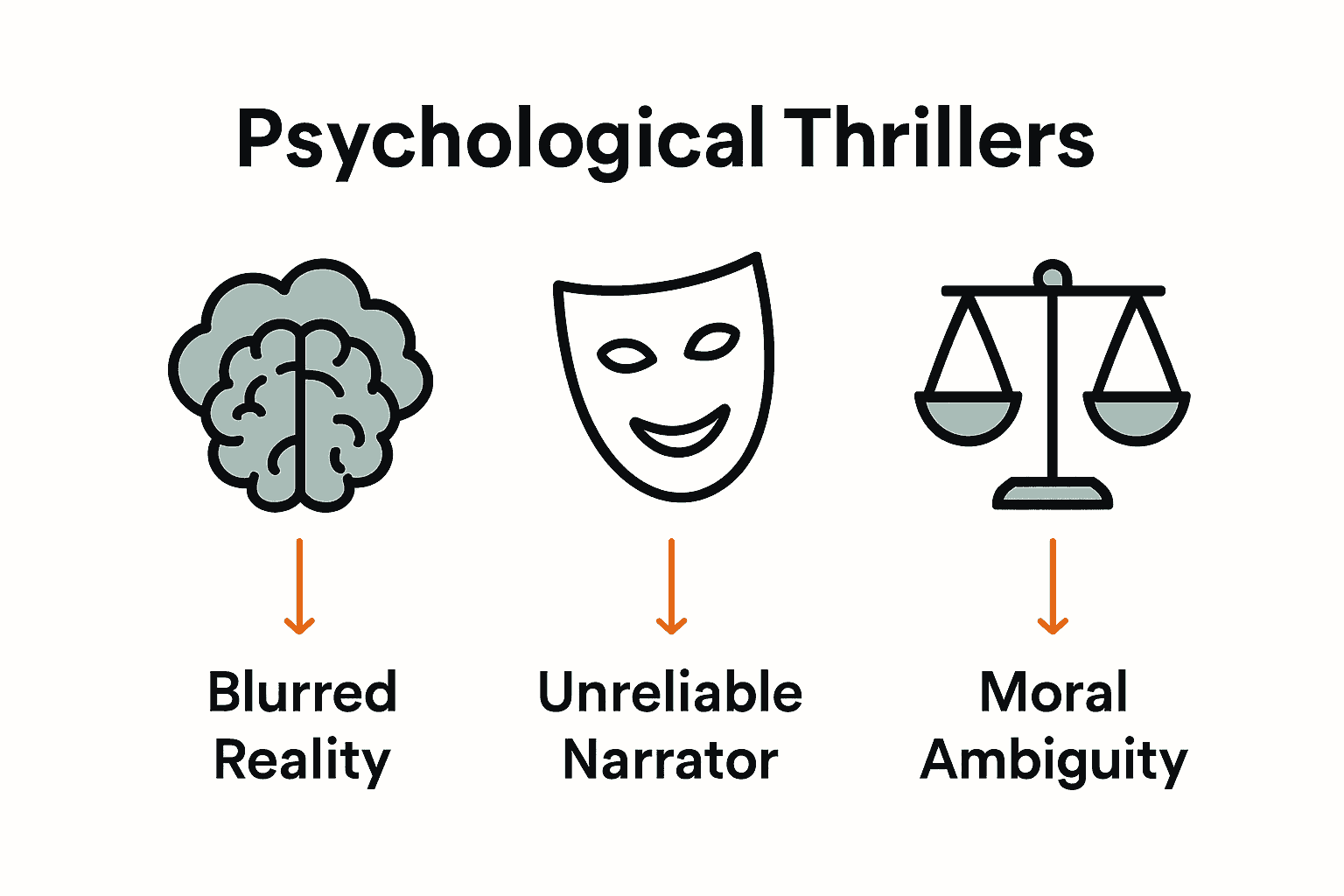
Common Motifs and Recurring Patterns
Psychological thrillers are characterized by distinctive narrative techniques and recurring themes that distinguish them from other genres. According to Wikipedia, two critical motifs are the unreliable narrator and the MacGuffin – narrative devices that deliberately challenge audience expectations and create psychological tension.
The concept of an unreliable narrator is particularly fascinating, as it invites readers to constantly question the authenticity of the storytelling. Movie Time Today explores how these narratives frequently revolve around themes of identity crisis, where characters wrestle with complex psychological challenges such as amnesia or multiple personalities. This narrative strategy transforms the storytelling from a simple plot progression into a nuanced exploration of perception and mental states.
Key recurring patterns in psychological thrillers include:
- Characters experiencing profound identity disruptions
- Psychological obsessions that drive narrative momentum
- Blurred boundaries between reality and delusion
- Manipulation of audience perception
- Internal psychological conflicts that externalize through plot
These motifs are not merely stylistic choices but powerful tools for psychological exploration. By presenting characters who are fundamentally uncertain about their own experiences, psychological thrillers create a profound sense of unease and intellectual engagement.
 The genre invites readers to become active participants in unraveling complex psychological landscapes, challenging conventional narrative expectations and offering deep insights into human consciousness.
Here’s a summary of major themes and motifs in psychological thrillers:
| Theme or Motif | Key Characteristics | Narrative Purpose |
|---|---|---|
| Blurred Reality & Perception | Reality vs. delusion Fragile memory Uncertainty |
Create constant doubt Challenge perception |
| Identity & Transformation | Identity crisis Split personalities Psychological change |
Explore self-discovery Drive character arcs |
| Moral Ambiguity | Ethical dilemmas Questionable motives Dark impulses |
Blur good and evil Reveal hidden motives |
| Unreliable Narrator | Withheld information Contradictory accounts Cognitive dissonance |
Manipulate audience Deepen suspense |
| Psychological Manipulation | Gradual revelations Audience misdirection Emotional tension |
Engage reader’s intellect Build tension |
Psychological Manipulation and Unreliable Narrators
Psychological manipulation lies at the heart of narrative complexity in psychological thrillers, with unreliable narrators serving as the primary mechanism for creating profound psychological tension. Fiveable explains that these narrators deliberately challenge viewers’ perceptions by presenting skewed or deceptive information, effectively blurring the lines between objective reality and subjective experience.
StudySmarter highlights how non-linear storytelling and unreliable narration function as sophisticated narrative techniques that immerse audiences directly into characters’ complex mental landscapes. By systematically destabilizing traditional storytelling conventions, these narratives force readers to constantly question not just the story’s progression, but their own interpretations of unfolding events.
Key characteristics of psychological manipulation in narratives include:
- Deliberate information withholding
- Presenting contradictory perspectives
- Creating cognitive dissonance for the audience
- Challenging established narrative expectations
- Revealing psychological vulnerabilities gradually
The ultimate power of unreliable narration lies in its ability to transform storytelling from a passive experience into an active psychological investigation.
Readers become detectives, parsing through fragmented memories, conflicting accounts, and intentionally obscured motivations. This approach doesn’t just tell a story – it invites audiences to deconstruct the very nature of perception, truth, and psychological reliability.
Moral Ambiguity and Human Nature
Psychological thrillers serve as a profound exploration of the intricate moral landscapes that define human behavior. Wikipedia highlights how these narratives challenge traditional moral frameworks by presenting worlds where conventional notions of right and wrong become fundamentally blurred. The genre confronts readers with characters who exist in morally complex spaces, often revealing the thin line separating rational behavior from destructive impulses.
StudySmarter emphasizes that these narratives are not about simplistic good versus evil dichotomies, but about intricate human complexities. Characters are presented with ethical dilemmas that expose the nuanced internal struggles driving human decision-making, challenging readers to consider the psychological motivations behind seemingly inexplicable actions.
Key aspects of moral ambiguity in psychological thrillers include:
- Characters operating outside traditional ethical boundaries
- Exploration of irrational psychological motivations
- Situations that challenge binary moral perspectives
- Revealing the potential for darkness within seemingly ordinary individuals
- Examining how extreme circumstances transform moral choices
Ultimately, psychological thrillers function as sophisticated psychological investigations. They strip away comfortable illusions about human nature, revealing the complex emotional and moral mechanisms that drive human behavior. By presenting characters who defy simple categorization, these narratives invite readers to confront the uncomfortable truth that morality is rarely absolute, but instead a fluid, context-dependent experience shaped by individual perception and circumstance.
Impact on Reader Experience and Genre Trends
Psychological thrillers have undergone a remarkable transformation, evolving to reflect the complex psychological landscapes of contemporary society. StudySmarter highlights how technological advancements have significantly enhanced visual storytelling, enabling more immersive narrative experiences that explore increasingly nuanced psychological themes.
Fiveable reveals that these narratives have become powerful mirrors of societal anxieties, tapping into collective fears about identity and trust. By presenting characters who struggle with self-perception and the reliability of human connections, psychological thrillers create a profound reflective space that resonates deeply with modern audiences’ inner psychological tensions.
Key trends shaping the reader experience include:
- Increased integration of digital technology narratives
- More diverse and complex character perspectives
- Greater emphasis on psychological authenticity
- Exploration of contemporary social and technological anxieties
- Blurring boundaries between traditional genre classifications
The genre continues to evolve as a sophisticated psychological investigation, challenging readers to confront uncomfortable truths about human nature. By presenting narratives that refuse simple resolutions, psychological thrillers transform reading from a passive experience into an active psychological exploration. For readers seeking deeper insights into gripping thriller stories, this genre offers an unparalleled journey into the intricate landscapes of human consciousness.
Discover the Depths of Psychological Thrillers with Short Reads
Psychological thrillers explore the fragile boundaries of reality and the complex journeys of identity and perception. If you’ve ever felt captivated yet unsettled by stories with unreliable narrators and moral ambiguity, you are not alone. These themes challenge your understanding of truth and push you to see beyond the surface. At The Short Reads, we understand your craving for gripping narratives that dive into these intricate psychological landscapes.
Experience unforgettable stories that bring these powerful themes to life. Our selection of psychological thriller short reads offers fast-paced, thought-provoking novellas and short books designed to immerse you immediately. Don’t wait to explore mind-bending tales full of suspense and subtle twists. Visit The Short Reads now and unlock a world where every page invites you to rethink reality and dive into the heart of human consciousness.
Frequently Asked Questions
What are the main themes in psychological thrillers?
The main themes in psychological thrillers include blurred boundaries between reality and perception, exploration of individual identity and psychological transformation, moral ambiguity and ethical dilemmas, psychological isolation and internal conflict, and the fragility of human perception and memory.
How does an unreliable narrator impact a psychological thriller?
An unreliable narrator challenges the audience’s perceptions by presenting skewed or deceptive information, creating cognitive dissonance, and keeping readers guessing about what is true. This narrative technique enhances psychological tension and deepens engagement with the story.
What narrative techniques are commonly used in psychological thrillers?
Common narrative techniques in psychological thrillers include non-linear storytelling, unreliable narration, character-driven plots that focus on psychological depth, and internal conflicts that manifest in external actions, all aimed at creating tension and a complex reading experience.
How do psychological thrillers explore moral ambiguity?
Psychological thrillers explore moral ambiguity by presenting characters who operate outside traditional ethical boundaries, revealing the complexities of psychological motivations, and challenging binary moral perspectives, which leads readers to confront the intricacies of human behavior.
Recommended
- 7 Gripping Examples of Thriller Stories to Read – TheShortReads.com
- Psychological Thriller – TheShortReads.com
- Thriller Fiction –
- Understanding the Role of Suspense in Fiction – TheShortReads.com
Article generated by BabyLoveGrowth
Share
