
Category Archives for Cozy Mystery Books
Best Cozy Mystery Books

The Best Cosy Mystery Books to Read on an Autumn Weekend
![[HERO] The Best Cosy Mystery Books to Read on an Autumn Weekend](https://cdn.marblism.com/U3vEyBK32y8.webp)
Did you know that despite the rise of fast-paced digital media, the “comfort reading” segment of the publishing industry has seen a 25% increase in sales over the last five years? You might think that in an age of high-octane thrillers, we would want more adrenaline, but the data suggests the opposite. We are increasingly seeking out stories where the stakes are high for the characters but the experience is soothing for the reader.
Rain on the window. Something warm in your hands. A murder that will absolutely be solved by Sunday.
There is a very specific kind of reading pleasure that belongs to autumn. It requires a few things: low light, a blanket, something hot to drink, and a book in which someone has been murdered in a picturesque location and a pleasantly eccentric detective is going to sort it all out before the final chapter. This is not high literature. It is not trying to be. The cosy mystery is one of the most purely satisfying genres in existence | comfort reading with a spine of plot, warm enough to curl up in, structured enough to keep you turning pages. On an autumn weekend, there is nothing better.
Understanding the Mystery Genre: Definition and Appeal
Before we dive into the list, it helps to understand what we actually mean when we talk about this category. If you look at a standard mystery genre: definition, you will find it described as a subgenre of crime fiction where the focus is on a puzzle rather than on violence or police procedure. In a “cosy,” the lead character is usually an amateur, the setting is socially intimate, and the “messiness” of the crime is kept off-stage.
The real surprise? These stories actually help lower cortisol levels. By providing a structured problem that is guaranteed to be solved, they offer a sense of order in a chaotic world. Whether you are looking for full-length novels or short mystery books under 100 pages, the goal is the same: intellectual engagement without the emotional trauma.
The Classics That Earned the Title
The Murder at the Vicarage by Agatha Christie
The book that introduced Miss Marple, and still one of the finest things Christie ever wrote. St Mary Mead is exactly the kind of village where nothing should ever happen and terrible things keep happening anyway. Miss Marple | elderly, sharp as a tack, underestimated by everyone | watches the village like a naturalist watches birds, and draws her conclusions accordingly. The perfect entry point if you’ve somehow never read Christie, and an ideal revisit if you have.
Strong Poison by Dorothy L. Sayers
The first Lord Peter Wimsey novel to feature Harriet Vane, and the one where the series finds its real heart. A mystery writer is on trial for poisoning her lover: Lord Peter attends the trial, falls immediately in love with her, and sets about proving her innocent. Sayers writes with a wit and intelligence that has dated not at all. The romance subplot is genuinely one of the best in detective fiction.
Gaudy Night by Dorothy L. Sayers
Later in the Wimsey series, and by common agreement its masterpiece. Set almost entirely in an Oxford women’s college, it’s less a traditional murder mystery than an investigation into an anonymous campaign of malice and cruelty. More thoughtful than most of its genre, deeply atmospheric, and the kind of book that rewards rereading. Sayers was doing something serious here under the cover of genre fiction.

The Modern Cosies That Get It Right
The Thursday Murder Club by Richard Osman
Four residents of a luxury retirement village meet weekly to investigate cold cases. Then a real murder lands on their doorstep. Osman writes with tremendous warmth and genuine comic timing, and his four protagonists | particularly Elizabeth, the former intelligence operative who is never quite what she appears | are immediately loveable. This is the book that revived the cosy mystery for a new generation, and it deserves every copy it’s sold.
The No. 1 Ladies’ Detective Agency by Alexander McCall Smith
Precious Ramotswe opens Botswana’s first detective agency for ladies and gently solves the problems of her community. This book is almost preternaturally calming to read | McCall Smith writes with such affection for his characters and setting that spending time with them feels like a genuine respite. The mysteries are secondary to the atmosphere. Perfect for a slow Sunday morning.
Magpie Murders by Anthony Horowitz
A novel within a novel: a literary editor reads the latest manuscript by a famous crime writer and discovers the final chapter is missing | and the author has turned up dead. Horowitz, who writes the Midsomer Murders and Foyle’s War scripts, is working at the absolute top of the form here. A love letter to the Golden Age mystery and a clever subversion of it at the same time. Immensely satisfying.
Elly Griffiths’ Ruth Galloway series starting with The Crossing Places
Ruth Galloway is a forensic archaeologist at a Norfolk university, called in when bones are found on the marshes. Griffiths writes setting with unusual skill | the Norfolk landscape is almost a character in itself, bleak and beautiful and full of history. The mysteries are well-plotted and the characters deepen satisfyingly across the series. Start at the beginning: the arc rewards it.
Quick Summary: Which Mystery Fits Your Weekend?
For When You Want Something a Little Darker
The cosy mystery exists on a spectrum. Some sit at the warmer, lighter end: others have a sharper edge. If you want the comfort of the form with a little more psychological depth, these are the ones.
The Secret History by Donna Tartt
Strictly speaking this is inverted mystery | you know who committed the crime on the first page, and the novel is about how and why. But it has the enclosed, atmospheric quality of the very best cosy mysteries: a small community (a Vermont liberal arts college), a tight cast of characters, a terrible secret. Tartt’s prose is intoxicating. This is a book that people tend to read in a single weekend whether they intend to or not. It is a fantastic example of how themes in psychological thrillers can intersect with the “closed circle” mystery.
Jackson Brodie series by Kate Atkinson, starting with Case Histories
Jackson Brodie is an Edinburgh private detective, and Atkinson uses the mystery form as a vehicle for something more novelistic and emotionally complex than the genre usually attempts. Three cold cases are woven together in the first book in a way that is structurally audacious and quietly devastating. Not comforting in the conventional sense. But deeply satisfying.
The Appeal by Janice Hallett
Told entirely through emails and text messages within an amateur dramatics society, where two newcomers are asked to identify a killer among the membership. Wickedly funny, structurally inventive, and impossible to put down once the plot takes hold. A genuinely fresh take on a classic premise | the closed community, the multiple suspects, the slow revelation of who everyone really is.
The Atmosphere Is Half the Point
What makes a mystery genuinely cosy isn’t just the absence of graphic violence. It’s the presence of something: a world that feels complete and particular, characters you want to spend time with, a setting that becomes so vivid you feel like you’ve been there.
The best ones on this list | Christie at her peak, Sayers in Oxford, Osman’s retirement village, Griffiths on the Norfolk marshes | have this quality in abundance. You’re not just reading a puzzle. You’re visiting somewhere, and you don’t want to leave. That’s exactly what an autumn weekend calls for.
If you are looking for easy read mystery books to get started, the mystery genre definition often points to these comforting, puzzle-focused stories. For those with limited time, short mystery books under 100 pages can provide the same satisfaction in a single sitting without the commitment of a 400-page tome.
Where to Start
If you have never read a cosy mystery: The Thursday Murder Club. It’s the most immediately accessible book on this list, warm without being saccharine, and it will make you want to read the rest of the series immediately.
If you want to go to the source: The Murder at the Vicarage. Christie invented most of what the genre still uses, and she was very good at it.
If you want the best the form has ever produced: Gaudy Night. It will take you a weekend and change how you think about detective fiction.
If you want something you can’t put down and slightly can’t explain: Magpie Murders. Horowitz is doing something clever and he makes it look effortless.
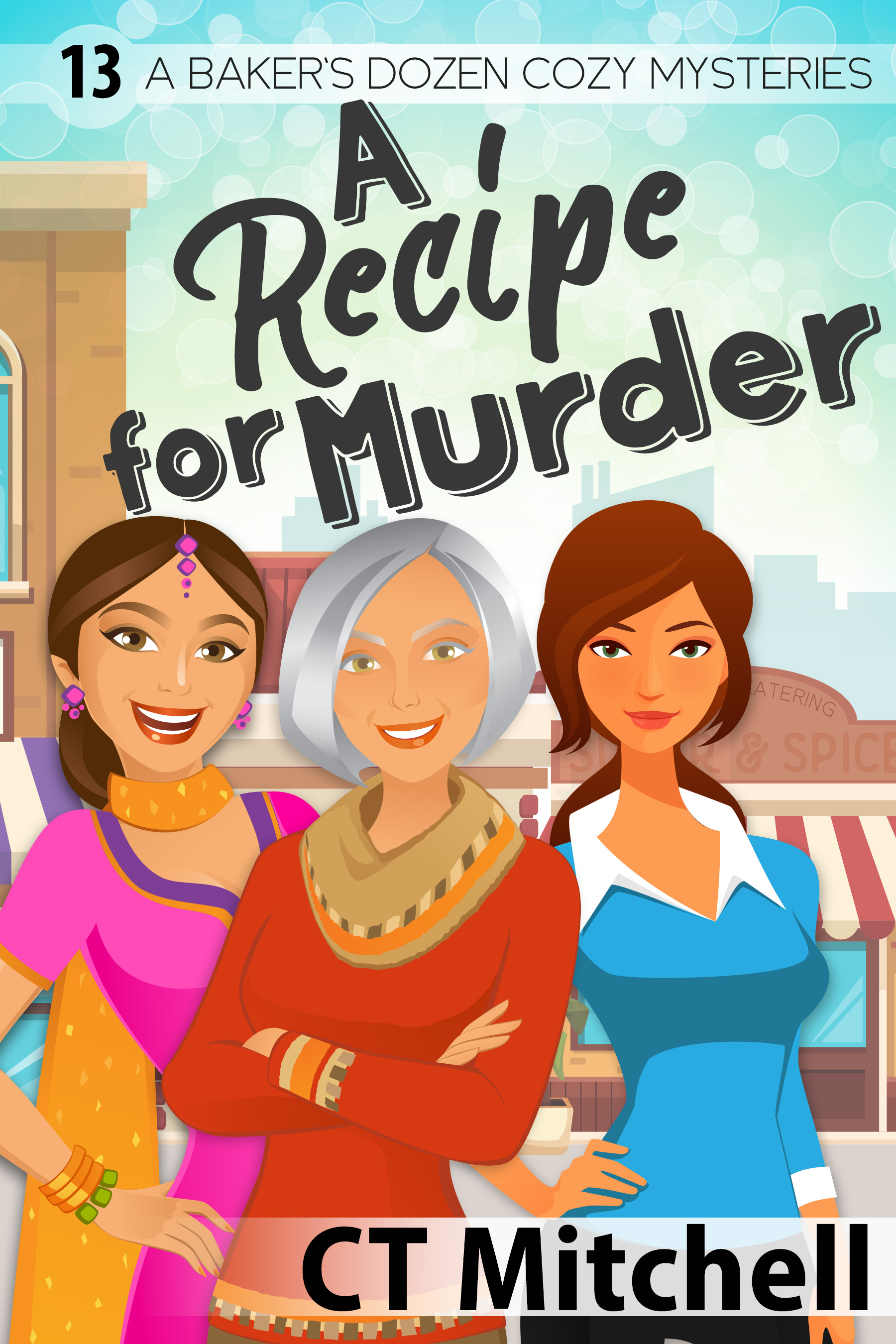
For a modern, quick read: A Recipe for Murder by C.T. Mitchell. It is a perfect example of a short mystery book under 100 pages that delivers a complete, satisfying story. It features a bright, inviting narrative that fits perfectly into a busy schedule while still giving you that “whodunit” fix.
The cosy mystery asks very little of you and gives a great deal back. A world with edges. A problem with a solution. Characters who feel like company. On a grey autumn Saturday with nowhere to be, that’s not a small thing. The real trick to enjoying these is to stop feeling like you “should” be reading something more “important.” The most important thing you can read is the book that actually keeps you in the chair.
Pick one. Make the tea. Close the tabs. If you find yourself struggling to maintain focus, you might want to look into how to rebuild your reading brain through shorter, more engaging texts. Once you regain that momentum, the world of mystery fiction is endless.
Ready to find your next weekend obsession? Browse our collection of short mystery stories and start your investigation today.
Share


