![[HERO] I Used to Love Reading and Now I Don’t | Here’s What Helped](https://cdn.marblism.com/D7Zh6DVxB2w.webp)
Did you know that recent industry surveys suggest nearly 33% of former readers claim they simply no longer have the time to open a book, while another 28% report they can no longer concentrate on a single page for more than a few minutes? If you feel like your attention span has been dismantled by a decade of digital noise, you aren’t just imagining it. You are part of a growing demographic of “lost readers” who once found solace in stories but now find themselves staring blankly at the same paragraph four times in a row.
There was a time when I could disappear into a book for hours. A whole Saturday afternoon gone, just like that | and I’d surface blinking, slightly confused about what year it was, quietly euphoric. Reading wasn’t something I did. It was something I was.
And then, somewhere in my late twenties, it stopped.
Not dramatically. There was no moment where I closed a book and thought, “Well, that’s it.” It was more like a slow fade. I’d pick up a novel, read the same paragraph three times, and put it down. I’d buy books with great intentions and let them stack up on the nightstand like a monument to my own distraction. I’d scroll through social media for forty:five minutes, then feel vaguely guilty that I wasn’t reading.
If you’ve felt this, you know how disorienting it is. Because it’s not just losing a hobby. It feels like losing a piece of yourself. If you find yourself feeling like you hate reading lately, it is important to realize this is a structural issue, not a personal one.
The first thing I had to understand was that I hadn’t become a worse person. My brain had just been rewired | by a decade of smartphones, infinite scroll, and content designed to deliver a hit every eight seconds.
Deep reading requires something that researchers call “cognitive patience.” This is the ability to stay with a single, complex narrative or argument over a long period. Social media and modern web browsing systematically destroy this capacity by rewarding the “switch reflex.” We are trained to look for something new the second a sentence becomes challenging or the pace of a story slows down.
You might think that your inability to focus is a permanent change, but it turns out cognitive patience is a capacity, not a fixed trait. You can lose it. And more importantly: you can rebuild it. The real surprise? You don’t rebuild it by forcing yourself to read the hardest books you can find. You rebuild it by lowering the barrier to entry.
I want to be honest here. I didn’t follow a five:step system. I tried things. Some worked. Some didn’t. Here’s what genuinely moved the needle in my journey back to the page.
For a long time, I was trying to push through literary fiction because that’s what I used to love. But my brain wasn’t there yet. It needed something with more momentum.
I picked up a thriller. Then a memoir that read like a novel. Then a page:turning history book. I wasn’t “cheating” | I was relearning how to read. The goal wasn’t to be impressive. The goal was to remember what it felt like to not want to put a book down. This is where exploring mystery fiction types for learners and busy readers can be a literal lifesaver for your hobby.
Not just silenced. Inconvenient. I started charging it in another room at night. I deleted apps off my home screen. I made the path to distraction slightly longer and the path to my book slightly shorter.
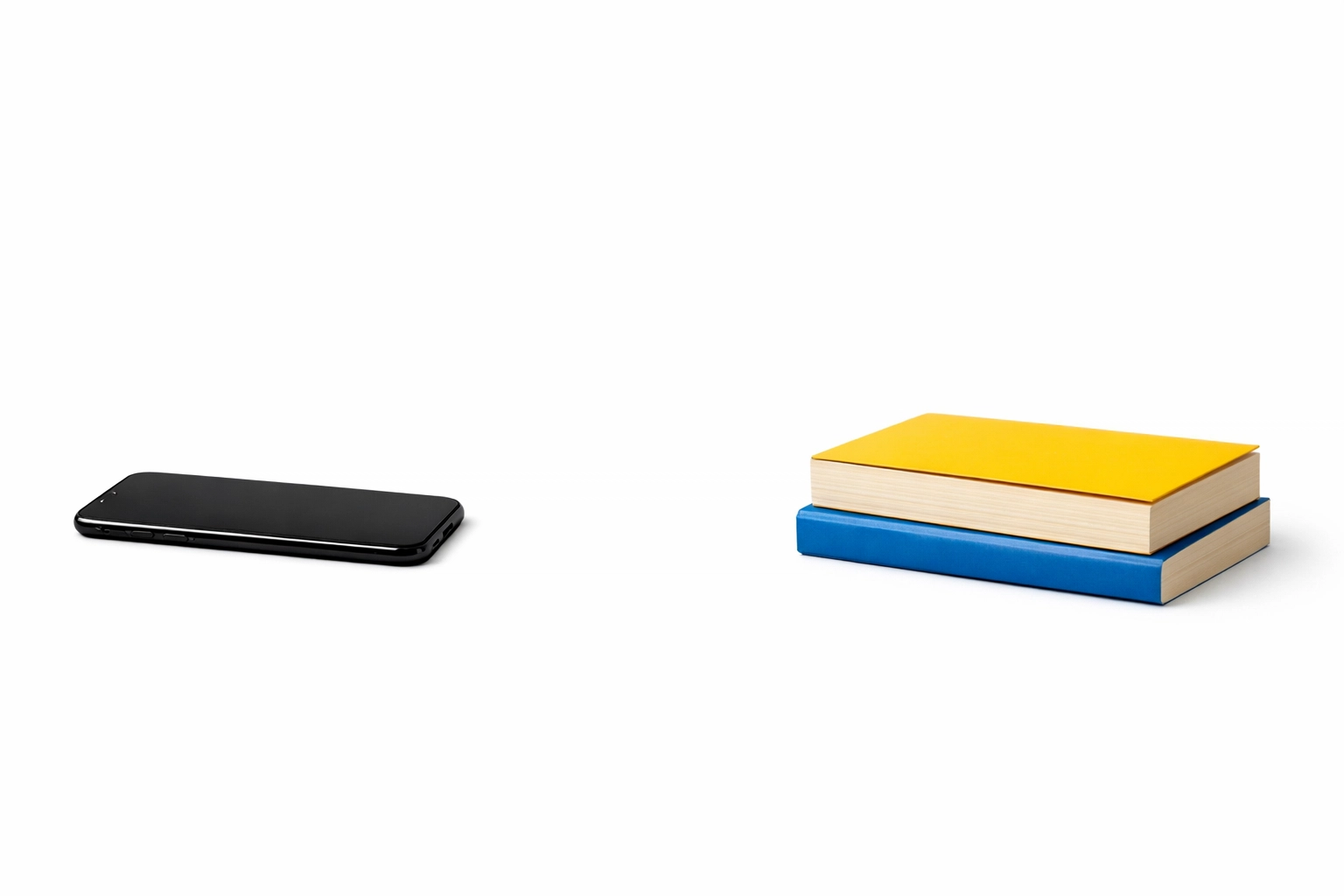
The book went on the nightstand. The phone went across the room. This sounds embarrassingly simple, and it is. It’s also shockingly effective. When the “switch reflex” kicks in, and you reach for your phone, the fact that it isn’t there forces your brain to settle back into the book.
This was huge. I used to feel obligated to finish every book I started, which meant that when something wasn’t clicking, I’d stall out entirely rather than move on. I’d feel guilty, avoid the book, and eventually avoid reading altogether.
Now I quit freely. Not out of laziness, but out of self:knowledge. Life is short and there are too many good books. If something isn’t working after fifty pages, I put it down without ceremony and find something that does. This “no:guilt” policy is essential for reclaiming the joy of the experience.
One of the biggest hurdles for a “lost reader” is the sheer size of modern novels. Facing a 500:page tome when you haven’t finished a book in a year is like trying to run a marathon after sitting on the couch for a decade.
I started looking for books under 150 pages. The sense of accomplishment that comes from finishing a book in one or two sittings provides a dopamine hit that rivals anything you’ll get on your phone. Understanding the benefits of short reads was the turning point for me. When you realize that a short read vs a full novel offers the same emotional satisfaction in a fraction of the time, the pressure evaporates.
Trying to read when you’re exhausted, right before sleep, is setting yourself up to fall asleep three pages in | which trains your brain to associate reading with drowsiness. I started carving out twenty minutes in the morning, with coffee, before looking at my phone. It changed everything.
Morning reading has a different quality to it. You’re bringing your best attention, not your dregs. You might think you don’t have twenty minutes, but most of us spend at least that much time scrolling through news or email before we even get out of bed.
I talked about books with other people. Joining a small book club | just four friends, very low:pressure | introduced a gentle social accountability I didn’t know I needed. I wanted to have something to say at the next meeting. That was enough motivation on the hard days.
There’s also something about discussing a book that deepens your relationship with it. You notice more, remember more, and care more. Research suggests that reading with a friend can significantly increase your “staying power” with a text. It turns a solitary act into a shared experience.
If you enjoy the “puzzle” aspect of stories, you might find that learning about short mystery writing tips or understanding mystery fiction terminology gives you a new lens through which to view your reading. It turns you from a passive consumer into an active observer of the craft.
I won’t pretend I’m back to those Saturday afternoons of my early twenties. Life is different now, and my reading looks different too | more intentional, maybe less rapturous, but more sustaining.
But the feeling is back. That thing where you’re on the subway and you miss your stop because you were somewhere else entirely. That specific pleasure of a sentence so well:constructed it makes you read it twice. That quiet that settles in when the story finally takes hold.
I thought I’d lost it for good. It turns out I’d just misplaced it.
Generally, we think of reading as a skill we learn once in childhood and keep forever. In reality, reading is a relationship. Like any relationship, it requires maintenance, boundaries, and occasionally, a change in scenery. By shifting from long, daunting novels to more manageable formats, you can rebuild the neural pathways required for deep focus.
If you’re in the middle of that loss right now | the stacks of unread books, the guilt, the wondering if something is wrong with you | I want you to know it’s not permanent. You don’t have to white:knuckle your way through Tolstoy to prove something. Start small. Start easy. Start wherever you can.
The door back is closer than it looks. If you are ready to take that first step, why not look into smart ways to discover mystery fiction or explore the difference between novellas and novels to find your next “easy win.”
Ready to find your way back to the page? Pick up a short read today and give yourself permission to stop after one chapter if you aren’t hooked. The goal isn’t to be a “perfect” reader | it’s just to be a reader again.
Share