
Over 80 percent of american readers say they want stories they can finish in one sitting, showing just how powerful short stories have become. These compact narratives pack striking emotion, vivid characters, and rich themes into a small space, making every detail count. For anyone looking to understand what sets this form apart, exploring the core elements of american short stories reveals why they continue to captivate audiences seeking quick yet meaningful escapes.
| Point | Details |
|---|---|
| Short stories are concise and impactful | They convey complex narratives within a limited word count, allowing for focused emotional experiences. |
| Diverse genres enhance accessibility | Short stories cover a wide range of genres, appealing to various reader interests and backgrounds. |
| Reading short stories is time-efficient | These narratives are perfect for busy readers, offering complete experiences in a short time frame. |
| Short stories complement longer formats | They provide powerful insights and emotional depth without the commitment required for novels. |
Short stories represent a powerful literary form designed to deliver complex narratives within a compact framework. According to San José State University Writing Center, these condensed narratives typically focus on a single plot, a limited number of characters, and a concentrated emotional experience that unfolds rapidly.
At their core, short stories are characterized by several fundamental elements that distinguish them from longer fiction forms.
 As detailed by University of British Columbia, these essential components include:
Unlike novels, short stories demand extraordinary narrative efficiency. Writers must craft complete emotional journeys within limited word counts, often between 1,000 and 7,500 words. This constraint requires meticulous selection of every narrative detail, transforming brevity into a storytelling strength. Short story techniques become critical, with authors strategically using dialogue, description, and character interactions to maximize narrative impact.
The unique power of short stories lies in their ability to capture profound human experiences in microcosmic moments. Whether exploring complex emotions, social dynamics, or personal transformations, these compact narratives offer readers intense, concentrated storytelling that can be consumed in a single sitting, making them perfect for our fast-paced modern reading habits.
Short stories represent an incredibly diverse literary landscape, offering readers a rich tapestry of genres and narrative styles. Joy Answer highlights the remarkable breadth of short fiction, revealing a compelling array of genres that cater to virtually every reader’s interest and imagination.
The most prevalent short story genres include:
Some unique short story genres offer fascinating niche experiences. Wikipedia’s exploration of school stories demonstrates how specific settings can create entire narrative subgenres, such as boarding school tales that delve into themes of friendship, loyalty, and personal growth. These specialized genres prove that short stories can be far more than simple plot vehicles – they are complex artistic expressions that capture nuanced human experiences.
Interesting subgenres like flash fiction provide even more narrative innovation, challenging writers to craft complete stories in extremely limited word counts. Mystery short story examples showcase how compact narratives can deliver powerful emotional and intellectual impact, proving that brevity can be a remarkable storytelling strength.
Reading short stories offers readers a unique and powerful literary experience that goes far beyond traditional long-form fiction. Literary Devices highlights the remarkable advantages of these condensed narratives, emphasizing their ability to deliver profound insights within compact storytelling formats.
The key benefits of reading short stories include:
According to The Watershed Journal, short stories excel at conveying complex themes and emotions through their focused narrative approach. These compact literary works challenge readers to engage deeply with characters and plots in remarkably brief spaces, making them intellectual and emotional powerhouses. Benefits of short reads demonstrate how these narratives can transform reading from a time-consuming activity into a flexible, enriching experience.
Moreover, short stories serve as perfect literary appetizers for readers hesitant about committing to full-length novels. They offer a low-risk entry point into new genres, writing styles, and narrative voices, allowing readers to explore diverse storytelling landscapes without significant time investment.
Whether you have fifteen minutes or an hour, short stories provide a complete, satisfying reading experience that can spark imagination, provoke reflection, and deliver meaningful emotional journeys.
Short stories represent an extraordinary literary medium that transcends traditional reading barriers, offering unique narratives for readers from all backgrounds and interests. Wikipedia’s exploration of short story cycles reveals how interconnected narratives can create rich, multifaceted reading experiences that appeal to diverse audience segments.
Different reader groups can find compelling short story experiences through specialized approaches:
Electronic literature research demonstrates how innovative storytelling formats can engage readers who might find traditional novels intimidating. These dynamic narrative approaches open new pathways for reader engagement, particularly for those seeking more interactive and technologically integrated reading experiences. Short reads for busy people further illustrate how flexible storytelling can accommodate varied lifestyle demands.
Ultimately, short stories serve as powerful connectors across reading communities. They break down complex narratives into digestible experiences, allowing readers from different backgrounds to discover shared human emotions and experiences through concise, impactful storytelling. Whether you’re a student, professional, international reader, or casual book enthusiast, short stories offer a universal gateway to literary exploration.
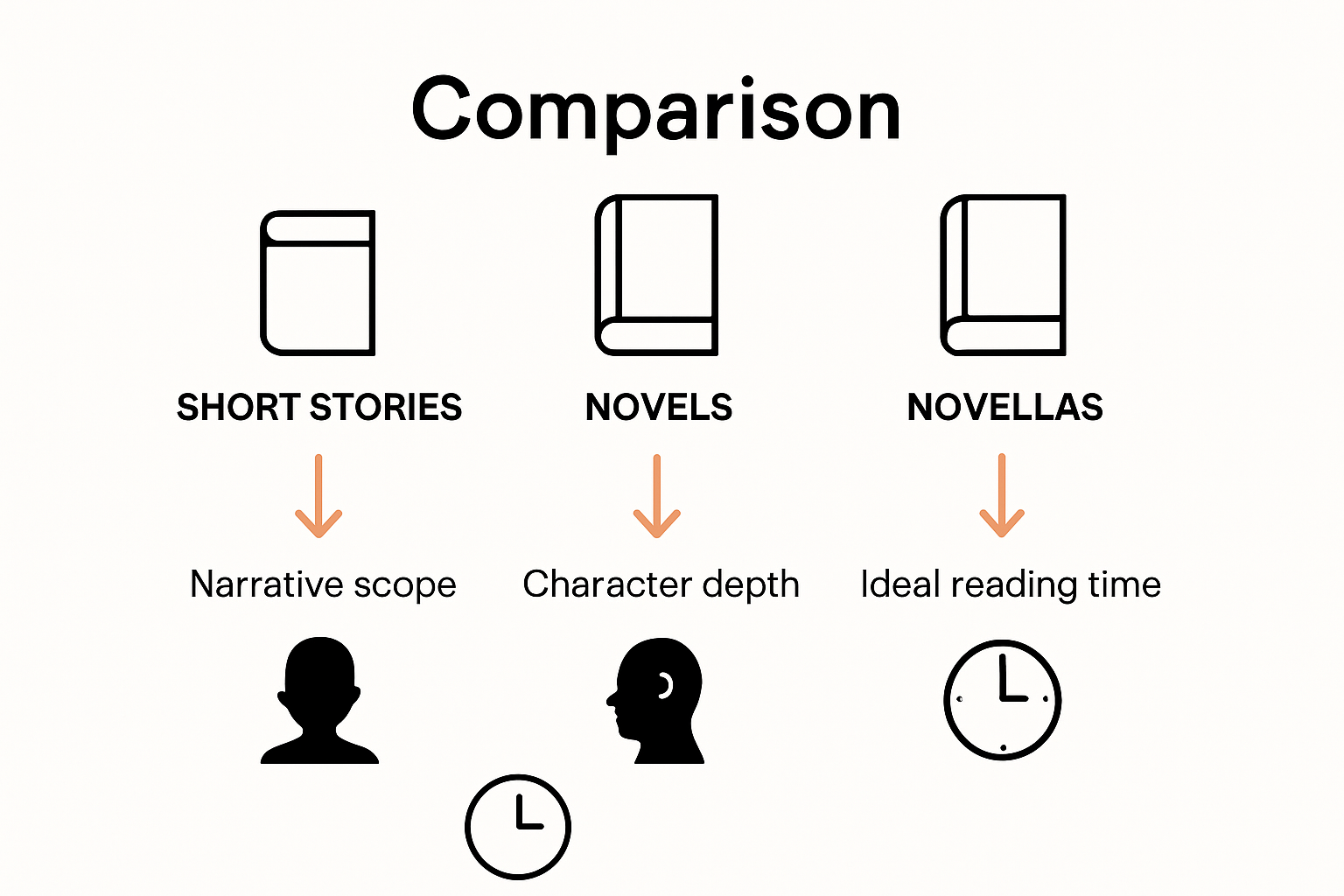
Navigating the landscape of literary formats reveals fascinating distinctions between short stories and their longer counterparts. University of Basrah Faculty Research highlights critical differences, noting that short stories fundamentally differ from novels in their narrative structure, complexity, and storytelling approach.
Key comparative characteristics include:
Wikipedia’s exploration of short story cycles reveals additional nuance, demonstrating how interconnected short stories can create rich narrative experiences that challenge traditional novel structures. Novellas vs. Novels guide further illuminates the intricate distinctions between these narrative formats.
Ultimately, each literary format offers unique storytelling potential. Short stories excel at capturing concentrated emotional moments, providing readers with powerful, concise narratives that deliver profound insights without requiring extensive time commitments. They represent a dynamic, flexible storytelling approach that complements, rather than competes with, longer narrative forms.
Short stories unlock intense emotional journeys in just a few pages but finding the right ones that captivate you can be a challenge. The article highlights how short stories deliver narrative intensity, time efficiency, and diverse genres, all key to fitting powerful storytelling into busy lives. If you crave page-turning mystery, psychological thrills, or action-packed novellas that mirror these benefits, our curated collections have you covered.
Experience the full impact of concise storytelling with cozy mystery short reads, psychological thriller short reads, and murder mystery novellas crafted to fit your lifestyle. These stories offer quick but meaningful engagement that enrich your free moments while diving deep into gripping plots and characters.

Don’t wait to transform your reading experience with stories designed for today’s fast pace. Visit The Weekend Mystery Bundle now and immerse yourself in thrilling short reads that deliver powerful emotions and intrigue in every page. Start your journey into captivating short fiction today and make every minute of reading count.
Short stories are defined by several core elements including plot, character, setting, theme, and point of view. These components work together to create a concise narrative that focuses on a single experience or idea.
Short stories typically focus on a single incident with limited character development and a streamlined plot, while novels explore broader storylines, offer comprehensive character arcs, and cover extended timelines.
Reading short stories provides time efficiency, narrative intensity, skill development, mental stimulation, and accessibility. They are ideal for readers seeking quick, engaging narratives that deliver powerful messages without requiring a significant time commitment.
Yes, short stories encompass a wide range of genres, from mystery and horror to romance and science fiction, making them appealing to diverse audiences. They serve as a low-risk way for readers to explore various literary styles and themes.