
Why Read Short Mysteries: Complete Guide for Avid Fans

Over 60 percent of american readers say they want stories they can finish in one sitting, especially when life gets hectic. Short mystery stories answer this need by packing suspense, clever puzzles, and swift resolutions into a brief but gripping package. Whether you crave a quick mental challenge or just enjoy solving crimes alongside memorable characters, this genre delivers entertainment without a big time commitment.
Table of Contents
- What Defines a Short Mystery Story
- Key Short Mystery Subgenres Explained
- Benefits for Busy and Reluctant Readers
- Why Short Mysteries Appeal to All Ages
- Comparing Short Mysteries to Full-Length Novels
Key Takeaways
| Point | Details |
|---|---|
| Short Mystery Stories are Concise | These narratives deliver suspense and resolution within a limited word count, making them ideal for quick reading sessions. |
| Diverse Subgenres Enhance Engagement | Short mysteries encompass various styles, catering to different reader preferences, from traditional whodunits to psychological thrillers. |
| Perfect for Busy Readers | They require low time investment and offer immediate plot engagement, making them suitable for individuals with packed schedules. |
| Appeal Across Age Groups | Short mysteries engage all ages by focusing on universal themes and providing quick gratification without extensive commitment. |
What Defines a Short Mystery Story
A short mystery story is a compact narrative form that condenses the intrigue of crime fiction into a concentrated storytelling experience. According to Britannica, a mystery story fundamentally involves a crime or puzzle to be solved, typically featuring a detective or investigator who methodically unravels hidden truths through logical deduction and careful analysis.
At its core, a short mystery distinguishes itself through several key characteristics. Unlike full-length novels, these narratives prioritize narrative economy – delivering suspense, character development, and plot resolution within a limited word count. Britannica defines short stories as “brief fictional prose narratives” that focus intensely on “a single effect conveyed in one or a few significant episodes or scenes.”
The structural framework of a short mystery typically includes several essential elements:
- A compelling central mystery or crime
- A limited cast of characters
- Rapid plot progression
- Concentrated narrative tension
- A clear resolution or revelation
- Minimal but strategic character backstory
These condensed narratives challenge writers to craft intricate puzzles and engaging character interactions within an extremely limited space. Readers can enjoy a complete investigative journey in a single sitting, making short mysteries perfect for busy individuals or those seeking quick, intellectually stimulating entertainment.
For readers eager to explore the nuanced world of short mystery storytelling, our guide on mystery short stories examples offers an excellent starting point for understanding this captivating genre.
Key Short Mystery Subgenres Explained
Short mystery stories encompass a rich and diverse landscape of narrative styles, each offering unique approaches to unraveling criminal puzzles. One fascinating subgenre is the inverted detective story, which according to Wikipedia, reveals the crime and perpetrator’s identity upfront, focusing instead on the detective’s methodical process of solving the case – a narrative technique that transforms traditional mystery storytelling.
Another intriguing subgenre is the romanetto, a distinctive literary form originating in Czech literature. Wikipedia describes this style as a novella-length narrative that presents an initially unexplained mystery, ultimately resolving it through rational and scientific explanations. This approach challenges readers to engage deeply with logical problem-solving and systematic reasoning.
The most prominent short mystery subgenres include:
- Classic Whodunit: Traditional puzzle-solving mysteries
- Hardboiled Detective: Gritty, urban crime narratives
- Cozy Mysteries: Light-hearted, often humorous investigations
- Police Procedural: Detailed law enforcement investigation stories
- Amateur Sleuth: Mysteries solved by non-professional detectives
- Psychological Thriller: Mysteries exploring complex mental landscapes
These subgenres demonstrate the remarkable versatility of short mystery storytelling, offering readers compact yet compelling narrative experiences that can be enjoyed in a single sitting. Whether you prefer intellectual puzzles or character-driven investigations, there’s a short mystery subgenre waiting to captivate your imagination.
Readers looking to dive deeper into the nuanced world of mystery narratives can explore our mystery subgenre guide for more comprehensive insights into these fascinating storytelling styles.
Benefits for Busy and Reluctant Readers
Short mystery stories offer a perfect literary solution for readers struggling with time constraints or limited reading engagement. According to Britannica, these narratives are “designed to be read in a single sitting,” making them ideal for individuals with packed schedules who want intellectual stimulation without a significant time investment.
Britannica highlights another crucial advantage: mystery stories inherently “captivate readers by presenting puzzles or crimes to be solved,” which stimulates curiosity and critical thinking. This characteristic makes them especially appealing to reluctant readers seeking engaging content that challenges their analytical skills without requiring extensive commitment.
Key benefits for busy and hesitant readers include:
- Rapid narrative consumption (15-60 minute reading time)
- Immediate plot engagement
- Complete story arc in one sitting
- Low time investment
- High intellectual stimulation
- Portable entertainment
- Stress-reducing mental challenge
For professionals, parents, students, and anyone with limited leisure time, short mysteries provide a perfect literary escape. They transform mundane moments – like commute times or lunch breaks – into thrilling intellectual adventures that exercise mental agility and provide quick, satisfying entertainment.
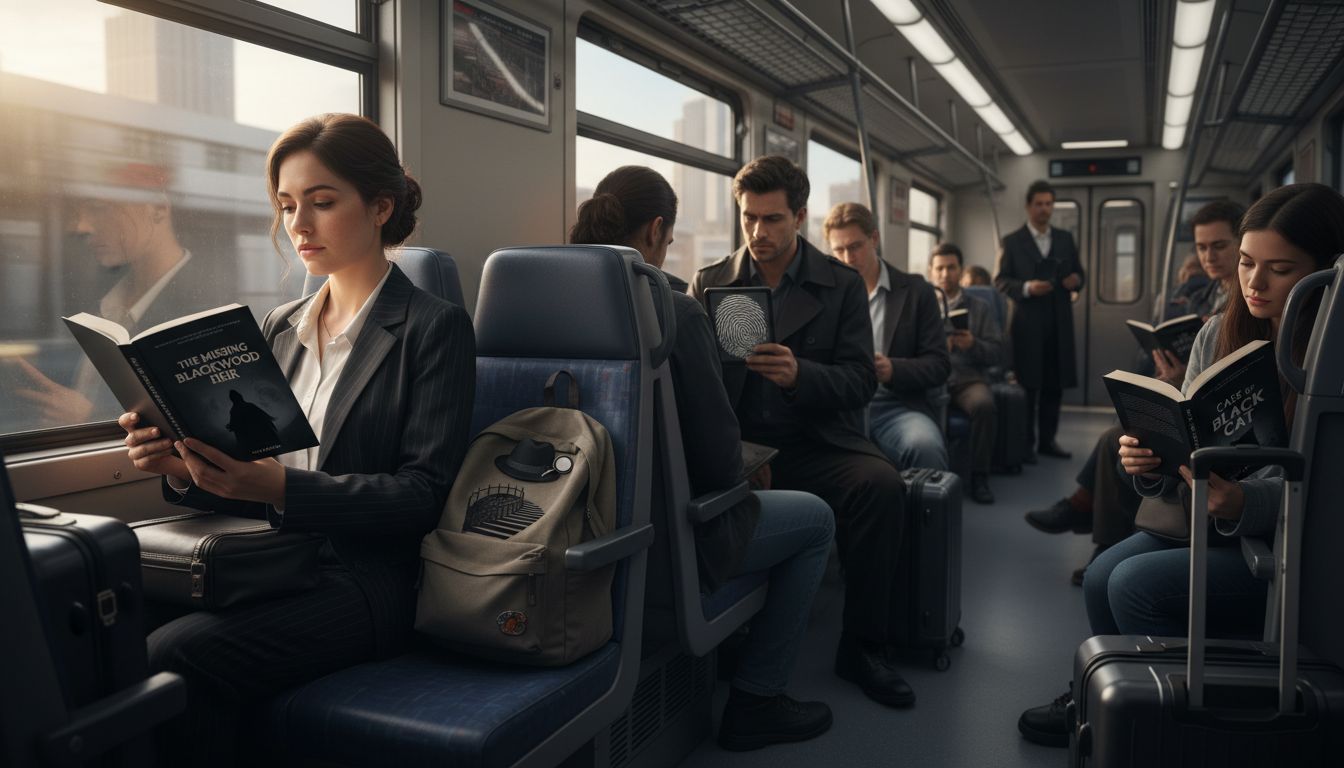
Readers seeking practical strategies for incorporating short reads into their busy lives can explore our guide on short reads for busy people, which offers actionable tips for maximizing reading enjoyment with minimal time investment.
Why Short Mysteries Appeal to All Ages
Short mysteries possess a unique universal charm that transcends generational boundaries. According to Britannica, these narratives “focus on universal themes and concise narratives,” making them inherently accessible and enjoyable for readers across different age groups and backgrounds.
Britannica further emphasizes that mystery stories fundamentally “engage readers by challenging them to solve puzzles or crimes,” creating an intellectual experience that appeals to the natural human curiosity present in both young and mature readers. This intellectual stimulation becomes a bridge that connects diverse audiences through the shared experience of unraveling complex narratives.
The age-spanning appeal of short mysteries manifests through several compelling characteristics:
- Cognitive Engagement: Mental puzzle-solving for all intellect levels
- Quick Gratification: Complete stories in minimal time
- Diverse Complexity: Narratives ranging from simple to intricate
- Emotional Resonance: Universal human experiences and motivations
- Low Reading Commitment: Accessible for casual and avid readers
- Portable Entertainment: Easy to consume anywhere
- Skill-Building: Enhances critical thinking and analytical skills
From teenagers discovering the joys of detective work to seniors seeking mental stimulation, short mysteries offer a versatile reading experience that adapts to individual preferences and reading capabilities. They represent a democratic form of storytelling that welcomes readers of all ages into the exciting world of literary investigation.
Readers interested in exploring age-specific mystery recommendations can discover our short mystery fiction guide, which provides tailored suggestions for different reader demographics.
Comparing Short Mysteries to Full-Length Novels
Short mysteries and full-length novels represent two distinct storytelling approaches within the mystery genre. According to Britannica, short stories are “brief narratives that focus on a single effect or theme, often with limited characters and settings,” which fundamentally distinguishes them from their more expansive novel counterparts.
Britannica highlights that while full-length mystery novels “provide a more in-depth exploration of complex plots and character development,” short mysteries offer a concentrated narrative experience that demands precision and strategic storytelling. This core difference creates unique advantages for each format, catering to different reader preferences and time constraints.
Key comparative elements between short mysteries and full-length novels include:
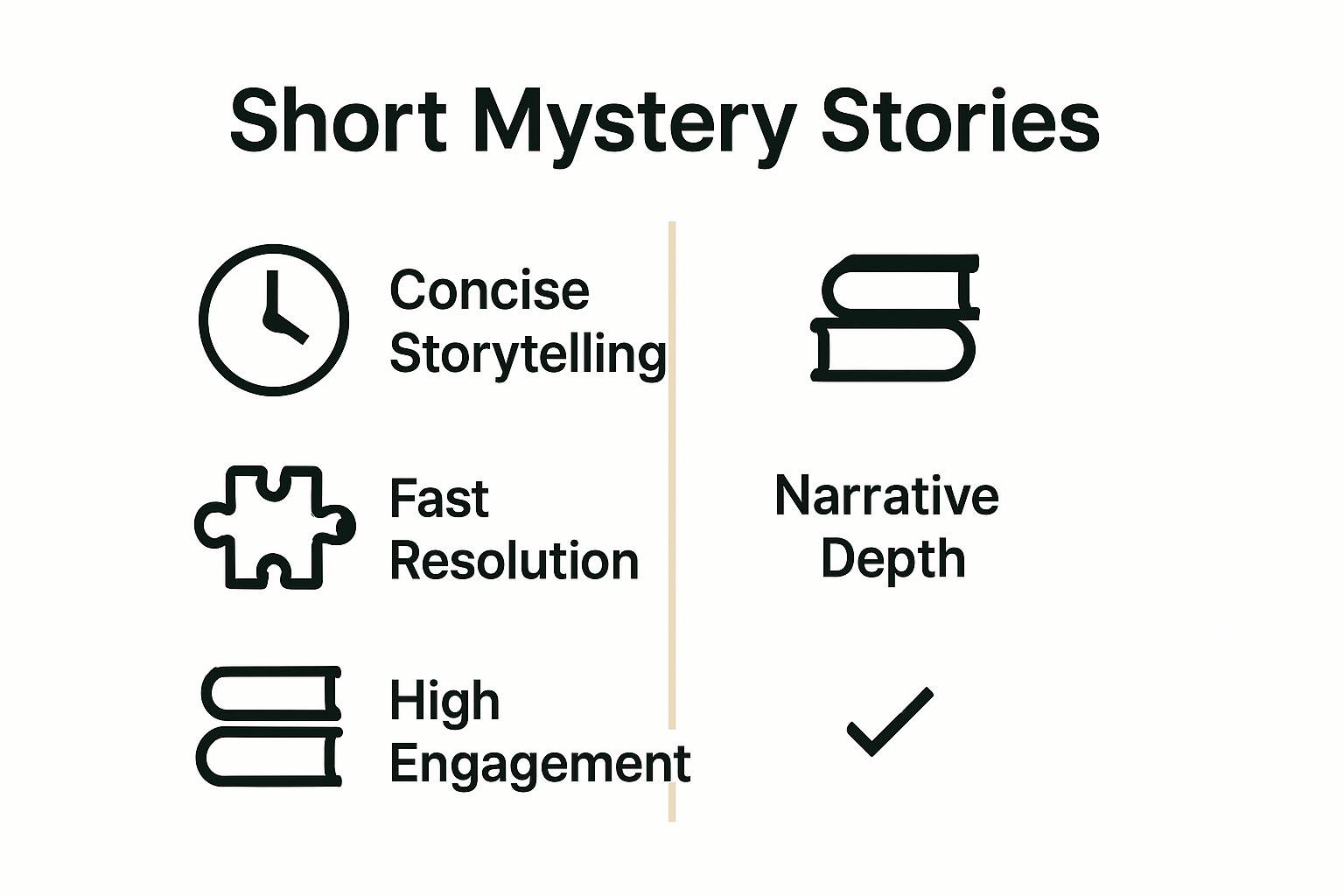
- Narrative Scope: Limited vs. expansive storylines
- Character Development: Focused vs. comprehensive character arcs
- Reading Time: 30 minutes vs. 6-10 hours
- Plot Complexity: Streamlined vs. intricate investigations
- Emotional Investment: Quick engagement vs. prolonged immersion
- Narrative Density: Concentrated vs. layered storytelling
- Accessibility: Immediate vs. extended commitment
Short mysteries excel in delivering sharp, immediate narrative satisfaction, while full-length novels provide deeper, more meandering investigative experiences. Each format offers unique pleasures, allowing readers to choose based on their current mood, available time, and desired level of narrative engagement.
Readers interested in understanding the nuanced differences between these narrative formats can explore our guide to novellas versus novels, which offers a comprehensive breakdown of their distinctive characteristics.
Discover the Perfect Short Mysteries to Fit Your Busy Life
If you have found yourself seeking intellectually stimulating stories that fit into tight schedules or desire quick yet captivating puzzle-solving adventures the challenge is finding high-quality short mystery reads that deliver satisfaction in a single sitting. Our article highlights key pain points for busy and reluctant readers such as limited reading time and the need for mental engagement that does not overwhelm. With terms like narrative economy and rapid plot progression in mind you deserve stories that deliver suspense and resolution fast without sacrificing depth or intrigue.
Explore our carefully curated collection of short read books including cozy mystery short reads, psychological thriller short reads, detective short reads, and more in The Weekend Mystery Bundle.

Unlock thrilling mystery fiction short reads and murder mystery novellas crafted for those who want to dive into gripping puzzles during lunch breaks or commutes. Start your journey now with The Weekend Mystery Bundle and enjoy the perfect balance of quick gratification and intense intellectual stimulation. Visit The Weekend Mystery Bundle today to transform your limited reading time into exciting mystery escapes.
Frequently Asked Questions
What is a short mystery story?
A short mystery story is a compact narrative that revolves around a crime or puzzle to be solved, featuring a detective or investigator who unravels hidden truths using logical deduction within a limited word count.
What are the benefits of reading short mystery stories?
Short mystery stories provide rapid narrative consumption, immediate engagement with the plot, a complete story arc in a single sitting, and high intellectual stimulation, making them ideal for busy individuals seeking quick entertainment.
How do short mysteries differ from full-length novels?
Short mysteries focus on streamlined and concentrated narratives, requiring precision in storytelling, while full-length novels provide more in-depth exploration of complex plots and character development.
Why are short mysteries appealing to readers of all ages?
Short mysteries are engaging for all ages due to their cognitive stimulation, quick gratification of completing a story, low reading commitment, and the ability to evoke universal themes and emotions, making them accessible to a wide audience.
Recommended
- How to Enjoy Mystery Fiction Short Reads for Lasting Fun – TheShortReads.com
- How to Enjoy Short Reads for Busy Mystery Lovers – TheShortReads.com


