
Psychological thrillers grip us with more than nail-biting suspense. This genre pulls readers into the hidden corners of the mind, turning the ordinary into something far more unsettling. Studies show these stories are among the most popular in modern fiction, thanks to their focus on psychological tension and complex characters. If you want to understand what makes psychological thrillers so impactful, exploring their core elements and storytelling secrets opens a window into the thrill that keeps audiences hooked.
| Point | Details |
|---|---|
| Psychological Depth | Psychological thrillers focus on complex characters and their internal conflicts rather than external action. |
| Genre Variations | Subtypes like domestic noir and horror-of-personality offer unique insights into human psychology and narrative structure. |
| Narrative Techniques | Techniques such as unreliable narration and symbolic visual metaphors enhance the psychological experience for the audience. |
| Cautionary Elements | Readers should be aware of narrative clichés and representational challenges within the genre to fully appreciate its depth. |
Psychological thrillers represent a riveting genre that delves deep into the intricate labyrinths of human consciousness. According to en.wikipedia.org, these narratives combine elements of thriller and psychological fiction, focusing intensely on characters’ mental states, perceptions, and complex interpersonal dynamics.
At their core, psychological thrillers explore profound psychological landscapes that challenge traditional narrative boundaries. As research from ijnrd.org reveals, these stories immerse audiences in gripping narratives that expose characters’ deepest delusions, insecurities, and unresolved traumas. The genre masterfully blends elements of horror, mystery, and psychological investigation to create uniquely tension-filled experiences.
The key characteristics of psychological thrillers include:
Unlike traditional thriller genres, psychological thrillers prioritize internal conflict over external action. They transform the human mind into a battlefield, where characters wrestle with their own fears, secrets, and psychological demons. psychological motifs play a critical role in constructing these intricate narrative experiences, revealing how perception can become both a weapon and a vulnerability.
These narratives often challenge readers by presenting scenarios where nothing is as it initially appears. Mental instability, unreliable narrators, and psychological transformations become the primary storytelling mechanisms, creating an atmosphere of persistent uncertainty and psychological tension.
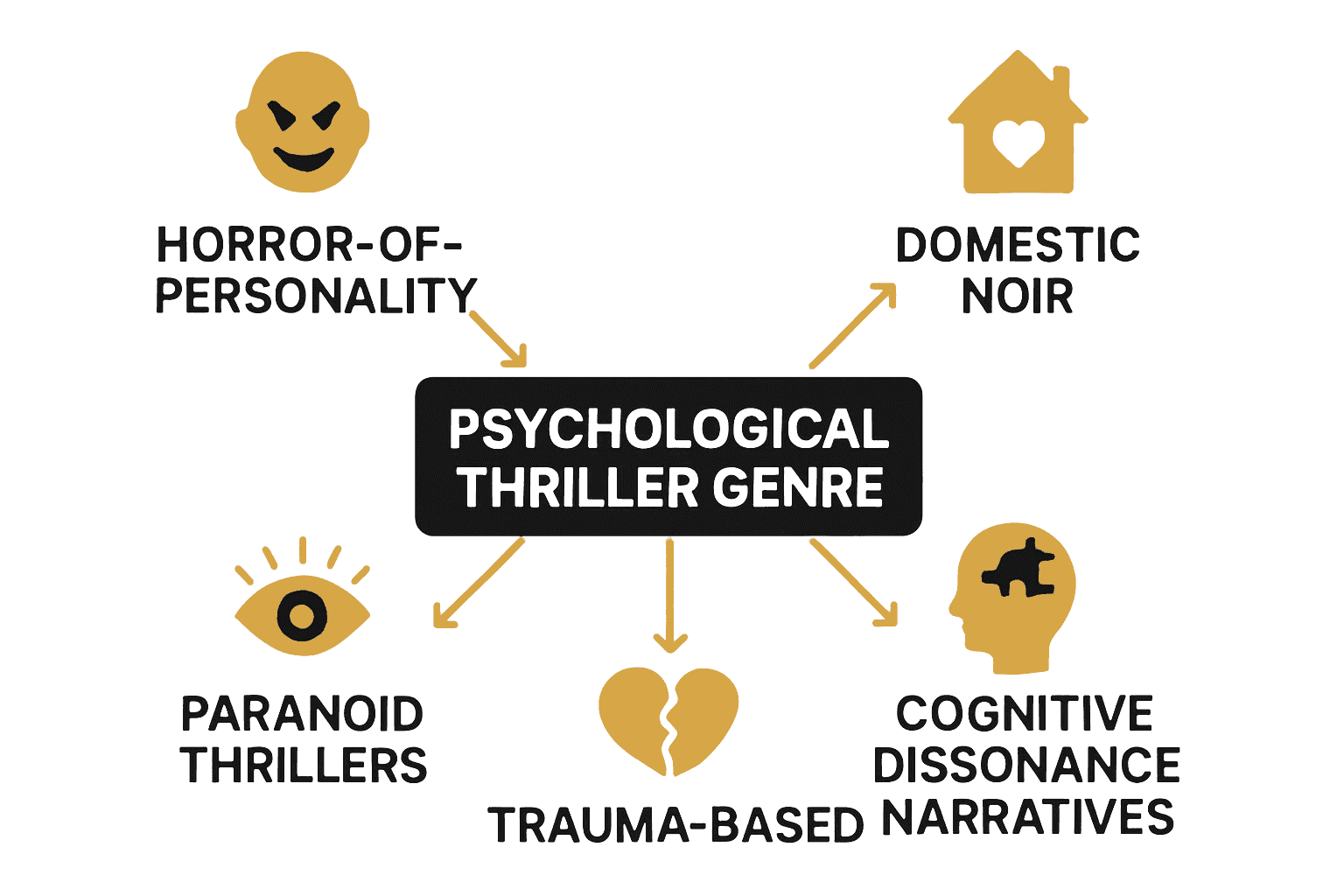
Psychological thrillers encompass a rich and diverse landscape of narrative approaches, each subgenre offering unique insights into human psychology. According to en.wikipedia.org, the horror-of-personality subgenre represents a particularly intense exploration of psychological darkness, focusing on human villains with profoundly disturbing mental landscapes.
One compelling variation is domestic noir, which en.wikipedia.org describes as a subgenre centered on the dark undercurrents of intimate relationships. This approach transforms seemingly ordinary domestic settings into psychological minefields, revealing the complex emotional tensions lurking beneath surface normalcy.
The major subtypes of psychological thrillers include:
Each subtype approaches psychological tension through distinct narrative strategies. Paranoid thrillers, for instance, create suspense by gradually eroding characters’ sense of safety, while cognitive dissonance narratives deliberately destabilize audience expectations about narrative reality. psychological transformation becomes a critical lens through which these stories explore the fragility of human perception.
These genre variations share a fundamental commitment to excavating the complex interior worlds of characters. They transform psychological exploration into a high-stakes narrative adventure, where mental and emotional landscapes become more dangerous and unpredictable than any external threat.
Psychological thrillers deploy a sophisticated arsenal of narrative techniques designed to penetrate the deepest recesses of human psychology. According to en.wikipedia.org, these narratives masterfully employ unreliable narrators and intricate plot twists to create a dissolving sense of reality that keeps audiences perpetually unsettled and emotionally invested.
Visual and atmospheric storytelling plays a crucial role in psychological thrillers. Research from ijnrd.org reveals how directors use symbolic elements like mirrors and strategic lighting techniques to externalize characters’ inner psychological landscapes. Low-key lighting and shadow play become powerful tools for portraying emotional turmoil, transforming visual aesthetics into a metaphorical representation of characters’ mental states.

The key storytelling techniques in psychological thrillers include:
These narrative strategies work in concert to create a profoundly immersive psychological experience. By deliberately destabilizing traditional storytelling conventions, psychological thrillers transform narrative itself into a psychological exploration.
effective storytelling becomes a lens through which complex human experiences are examined and transformed.
Ultimately, the most powerful technique in psychological thrillers is their ability to blur boundaries between external reality and internal perception. They invite audiences to question not just what is happening, but how and why characters experience their reality in such uniquely fractured and compelling ways.
Psychological thrillers explore a complex tapestry of human experience through deeply nuanced themes and intricate character dynamics. According to en.wikipedia.org, these narratives frequently delve into profound psychological territories like death, identity, perception, and the malleable nature of reality, creating intense explorations of human consciousness.
The genre’s character archetypes are particularly fascinating. en.wikipedia.org highlights the emergence of characters like the femme fatale and the unreliable narrator, who challenge traditional storytelling by embodying psychological complexity. These characters often operate within intricate domestic landscapes, transforming seemingly ordinary relationships into psychological battlegrounds of manipulation and hidden motivations.
The most prevalent themes and character archetypes include:
Unlike traditional narrative forms, psychological thrillers reject simplistic character representations. emotional storytelling becomes a critical lens through which these complex characters are examined, revealing the intricate psychological mechanisms that drive human behavior.
Ultimately, these themes and archetypes serve a profound purpose: they strip away social masks, exposing the raw, often uncomfortable truths about human nature. By presenting characters who exist in psychological gray areas, these narratives challenge audiences to confront the complexity of human motivation and the thin line between sanity and psychological breakdown.
Psychological thrillers, while compelling, are not immune to narrative traps that can undermine their psychological depth. According to en.wikipedia.org, the genre frequently struggles with predictable plot twists and overused narrative devices that can diminish the intellectual and emotional impact of the story.
Research from ijnrd.org highlights a critical concern about the genre’s representation, particularly the problematic perpetuation of stereotypes. The femme fatale archetype, for instance, often reinforces harmful narratives about women’s sexuality and psychological complexity, reducing nuanced characters to simplistic, potentially damaging tropes.
Key pitfalls readers should be aware of include:
7 Essential Psychological Thriller Tips for Every Reader can help readers develop a more critical and nuanced approach to navigating these potential narrative pitfalls.
Ultimately, discerning readers should approach psychological thrillers with both intellectual curiosity and critical awareness. By recognizing these potential limitations, audiences can engage more deeply with the genre’s true potential: exploring the complex, often uncomfortable terrain of human psychological experience.
If you find yourself captivated by the complex mental games and blurred realities described in psychological thrillers this is your chance to experience these elements firsthand. This genre’s challenges such as navigating unreliable narrators and exploring fractured perceptions can sometimes feel overwhelming but also intensely rewarding. Our collection of psychological thriller short reads offers sharp insights and engrossing stories that perfectly capture the essence of manipulation betrayal and identity crisis found in these narratives.

Explore our selection today by visiting The Weekend Mystery Bundle. With titles carefully crafted to highlight intricate character psychology and thrilling plot twists you’ll find the perfect balance between emotional storytelling and gripping suspense. Don’t wait to immerse yourself in stories that challenge your perception and keep you guessing. Your next engaging psychological thriller awaits now at The Weekend Mystery Bundle. Discover how short reads can transform your understanding of this captivating genre.
Psychological thrillers are characterized by intense psychological manipulation, exploration of unstable mental states, complex character motivations, and blurred lines between reality and perception. They prioritize internal conflict, focusing on characters’ fears, secrets, and psychological demons.
The major subtypes include Horror-of-Personality, Domestic Noir, Paranoid Thrillers, Cognitive Dissonance Narratives, and Trauma-Based Psychological Thrillers. Each subtype explores psychological tension through unique narrative strategies.
Key storytelling techniques in psychological thrillers include unreliable narration, symbolic visual metaphors, non-linear narrative structures, psychological fragmentation, and sensory manipulation. These techniques create an immersive and unsettling experience for the audience.
Recurring themes include psychological disintegration, identity crisis, manipulation and betrayal, perception vs. reality, and moral ambiguity. Common character archetypes feature the obsessive detective, psychologically fractured protagonist, manipulative antagonist, unreliable witness, and psychological predator.
Share



Over 60 percent of readers now turn to shorter books or bite-sized stories due to busy schedules. The choice between a quick short read and a sweeping novel can shape the way you enjoy stories, especially if you crave meaningful narratives but have limited time. Whether you love fast-paced mysteries or long, intricate tales, recognizing the difference between these formats helps you match your reading with your lifestyle.
| Point | Details |
|---|---|
| Short Reads vs Novels | Short reads offer quick, concentrated storytelling, usually under 15,000 words, while novels provide complex narratives over 50,000 words. |
| Genre Preferences | Cozy mysteries and psychological thrillers are popular short read genres, appealing to readers through engaging puzzles and intense character exploration. |
| Reader Needs | Time-constrained readers favor short reads for their ease of consumption in brief periods, making them ideal for busy lifestyles. |
| Choosing Formats | Select novels for immersive storytelling and deep character development, while short reads are suitable for quick resolutions and diverse experiences. |
Reading formats are as diverse as the stories they contain, and understanding the difference between short reads and novels can transform your reading experience. According to Wikipedia, a novella represents a unique narrative length situated between traditional short stories and full novels, typically ranging from 17,500 to 40,000 words.
Novels, by contrast, are more expansive narrative forms. ijels defines them as “fictitious prose narratives of considerable length” that explore complex characters and intricate plot structures. While novels offer deep narrative immersion, short reads provide concentrated storytelling experiences perfect for readers with limited time or those seeking quick, engaging narratives.
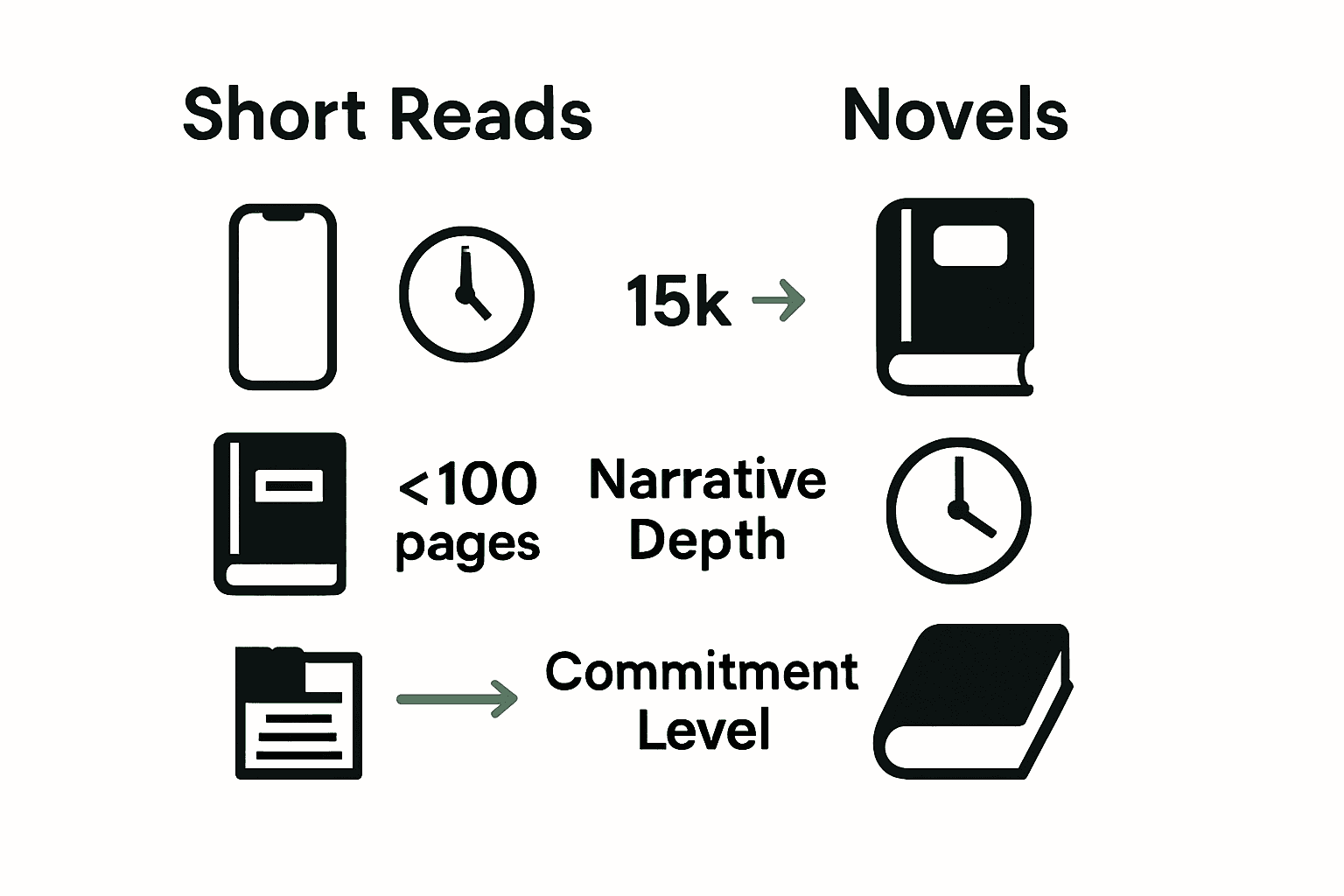
The key distinctions between short reads and novels can be summarized as:
For readers seeking quick yet compelling stories, Understanding the Benefits of Short Reads provides additional insights into why these concise narratives are gaining popularity across diverse reading communities.
Within the landscape of short reads, two genres have captured readers’ imaginations: cozy mysteries and psychological thrillers. Wikipedia defines cozy mysteries as a unique sub-genre of crime fiction where the action happens subtly, with amateur sleuths solving crimes in intimate, close-knit communities.
Psychological thrillers, in contrast, dive deep into the complex mental landscapes of characters, exploring psychological tensions and intricate emotional dynamics. These narratives often feature protagonists navigating intense personal challenges, moral dilemmas, and unexpected psychological twists that keep readers on the edge of their seats.
Key characteristics of these compelling genres include:
Readers seeking deeper insights into these fascinating genres can explore our Themes in Psychological Thrillers guide, which offers a comprehensive exploration of the intricate storytelling techniques that make these short reads so captivating.
Reading preferences are deeply personal, shaped by individual lifestyles, time constraints, and narrative appetites. Women.com reveals that certain readers gravitate towards cozy mysteries precisely because they offer engaging puzzles without graphic violence, appealing to those who prefer intellectual stimulation over sensationalism.
Modern readers face unique challenges in consuming literature.
 Busy professionals, parents, and individuals with limited leisure time increasingly seek narrative experiences that can be enjoyed in shorter formats. Short reads have emerged as a perfect solution, offering complete storytelling experiences that can be consumed during commutes, lunch breaks, or brief moments of personal downtime.
Reader preferences can be categorized into several key motivational groups:
For readers wanting to explore how their reading preferences align with different short read genres, our Cozy Mystery Fiction resource provides nuanced insights into these captivating narrative experiences.
Wikipedia highlights the emerging trend of microblogging novels, which represent a revolutionary approach to storytelling that caters to modern readers’ shrinking attention spans and digital consumption habits. These compact narrative forms offer unprecedented accessibility, allowing readers to engage with stories in bite-sized, convenient formats that seamlessly integrate into busy lifestyles.
Short reads present a nuanced reading experience with distinct advantages and limitations. Unlike traditional novels, they provide immediate narrative gratification, enabling readers to complete entire stories during brief moments of downtime. Wikipedia notes that short story cycles can create enhanced reading experiences by offering depth and variety within more condensed formats, presenting readers with rich, interconnected narrative landscapes.
The key benefits and potential drawbacks of short reads include:
Benefits:
Drawbacks:
Readers curious about exploring these compact narrative forms can dive deeper with our What is Flash Fiction? resource, which offers comprehensive insights into these innovative storytelling techniques.
Wikipedia reveals that novellas represent a fascinating middle ground in literary consumption, offering readers a uniquely balanced narrative experience. These intermediate-length works provide more narrative depth than short stories while maintaining a more digestible format compared to full-length novels, making them an ideal option for readers seeking substantial yet time-efficient storytelling.
The accessibility of different reading formats dramatically impacts how readers engage with literature. Modern reading experiences are increasingly influenced by technological platforms, personal time constraints, and individual cognitive preferences. Short reads have emerged as a powerful solution for readers who want rich narrative experiences without the significant time investment required by traditional novels.
Key comparative aspects of reading experiences include:
Reading Format Comparison:
Wikipedia highlights contes as another fascinating narrative form, characterized by wit and fantasy, offering engaging stories that bridge the gap between traditional storytelling formats. These compact narratives demonstrate how literary experiences can be both rich and concise.
Readers interested in exploring the nuanced world of compact narratives can find deeper insights in our Understanding Short Story Structure guide, which provides a comprehensive exploration of these innovative storytelling approaches.
Wikipedia underscores that choosing between novellas and novels is ultimately a personal decision influenced by individual reading preferences, time availability, and narrative expectations. The selection process involves carefully weighing the depth of narrative immersion against the practical constraints of modern reading habits.
Readers must consider multiple factors when selecting their ideal reading format. Short reads offer immediate narrative satisfaction, while novels provide more comprehensive storytelling experiences. Wikipedia highlights that short story cycles present an innovative compromise, offering readers diverse narratives within a single collection and allowing for flexible, bite-sized literary exploration.
Key decision-making criteria include:
Choosing Your Ideal Reading Format:
For readers seeking curated recommendations that match their reading preferences, our Best Short Books collection offers a carefully selected range of compact narratives to suit various tastes and reading styles.
Feeling torn between diving into a sprawling novel or savoring a quick, impactful story Often the challenge is finding narratives that fit your busy schedule yet still captivate your imagination. As highlighted in the article, short reads offer concentrated storytelling that fits into limited free time while novels provide deeper character journeys. If you crave the intensity of mysteries and thrillers but have little time to spare, exploring genres like cozy mysteries or psychological thrillers in short read form can be the perfect solution.

Unlock a world tailored for readers like you at The Short Reads. Whether you prefer cozy mystery short reads or thrilling novellas, our collection helps you stay immersed in gripping narratives without the long commitment. Act now to enjoy rich stories designed for efficient reading and personal enjoyment. Start your journey with carefully selected short reads today at The Short Reads and explore our curated mystery fiction short reads to match your reading preferences instantly.
Short reads typically range from 1,000 to 15,000 words, offering concentrated storytelling focused on singular plot points or character moments, while novels exceed 50,000 words and provide more extensive character development and intricate plots.
Short reads fit into busy lifestyles by offering complete stories that can be enjoyed in brief moments of free time, making them ideal for readers who face time constraints.
Common genres in short reads include cozy mysteries, which feature amateur sleuths solving crimes in small communities, and psychological thrillers that explore complex character motivations and intense emotional dynamics.
The advantages of short reads include quick consumption and lower commitment, ideal for fragmented attention spans. However, they may have limited character development and less complex plot structures compared to full-length novels.



Over 60 percent of bestselling thrillers tap into psychological tension rather than physical action. The appeal of psychological thrillers runs deep because they explore the mysteries of the mind, leaving readers questioning reality and their own perceptions. These stories stand out by pushing boundaries, spotlighting unreliable narrators, blurred realities, and moral dilemmas. Discover how the most gripping psychological thrillers use these powerful themes to keep you on the edge of your seat.
| Point | Details |
|---|---|
| Complexity of Psychology | Psychological thrillers explore intricate mental landscapes, focusing on characters’ internal struggles rather than external actions. |
| Narrative Techniques | Techniques like unreliable narrators and non-linear storytelling create psychological tension and engage readers’ intellect. |
| Moral Ambiguity | The genre challenges traditional notions of right and wrong, presenting characters in morally complex situations that reflect human nature. |
| Evolving Genre Trends | Technological advancements and societal anxieties have shaped modern psychological thrillers, making them increasingly immersive and reflective of contemporary issues. |
Psychological thrillers represent a complex narrative genre that delves deep into human consciousness, exploring the intricate landscape of mental and emotional experiences. According to Wikipedia, these stories combine elements of thriller and psychological fiction, focusing intensely on characters’ mental states and the nuanced complexities of human psychology.
At their core, psychological thrillers are distinguished by their profound examination of internal human struggles. StudySmarter highlights that these narratives often employ sophisticated techniques like unreliable narrators and non-linear storytelling to create an atmosphere of sustained psychological tension. The primary aim is not merely to entertain, but to challenge readers’ perceptions of reality and truth.
Key themes in psychological thrillers frequently include:
These narratives are less about external action and more about the intricate psychological journeys characters undertake. They invite readers to question fundamental assumptions about consciousness, presenting characters who are often wrestling with complex internal landscapes. By focusing on psychological depth, these stories transform traditional thriller conventions into profound explorations of human nature.
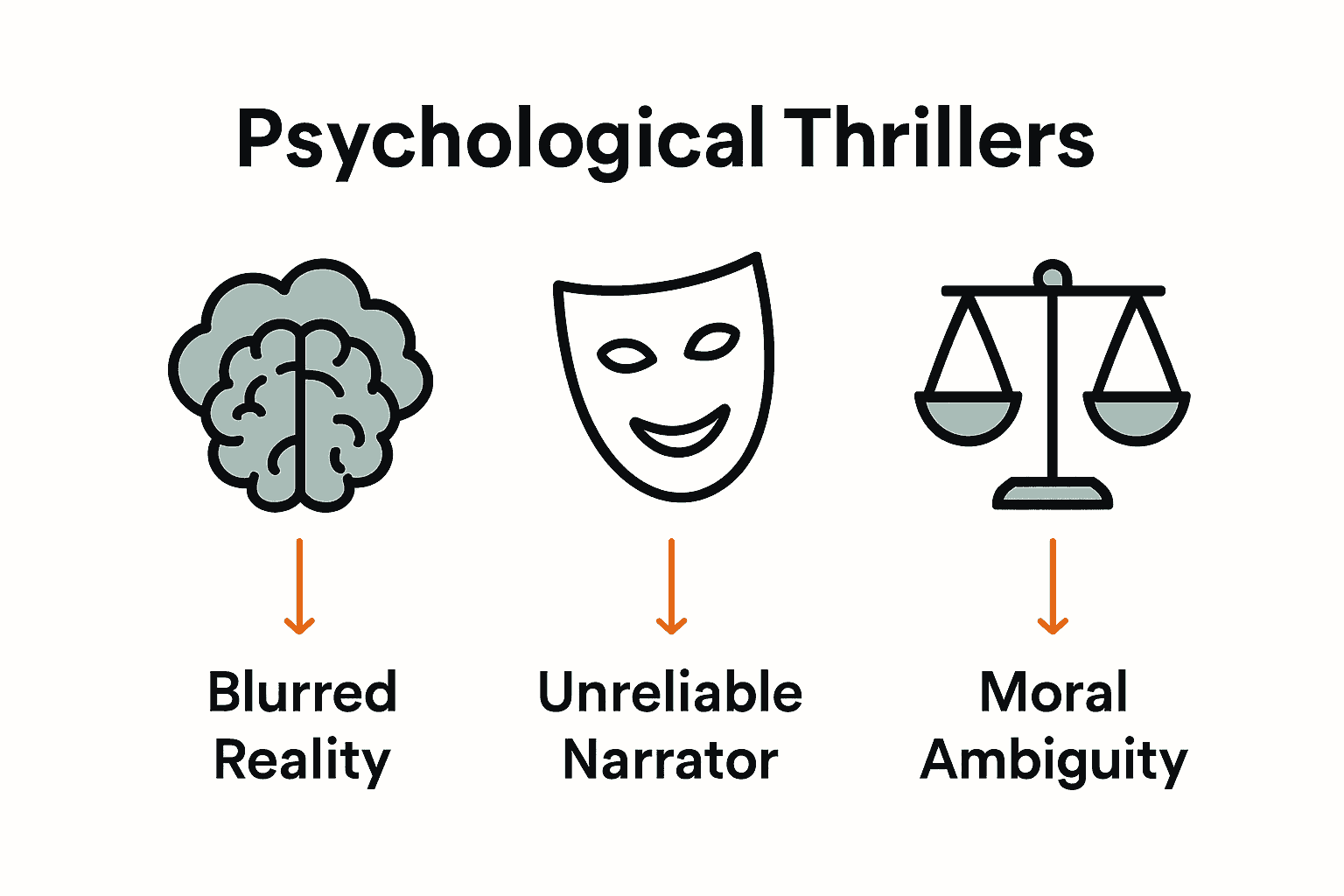
Psychological thrillers are characterized by distinctive narrative techniques and recurring themes that distinguish them from other genres. According to Wikipedia, two critical motifs are the unreliable narrator and the MacGuffin – narrative devices that deliberately challenge audience expectations and create psychological tension.
The concept of an unreliable narrator is particularly fascinating, as it invites readers to constantly question the authenticity of the storytelling. Movie Time Today explores how these narratives frequently revolve around themes of identity crisis, where characters wrestle with complex psychological challenges such as amnesia or multiple personalities. This narrative strategy transforms the storytelling from a simple plot progression into a nuanced exploration of perception and mental states.
Key recurring patterns in psychological thrillers include:
These motifs are not merely stylistic choices but powerful tools for psychological exploration. By presenting characters who are fundamentally uncertain about their own experiences, psychological thrillers create a profound sense of unease and intellectual engagement.
 The genre invites readers to become active participants in unraveling complex psychological landscapes, challenging conventional narrative expectations and offering deep insights into human consciousness.
Here’s a summary of major themes and motifs in psychological thrillers:
| Theme or Motif | Key Characteristics | Narrative Purpose |
|---|---|---|
| Blurred Reality & Perception | Reality vs. delusion Fragile memory Uncertainty |
Create constant doubt Challenge perception |
| Identity & Transformation | Identity crisis Split personalities Psychological change |
Explore self-discovery Drive character arcs |
| Moral Ambiguity | Ethical dilemmas Questionable motives Dark impulses |
Blur good and evil Reveal hidden motives |
| Unreliable Narrator | Withheld information Contradictory accounts Cognitive dissonance |
Manipulate audience Deepen suspense |
| Psychological Manipulation | Gradual revelations Audience misdirection Emotional tension |
Engage reader’s intellect Build tension |
Psychological manipulation lies at the heart of narrative complexity in psychological thrillers, with unreliable narrators serving as the primary mechanism for creating profound psychological tension. Fiveable explains that these narrators deliberately challenge viewers’ perceptions by presenting skewed or deceptive information, effectively blurring the lines between objective reality and subjective experience.
StudySmarter highlights how non-linear storytelling and unreliable narration function as sophisticated narrative techniques that immerse audiences directly into characters’ complex mental landscapes. By systematically destabilizing traditional storytelling conventions, these narratives force readers to constantly question not just the story’s progression, but their own interpretations of unfolding events.
Key characteristics of psychological manipulation in narratives include:
The ultimate power of unreliable narration lies in its ability to transform storytelling from a passive experience into an active psychological investigation.
Readers become detectives, parsing through fragmented memories, conflicting accounts, and intentionally obscured motivations. This approach doesn’t just tell a story – it invites audiences to deconstruct the very nature of perception, truth, and psychological reliability.
Psychological thrillers serve as a profound exploration of the intricate moral landscapes that define human behavior. Wikipedia highlights how these narratives challenge traditional moral frameworks by presenting worlds where conventional notions of right and wrong become fundamentally blurred. The genre confronts readers with characters who exist in morally complex spaces, often revealing the thin line separating rational behavior from destructive impulses.
StudySmarter emphasizes that these narratives are not about simplistic good versus evil dichotomies, but about intricate human complexities. Characters are presented with ethical dilemmas that expose the nuanced internal struggles driving human decision-making, challenging readers to consider the psychological motivations behind seemingly inexplicable actions.
Key aspects of moral ambiguity in psychological thrillers include:
Ultimately, psychological thrillers function as sophisticated psychological investigations. They strip away comfortable illusions about human nature, revealing the complex emotional and moral mechanisms that drive human behavior. By presenting characters who defy simple categorization, these narratives invite readers to confront the uncomfortable truth that morality is rarely absolute, but instead a fluid, context-dependent experience shaped by individual perception and circumstance.
Psychological thrillers have undergone a remarkable transformation, evolving to reflect the complex psychological landscapes of contemporary society. StudySmarter highlights how technological advancements have significantly enhanced visual storytelling, enabling more immersive narrative experiences that explore increasingly nuanced psychological themes.
Fiveable reveals that these narratives have become powerful mirrors of societal anxieties, tapping into collective fears about identity and trust. By presenting characters who struggle with self-perception and the reliability of human connections, psychological thrillers create a profound reflective space that resonates deeply with modern audiences’ inner psychological tensions.
Key trends shaping the reader experience include:
The genre continues to evolve as a sophisticated psychological investigation, challenging readers to confront uncomfortable truths about human nature. By presenting narratives that refuse simple resolutions, psychological thrillers transform reading from a passive experience into an active psychological exploration. For readers seeking deeper insights into gripping thriller stories, this genre offers an unparalleled journey into the intricate landscapes of human consciousness.
Psychological thrillers explore the fragile boundaries of reality and the complex journeys of identity and perception. If you’ve ever felt captivated yet unsettled by stories with unreliable narrators and moral ambiguity, you are not alone. These themes challenge your understanding of truth and push you to see beyond the surface. At The Short Reads, we understand your craving for gripping narratives that dive into these intricate psychological landscapes.
Experience unforgettable stories that bring these powerful themes to life. Our selection of psychological thriller short reads offers fast-paced, thought-provoking novellas and short books designed to immerse you immediately. Don’t wait to explore mind-bending tales full of suspense and subtle twists. Visit The Short Reads now and unlock a world where every page invites you to rethink reality and dive into the heart of human consciousness.
The main themes in psychological thrillers include blurred boundaries between reality and perception, exploration of individual identity and psychological transformation, moral ambiguity and ethical dilemmas, psychological isolation and internal conflict, and the fragility of human perception and memory.
An unreliable narrator challenges the audience’s perceptions by presenting skewed or deceptive information, creating cognitive dissonance, and keeping readers guessing about what is true. This narrative technique enhances psychological tension and deepens engagement with the story.
Common narrative techniques in psychological thrillers include non-linear storytelling, unreliable narration, character-driven plots that focus on psychological depth, and internal conflicts that manifest in external actions, all aimed at creating tension and a complex reading experience.
Psychological thrillers explore moral ambiguity by presenting characters who operate outside traditional ethical boundaries, revealing the complexities of psychological motivations, and challenging binary moral perspectives, which leads readers to confront the intricacies of human behavior.
Article generated by BabyLoveGrowth
Share