
Tag Archives for " legal thrillers "
Short Reads vs Full Novels: Complete Guide

Over 60 percent of readers admit they struggle to finish traditional novels in today’s busy world. With so many stories available in bite-sized formats, the lines between short reads and full novels can get confusing fast. Knowing exactly what sets these two forms apart helps you save time and ensures a satisfying reading experience, whether you want a quick adventure or a deep literary journey.
Table of Contents
- Short Reads vs Full Novels Defined
- Genres and Types: Mysteries, Thrillers, and More
- Key Benefits and Appeal for Modern Readers
- Misconceptions About Short and Long Fiction
- Choosing the Right Format for Your Lifestyle
Key Takeaways
| Point | Details |
|---|---|
| Short Reads | Ideal for quick consumption, short reads offer concise narratives focusing on single plots and emotional intensity. |
| Full Novels | Provide an immersive experience, allowing for complex character development and exploration of intricate themes. |
| Modern Appeal | Short reads cater to busy lifestyles by delivering impactful stories in less time, appealing to a diverse range of readers. |
| Misconceptions | Short stories are not lesser forms of narrative; they entail unique structures capable of profound thematic exploration. |
Short Reads vs Full Novels Defined
Understanding the fundamental differences between short reads and full novels is crucial for readers seeking the perfect literary experience. According to Eric Education Research, these two forms of storytelling have distinct characteristics that shape their narrative structure, complexity, and reader engagement.
A short read is a concise narrative typically ranging between 3,500-7,500 words, designed to be consumed in a single sitting. As research from RSIS International explains, short stories are prose narratives that focus on:
- A single plot or event
- A limited number of characters
- A unified, concentrated theme
- Creating a singular emotional effect or mood
In contrast, a full novel presents a more expansive narrative landscape. These longer works typically involve:
- Multiple connected sequences of events
- Complex character developments
- Intricate sub-plots
- Broader exploration of themes and societal issues
- Extended time frames and multiple settings
The primary distinction lies in depth and scope.
 Short reads offer quick, intense bursts of storytelling that can be rapidly consumed, perfect for busy readers or those seeking concentrated narrative experiences.
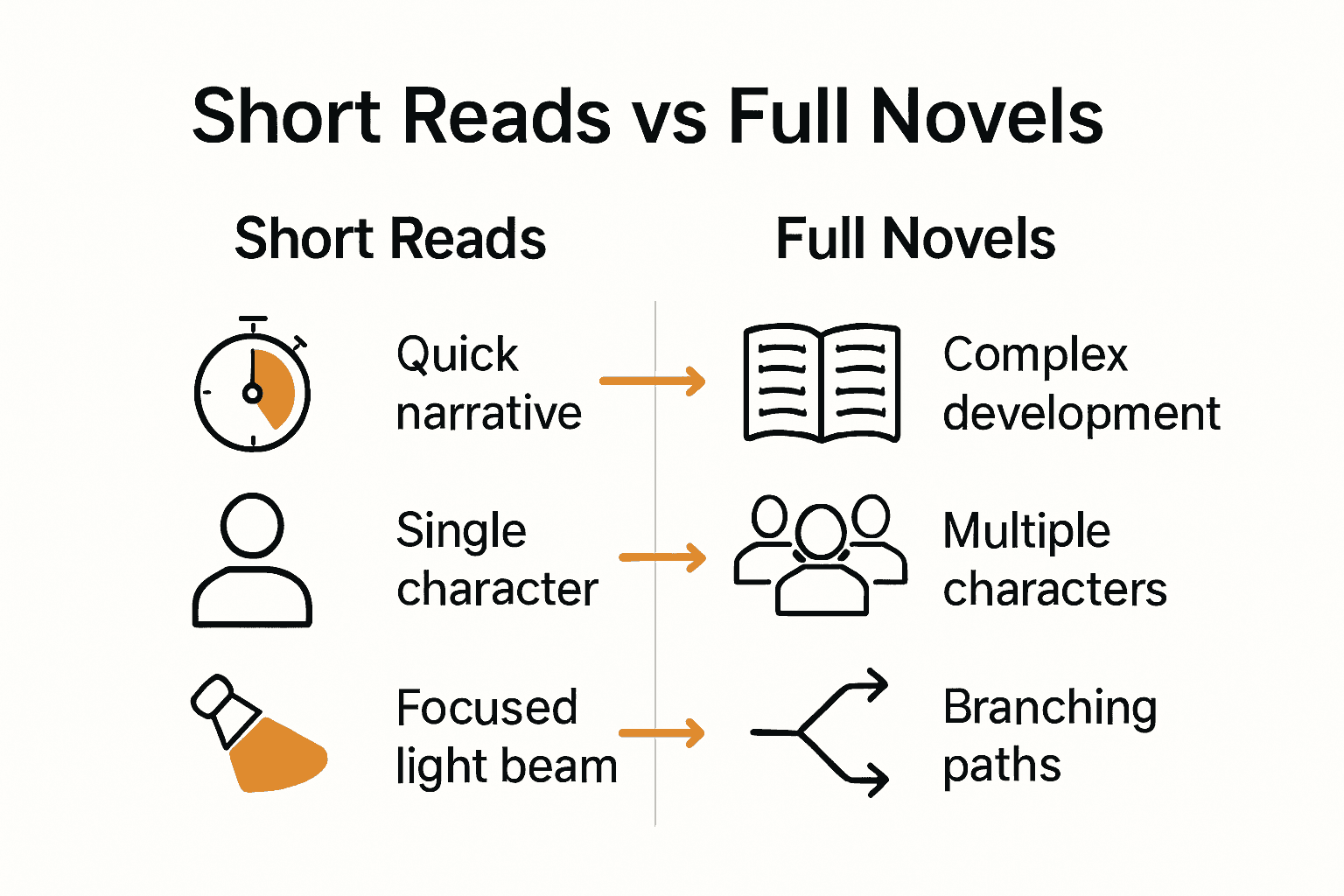 Full novels from TheShortReads.com provide more immersive, comprehensive storytelling that allows readers to deeply explore characters, environments, and intricate narrative arcs.
Genres and Types: Mysteries, Thrillers, and More
The world of short reads and novels is rich with diverse genres that cater to different reader preferences and storytelling styles. According to AS Authors, mystery and thriller genres offer a fascinating array of subgenres that capture readers’ imaginations with unique narrative approaches.
Mystery Genres encompass several compelling subgenres:
- Noir Fiction: Dark, atmospheric stories with morally complex characters
- Locked Room Mysteries: Seemingly impossible crime scenarios that challenge logical reasoning
- Cozy Mysteries: Gentle narratives featuring amateur sleuths in small communities
- Hard-Boiled Mysteries: Gritty urban settings with tough, realistic detective protagonists
As research from English Studies reveals, Thriller Genres offer equally diverse storytelling experiences:
- Psychological Thrillers: Deep explorations of characters’ mental landscapes
- Espionage Thrillers: High-stakes spy narratives with international intrigue
- Political Thrillers: Dramatic stories involving governmental conspiracies
- Legal Thrillers: Intense courtroom and legal system narratives
For readers seeking a comprehensive understanding of these intricate genres, Mystery Fiction Terminology Guide provides deeper insights into the nuanced world of mystery and thriller narratives. Each genre offers a unique lens through which complex human experiences are explored, making them perfect for readers who enjoy compact, intense storytelling experiences.
Key Benefits and Appeal for Modern Readers
In today’s fast-paced world, readers are increasingly seeking literary experiences that fit their dynamic lifestyles. According to research from RSIS International, short reads have emerged as the perfect solution for modern readers seeking meaningful narratives in compact formats.
Key Benefits of Short Reads:
- Time Efficiency: Complete stories in a single sitting
- Immediate Gratification: Quick narrative resolution
- Accessibility: Perfect for commuters and busy professionals
- Diverse Storytelling: Intense, focused narrative experiences
Research from Eric Education Files highlights additional advantages, noting that short novels provide significant benefits beyond entertainment. They offer:
- Vocabulary Development: Introduction of new words in context
- Sustained Narrative Engagement: Maintaining reader interest
- Motivational Reading Experience: Encouraging continued literary exploration
Understanding the Benefits of Short Reads reveals that these compact narratives are more than just quick reads. They represent a sophisticated literary form that caters to contemporary reading habits, offering rich storytelling experiences without demanding extensive time commitments. Modern readers can now enjoy complex narratives, character developments, and thematic explorations in formats that seamlessly integrate with their busy lifestyles.
Misconceptions About Short and Long Fiction
The literary world is rife with misunderstandings about the nature and value of short reads and full-length novels. According to Eric Education Research, one of the most persistent misconceptions is that short stories are simply condensed versions of novels.
Common Misconceptions About Short Fiction:
- Myth: Short stories lack complexity
- Reality: Concentrated narrative depth
- Myth: They are just incomplete novel drafts
- Reality: Distinct narrative art form with unique structure
Research from RSIS International challenges another widespread belief, revealing that short stories are not shallow or less meaningful simply because of their brevity. In fact, they are meticulously crafted to:
- Deliver profound themes in minimal space
- Create intense emotional experiences
- Provide complete narrative arcs
- Engage readers with precision and impact
What is Flash Fiction? demonstrates that these compact narratives are sophisticated literary forms, capable of conveying complex ideas and emotions with remarkable efficiency. Contrary to popular belief, the length of a story does not determine its depth, emotional resonance, or artistic merit. Short fiction demands a different kind of mastery from writers – the ability to distill entire worlds and experiences into a few powerful pages.
Choosing the Right Format for Your Lifestyle
Reading is a personal journey that should seamlessly integrate with your unique lifestyle and time constraints. According to Eric Education Files, choosing between short reads and full novels is about finding the perfect literary experience that matches your available time and reading preferences.
Lifestyle Reading Profiles:
- The Commuter Reader: Short stories during transit
- The Weekend Warrior: Full novels during leisure time
- The Busy Professional: Novellas between work commitments
- The Constant Learner: Mix of formats for diverse experiences
Research from RSIS International highlights that reading formats are not one-size-fits-all. Different formats offer unique advantages:
- Short Stories: Quick, impactful reading sessions
- Novels: Deep, immersive narrative experiences
- Novellas: Balanced storytelling length
Short Reads vs Novels Guide reveals that modern readers have unprecedented flexibility in crafting their reading experience. Whether you have 15 minutes or several hours, there’s a literary format designed to fit your schedule, mood, and intellectual curiosity. The key is understanding your personal reading rhythm and choosing formats that enhance, rather than interrupt, your daily life.
Discover Stories That Fit Your Life
Struggling to find the perfect read that matches your busy schedule and craving for intense, immersive stories Understand the challenge of balancing time with rich storytelling We know you want quick, meaningful narratives that still deliver complex characters and gripping plots Whether you prefer cozy mysteries or psychological thrillers the challenge of picking between short reads and full novels can feel overwhelming
Explore a world of short read books that capture every thrilling moment from action-packed novellas to intricate murder mysteries Our collection at TheShortReads.com offers a variety of formats and genres that fit your lifestyle and keep you hooked The article highlighted how short reads provide immediate gratification while still embracing depth – now you can experience that firsthand with expertly crafted stories designed for readers like you
Dive into categories such as psychological thriller short reads and mystery fiction short reads crafted to trigger emotions and deliver powerful narratives in a fraction of the time you thought possible

Don’t wait to transform your reading habit Find your next favorite short read today and enjoy the perfect story no matter how much time you have Visit TheShortReads.com now and start your literary adventure with a thrilling, concise, and rewarding experience
Frequently Asked Questions
What is a short read?
A short read is a concise narrative typically ranging between 3,500 to 7,500 words, designed to be consumed in a single sitting, focusing on a single plot or event with limited characters and a unified theme.
How do short stories differ from full novels?
Short stories are generally shorter, focusing on a single event or theme, while full novels offer a more expansive narrative with multiple sequences, complex character developments, and broader thematic explorations.
What are the benefits of reading short stories?
Short stories provide time efficiency, immediate gratification, and accessibility, making them ideal for busy readers. They also help in vocabulary development and sustain narrative engagement.
Are short reads as valuable as full-length novels?
Yes, short reads are a distinct narrative art form that can deliver profound themes and intense emotional experiences despite their brevity. They are meticulously crafted to engage readers deeply in a compact format.
Recommended
- Short Reads vs Novels: Complete Guide for Readers – TheShortReads.com
- Understanding the Benefits of Short Reads – TheShortReads.com
- Best Short Books – TheShortReads.com
- What is Flash Fiction? Understanding This Unique Story Form – TheShortReads.com


7 Gripping Examples of Thriller Stories to Read

In looking at 7 gripping examples of thriller stories to read, most people expect jump scares or a simple whodunit, but the real power comes from how these stories dig into human fear, social tension, and hidden motives.
Thrillers have a way of grabbing you from the first page and refusing to let go. Think of Stephen King’s ‘The Shining’ with its protagonist’s terrifying psychological collapse set in a hotel that becomes a living trap.
The most unforgettable thrillers are the ones that unnerve you not with monsters or villains, but by exposing the darkness lurking inside everyday life.
Table of Contents
- Classic Psychological Thrillers: The Shining
- Modern Suspense: Gone Girl
- Classic Crime Thrillers: The Silence of the Lambs
- International Thrills: The Girl with the Dragon Tattoo
- Engaging Legal Thrillers: A Time to Kill
- Action-Packed Adventures: The Bourne Identity
- Supernatural Mystery: The Haunting of Hill House
Quick Summary
| Takeaway | Explanation |
|---|---|
| Explore psychological disintegration in thrillers | Novels like “The Shining” delve into mental breakdowns driven by isolation and trauma. |
| Unreliable narratives elevate suspense | In “Gone Girl,” alternating perspectives enhance psychological manipulation and keep readers guessing. |
| Complex protagonists redefine genres | Characters such as Clarice Starling challenge traditional portrayals with depth and vulnerability. |
| Social critique enhances thriller plots | Works like “The Girl with the Dragon Tattoo” intertwine social issues with gripping narratives. |
| Moral complexities shape legal thrillers | “A Time to Kill” confronts racism and justice through intense courtroom drama, prompting ethical reflections. |
1: Classic Psychological Thrillers: The Shining
Stephen King’s “The Shining” represents a masterclass in psychological thriller storytelling, transcending traditional horror narrative by exploring profound psychological disintegration. Published in 1977, this novel delves deep into the human psyche, presenting a terrifying exploration of isolation, mental breakdown, and supernatural manipulation.
The story centers on Jack Torrance, a struggling writer and recovering alcoholic who becomes the winter caretaker at the isolated Overlook Hotel in Colorado. As documented by research published in the Journal of Language and Linguistic Studies, the novel brilliantly captures the psychological trauma of extreme isolation and familial tension.
Key elements that make “The Shining” a compelling psychological thriller include:
- Intense psychological deterioration of the protagonist
- Supernatural elements intertwined with human vulnerability
- Claustrophobic setting that amplifies mental tension
- Complex family dynamics under extreme stress
King masterfully transforms the hotel into more than just a physical space it becomes a character itself, manipulating Jack’s fragile mental state. The narrative explores how environmental pressures and internal psychological struggles can trigger catastrophic mental breakdown. Jack’s gradual transformation from a struggling writer trying to reconnect with his family to a violent, possessed individual represents a chilling study of human psychological fragility.
For readers interested in exploring more psychological thriller experiences, “The Shining” offers an unparalleled journey into the darkest corners of human consciousness. Its enduring legacy lies not just in its supernatural elements, but in its profound psychological exploration of how isolation, addiction, and past traumas can unravel an individual’s sanity.
2: Modern Suspense: Gone Girl
Gillian Flynn’s “Gone Girl” revolutionized the psychological thriller genre, introducing a narrative that challenges traditional storytelling expectations. Published in 2012, this novel became a cultural phenomenon by presenting a dark and intricate exploration of marriage, media manipulation, and personal deception.
The story follows Nick and Amy Dunne, a seemingly perfect couple whose relationship dramatically unravels when Amy mysteriously disappears on their fifth wedding anniversary. As research from Time magazine highlights, the novel subverts traditional gender narratives by presenting complex, deeply flawed characters.
Key characteristics that distinguish “Gone Girl” as a modern thriller include:
- Alternating narrative perspectives revealing unreliable storytelling
- Profound psychological manipulation between characters
- Sophisticated critique of media sensationalism
- Unexpected plot twists that challenge reader expectations
Flynn masterfully constructs a narrative that keeps readers guessing, employing multiple narrative voices and strategic revelations that systematically deconstruct the characters’ public personas. The novel explores themes of identity, performance, and the masks people wear in relationships.
Moreover, the book offers a scathing commentary on contemporary marriage, media culture, and societal expectations. Its intricate plot demonstrates how personal narratives can be constructed, manipulated, and weaponized. For readers looking to dive deeper into suspenseful storytelling, “Gone Girl” represents a landmark work that redefined psychological thriller conventions.
3: Classic Crime Thrillers: The Silence of the Lambs
Thomas Harris’s “The Silence of the Lambs” stands as a groundbreaking thriller that redefined the crime genre, blending psychological complexity with forensic intrigue. Originally published in 1988, this novel introduced readers to two of the most compelling characters in modern literature: FBI trainee Clarice Starling and the brilliant, cannibalistic serial killer Dr. Hannibal Lecter.
According to research exploring the novel’s cultural impact, the story represents a profound exploration of psychological manipulation and professional ambition. The narrative follows Clarice Starling, a young FBI trainee tasked with interviewing Dr. Lecter to gain insights into capturing another serial killer, Buffalo Bill.
Key elements that make “The Silence of the Lambs” a remarkable thriller include:
- Complex psychological profiling of criminal personalities
- Intense cat-and-mouse intellectual confrontations
- Powerful character development of both protagonist and antagonists
- Forensic details that add authenticity to the narrative
The novel revolutionized the crime thriller genre by presenting a female protagonist who is both vulnerable and extraordinarily competent. Clarice Starling challenges traditional gender narratives in law enforcement, using her intelligence and psychological insight to navigate dangerous criminal landscapes.
Dr. Hannibal Lecter emerges as one of literature’s most fascinating antagonists a brilliant psychiatrist whose intellectual prowess is matched only by his psychological darkness. Their interactions create a unique dynamic that transcends typical crime narrative structures. For those intrigued by thriller storytelling, “The Silence of the Lambs” offers an unparalleled exploration of human psychology, criminal motivation, and institutional power dynamics.
4: International Thrills: The Girl with the Dragon Tattoo
Stieg Larsson’s “The Girl with the Dragon Tattoo” emerged as a groundbreaking international thriller that transformed global perceptions of Scandinavian crime fiction. Published posthumously in 2005, this novel introduced readers to Lisbeth Salander, a complex and unconventional protagonist who defies traditional narrative expectations.
According to research from Illinois Wesleyan University, the novel offers a profound critique of Swedish societal structures, exposing deep-rooted issues of misogyny, economic corruption, and systemic violence.
Key elements that distinguish this thriller include:
- Intricate investigative journalism narrative
- Powerful exploration of gender dynamics
- Complex technological and forensic elements
- Unflinching examination of social marginalization
The story centers on Mikael Blomkvist, an investigative journalist, and Lisbeth Salander, a brilliant but socially marginalized computer hacker. Together, they unravel a complex mystery involving a wealthy industrial family’s dark secrets. Salander represents a revolutionary character who challenges traditional gender stereotypes, presenting a raw, unapologetic portrayal of a survivor who transforms her trauma into strength.
Larsson’s narrative goes beyond typical thriller conventions, embedding deep social commentary within a gripping investigative framework. The novel scrutinizes systemic violence against women, corporate corruption, and the hidden darkness beneath Sweden’s progressive social facade. For enthusiasts of international thriller fiction, this book offers a masterclass in combining social critique with heart-pounding narrative tension.
5: Engaging Legal Thrillers: A Time to Kill
John Grisham’s “A Time to Kill” represents a powerful exploration of justice, racism, and moral complexity set against the backdrop of the Mississippi legal system. Published in 1989, this novel emerged as a groundbreaking narrative that confronts systemic racism through an intense legal drama centered on a father’s desperate quest for justice.
According to research from academic scholars, the story offers a nuanced examination of racial tensions in the American South, challenging readers to consider complex ethical dilemmas beyond traditional legal narratives.
Key elements that distinguish this legal thriller include:
- Profound exploration of racial injustice
- Intense courtroom drama with high emotional stakes
- Moral ambiguity surrounding individual versus systemic justice
- Authentic portrayal of Southern legal landscape
The narrative follows Jake Brigance, a young white attorney defending Carl Lee Hailey, a Black father who murders two white men who brutally assaulted his young daughter. The trial becomes a microcosm of broader societal conflicts, challenging readers to confront uncomfortable truths about racial inequality, personal vengeance, and legal ethics.
Grisham masterfully constructs a narrative that goes beyond traditional legal thriller conventions, transforming a courtroom drama into a profound meditation on personal moral courage versus systemic oppression. The story forces readers to grapple with challenging questions about justice, revenge, and the complex intersections of race and law. For those intrigued by compelling legal narratives, “A Time to Kill” offers an unforgettable journey through moral complexity and human resilience.
6: Action-Packed Adventures: The Bourne Identity
Robert Ludlum’s “The Bourne Identity” revolutionized the espionage thriller genre, introducing a complex protagonist who defies traditional spy narrative conventions. Published in 1980, the novel presents Jason Bourne as a multi-dimensional character struggling with identity and survival in a dangerous international landscape.
According to research from JSTOR, the novel represents a pivotal moment in thriller fiction, transforming the archetype of the spy from a one-dimensional operative to a deeply nuanced character wrestling with psychological trauma and fragmented memory.
Key elements that distinguish this thriller include:
- Intense psychological exploration of memory and identity
- High-stakes international espionage backdrop
- Complex moral ambiguity of intelligence operations
- Rapid narrative pacing with intricate plot developments
The story follows Jason Bourne, a mysterious man discovered with significant amnesia but possessing extraordinary combat and survival skills. As he attempts to uncover his true identity, he becomes entangled in a dangerous web of international intelligence agencies, mercenaries, and his own mysterious past.
Ludlum brilliantly constructs a narrative that goes beyond traditional action adventures, transforming the spy thriller into a profound exploration of personal identity and psychological reconstruction. The novel challenges readers to consider the thin line between individual agency and institutional manipulation. For enthusiasts of action-packed narratives, “The Bourne Identity” offers a masterclass in combining psychological depth with heart-stopping adventure.
7: Supernatural Mystery: The Haunting of Hill House
Shirley Jackson’s “The Haunting of Hill House” stands as a revolutionary supernatural thriller that transcends traditional ghost story conventions, blending psychological complexity with supernatural intrigue. Published in 1959, this novel represents a groundbreaking exploration of psychological terror and social alienation.
According to research from the Arizona Quarterly, the novel uses Gothic literary conventions to examine profound themes of domesticity, psychological instability, and societal marginalization through its intricate narrative structure.
Key elements that distinguish this supernatural thriller include:
- Nuanced psychological character development
- Ambiguous supernatural phenomena
- Complex exploration of individual trauma
- Subtle psychological manipulation of perception
The story follows four characters who arrive at the mysterious Hill House to investigate its paranormal reputation: Dr. Montague, a supernatural researcher, Eleanor Vance, a psychologically fragile woman with latent supernatural sensitivity, Luke Sanderson, the home’s potential heir, and Theodora, an artist with intuitive capabilities.
Jackson masterfully blurs the lines between psychological breakdown and supernatural experience, creating a narrative where readers cannot definitively distinguish between Eleanor’s mental state and genuine supernatural events. The house itself becomes a character, representing psychological oppression and societal constraints.
Below is a comprehensive table summarizing the article’s key thriller story examples, major themes, and distinguishing features to give readers a quick reference overview of the article’s main points.
| Thriller Example | Main Themes/Focus | Distinguishing Features |
|---|---|---|
| The Shining (Stephen King) | Psychological disintegration, isolation, trauma | Claustrophobic setting, supernatural influences, family breakdown |
| Gone Girl (Gillian Flynn) | Marriage, manipulation, media deception | Unreliable narrators, alternating perspectives, sharp plot twists |
| The Silence of the Lambs (Thomas Harris) | Crime psychology, ambition, professional rivalry | Strong female lead, complex antagonist, forensic intrigue |
| The Girl with the Dragon Tattoo (Larsson) | Social critique, gender, marginalization | Scandinavian setting, technological intrigue, social commentary |
| A Time to Kill (John Grisham) | Racism, justice, moral ambiguity | Southern legal drama, racial tension, ethical dilemmas |
| The Bourne Identity (Robert Ludlum) | Identity, memory, espionage | Amnesiac protagonist, international intrigue, psychological depth |
| The Haunting of Hill House (Jackson) | Supernatural ambiguity, trauma, alienation | Blurred reality, gothic setting, psychological terror |
For readers fascinated by supernatural mysteries, “The Haunting of Hill House” offers an unparalleled journey into the complex terrain where psychological vulnerability intersects with supernatural uncertainty.
Discover Your Next Short Thriller – Enjoy Intense Suspense Without the Commitment
Do gripping stories like “The Shining” or “Gone Girl” appeal to you, but you struggle to find time for long novels? If you have ever felt overwhelmed by the idea of thick books or wish you could experience the thrill of expertly crafted suspense in a fraction of the time, you are not alone. Many readers just want the excitement of a psychological, legal, or supernatural thriller without long reading hours. At TheShortReads.com, we specialize in delivering fast, accessible stories under 150 pages for busy schedules and casual readers. Our short fiction options are the perfect solution for anyone wanting to explore unforgettable characters and deep psychological twists—just like the standout examples highlighted in this article—without any pressure or time investment.

Ready to experience powerful storytelling in a more approachable way? Visit TheShortReads.com now and download your first free short thriller to discover how engaging quick reads can be. Looking for more genres that match your favorite thrillers? Explore our collection of short suspense stories for instant access and start building your reading habit today before another story passes you by.
Frequently Asked Questions
What are some key characteristics of psychological thrillers?
Psychological thrillers often involve intense character development, exploring themes of mental instability, manipulation, and the impact of isolation or trauma on the mind. They typically feature unreliable narrators and intricate, suspenseful plots.
How does ‘Gone Girl’ challenge traditional thriller narratives?
‘Gone Girl’ employs alternating narrative perspectives and unreliable storytelling, complicating the perception of characters. It offers a deep psychological exploration of marriage and media manipulation, featuring unexpected plot twists that keep readers engaged.
What makes ‘The Silence of the Lambs’ an innovative crime thriller?
‘The Silence of the Lambs’ blends psychological depth with forensic intrigue, featuring a strong female protagonist and a complex antagonist. Its exploration of criminal psychology and intense character interactions set it apart from traditional crime thrillers.
How do supernatural elements enhance the narrative in ‘The Haunting of Hill House’?
In ‘The Haunting of Hill House,’ supernatural elements are intricately woven with psychological complexities, creating ambiguity around character experiences. The house itself acts as a character, reflecting and amplifying the protagonists’ psychological states, thereby heightening the overall tension.
Recommended
- Thriller Books
- Thriller Fiction –
- Psychological Thriller
- Short Mystery Writing Tips for Captivating Tales

