
Tag Archives for " immediate gratification "
Short Reads vs Novellas: Everything You Need to Know

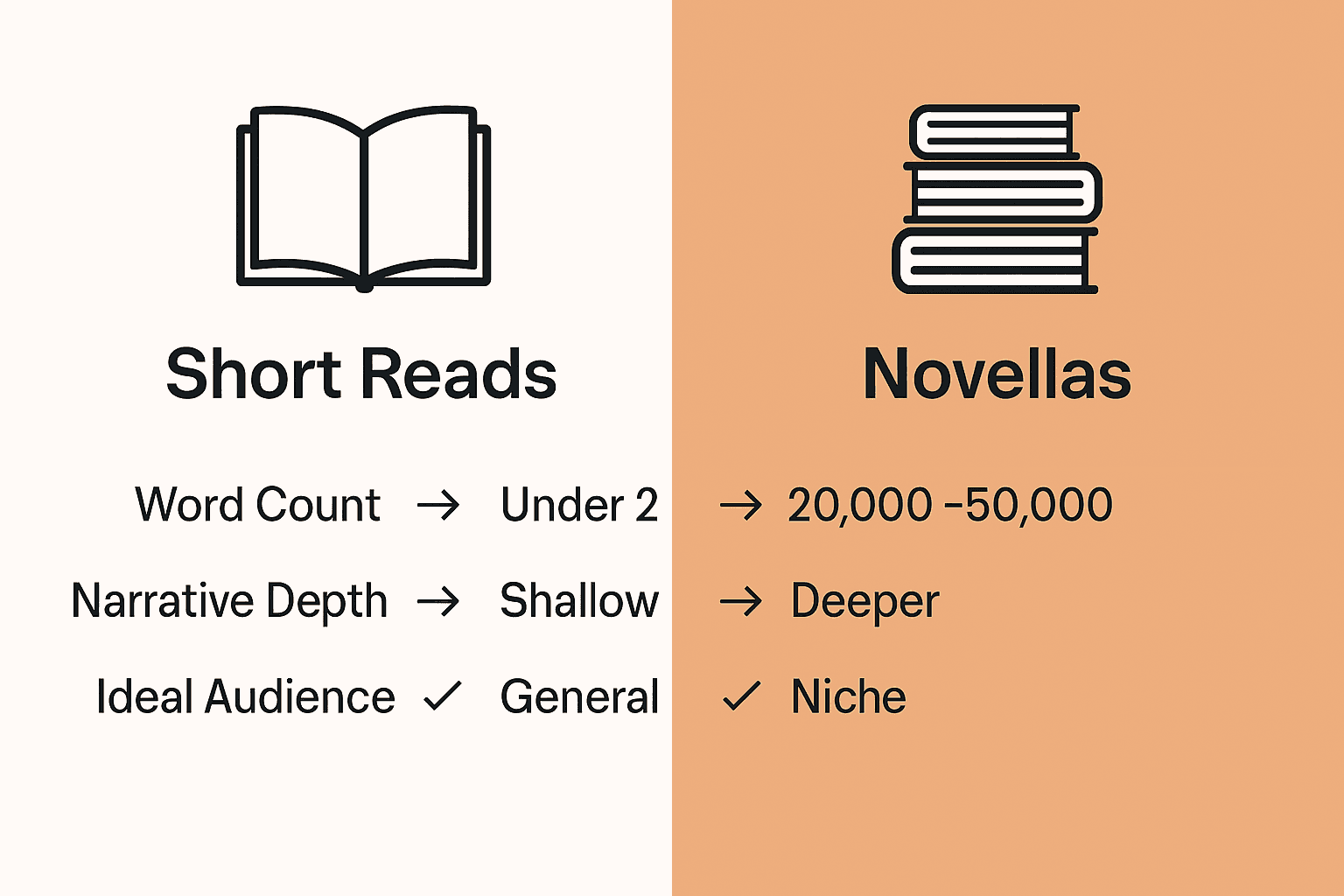
Most readers have felt the frustration of picking up a book that is either too brief or overwhelmingly long for their mood or schedule. Knowing whether you want a short read or a novella can make all the difference in enjoying your time with a story. Short reads usually clock in under 7,500 words and novellas range between 17,500 and 40,000 words. Understanding the real differences helps you select stories that match your interest, pace, and depth without second-guessing your choice.
Table of Contents
- Defining Short Reads And Novellas Clearly
- Key Differences In Length And Structure
- Popular Genres And Audience Preferences
- Benefits For Busy And Reluctant Readers
- Choosing Between Short Reads And Novellas
Key Takeaways
| Point | Details |
|---|---|
| Understanding Formats | Short reads are typically under 7,500 words, while novellas range from 17,500 to 40,000 words, allowing readers to choose based on their available time and engagement level. |
| Narrative Complexity | Novellas allow for deeper character development and complex themes compared to short reads, which focus on a single narrative arc. |
| Audience Preferences | Short reads appeal to busy readers seeking quick satisfaction, whereas novellas attract those who desire more intricate storytelling without committing to full novels. |
| Choosing the Right Format | Opt for short reads for immediate emotional impact and quick reads, while novellas are suited for stories requiring moderate depth and character exploration. |
Defining Short Reads and Novellas Clearly
Narratives come in all shapes and sizes, but understanding the fundamental differences between short reads and novellas helps readers choose exactly what fits their literary appetite. According to Wikipedia, a short story is “a piece of prose fiction that can typically be read in a single sitting and focuses on a self-contained incident or series of linked incidents, with the intent of evoking a single effect or mood.”
Novellas represent a fascinating middle ground in literary formats. Wikipedia defines them as “a narrative prose fiction whose length is shorter than most novels but longer than most short stories, typically ranging from 17,500 to 40,000 words.” This precise definition helps readers understand the structured landscape between brief stories and full-length novels.
Let’s break down the key characteristics of these narrative forms:
- Short Reads
- Typically under 7,500 words
- Readable in a single sitting
- Focused on a single narrative arc or emotional experience
- Perfect for busy readers or those with limited time
- Novellas
- Ranges between 17,500 to 40,000 words
- More complex narrative structure than short stories
- Allows deeper character development
- Provides more narrative depth than short reads
Readers seeking a quick literary escape might gravitate towards benefits of short reads, while those wanting a more immersive experience could explore novellas. Both formats offer unique storytelling opportunities that cater to different reading preferences and time constraints.
Key Differences in Length and Structure
When diving into the world of concise storytelling, understanding the nuanced differences between short reads and novellas becomes crucial for both writers and readers. International Association of Professional Writers and Editors provides clear parameters, noting that the Science Fiction and Fantasy Writers Association defines word count ranges that distinguish these formats: short stories extend up to 7,500 words, while novellas span between 17,500 and 40,000 words.
Beyond pure word count, these formats differ dramatically in narrative complexity and structural approach. New York Book Editors explain that novellas typically “concentrate on one event or character’s development arc, with a central theme or conflict” and notably lack the extensive subplots and detailed character development found in full-length novels.
Let’s explore the key structural differences:
Short Reads
- Ultra-compact narrative
- Single perspective or tight focus
- Minimal character background
- Typically resolves a single conflict
- Designed for quick, immediate emotional impact
Novellas
- More expansive narrative space
- Deeper character exploration
- Can develop more complex themes
- Often features a more intricate narrative arc
- Allows for more nuanced storytelling

Readers interested in understanding narrative techniques might want to check out our tutorial on short story structure, which provides deeper insights into these compelling storytelling formats.
Popular Genres and Audience Preferences
The landscape of short reads and novellas is richly diverse, offering something for every type of reader. New York Book Editors highlight that novellas are particularly popular in genres like science fiction, fantasy, and romance, appealing to readers who want compelling narratives that can be consumed in just one or two sittings.
International Center for Academic Research explains that novellas excel at providing an in-depth exploration of specific topics without demanding the time commitment of a full-length novel. This makes them perfect for readers who want a more immersive experience than a short story, but don’t have time for a sprawling novel.
Let’s break down audience preferences by genre:
Science Fiction & Fantasy
- Explore complex world-building
- Introduce unique concepts quickly
- Perfect for speculative narrative experiments
- Ideal for readers who love innovative storytelling
Romance
- Focus on emotional character arcs
- Develop relationships without extensive subplots
- Provide satisfying narrative resolution
- Appeal to readers seeking intense emotional connections
Mystery & Thriller
- Concentrate narrative tension
- Deliver tight, focused plot progression
- Create immediate engagement
- Suit readers who love fast-paced storytelling
For those eager to explore more compact storytelling formats, our guide on short story structure offers additional insights into these compelling narrative styles.
Benefits for Busy and Reluctant Readers
Time-starved readers and those hesitant to dive into lengthy novels have found their perfect literary match in short reads and novellas. New York Book Editors emphasize that novellas provide a more substantial narrative experience than short stories while remaining significantly faster to read than full-length novels, making them ideal for individuals with limited reading time.
International Center for Academic Research reveals an intriguing aspect of these compact narratives: their brevity forces writers to eliminate everything that doesn’t directly serve the central theme. This results in a laser-focused reading experience that captures and maintains reader engagement without overwhelming them with unnecessary details.
Key benefits for different reader types include:
For Busy Professionals
- Quick reading during commutes
- Complete stories in single sittings
- Intellectual stimulation without massive time investment
- Portable entertainment
For Reluctant Readers
- Less intimidating than lengthy novels
- Immediate narrative gratification
- Lower commitment threshold
- Builds reading confidence
For Multitaskers
- Fits into tight schedules
- Provides narrative satisfaction
- Can be read in short bursts
- Maintains reading momentum
Readers looking to explore compact storytelling can check out our guide on mystery fiction types for learners and busy readers, which offers additional insights into making reading more accessible and enjoyable.
Choosing Between Short Reads and Novellas
Navigating the literary landscape requires understanding the nuanced differences between short reads and novellas. New York Book Editors suggest that the primary consideration when selecting your narrative format is the inherent complexity of your story. Novellas offer a unique middle ground, providing more robust character development and plot intricacy than short stories while remaining more concentrated than full-length novels.
International Center for Academic Research recommends assessing your narrative’s core focus. If your story centers on a singular, compelling theme or conflict that demands more narrative depth than a short story but doesn’t require a novel’s expansive exploration, a novella might be your ideal storytelling vessel.
Key Decision Factors:
Choose a Short Read If:
- You have a single, powerful narrative moment
- Limited character background is needed
- Quick emotional impact is the primary goal
- Time constraints are significant
- Immediate storytelling resolution is preferred
Choose a Novella If:
- Your story needs moderate character development
- Complex themes require more space
- You want deeper narrative exploration
- The central conflict needs nuanced treatment
- Readers want more context than a short story
Readers seeking curated reading experiences can explore our best short books collection to discover compelling narratives that match their reading preferences.
Discover Your Perfect Story in Short Reads and Novellas
Choosing between short reads and novellas can feel overwhelming when you want a fulfilling story without investing too much time. This article showed how short reads deliver quick, powerful narratives while novellas provide richer character development and deeper themes. Whether you crave a fast emotional impact or a more immersive experience, finding the right format matters.
At The Short Reads, we understand these needs and offer a carefully curated collection of cozy mystery short reads, action thriller novellas, psychological thriller short reads, and more to match your mood and time availability. Our library is designed to keep you engaged without the overwhelm of a lengthy novel.
Elevate your reading journey today and explore stories crafted specifically for busy and thoughtful readers.
Ready to dive into stories that fit your life and interests perfectly Visit The Short Reads now and find your next great read from our mystery fiction short reads and murder mystery novellas collections Don’t wait to experience the joy of storytelling tailored to you
Frequently Asked Questions
What is the difference between short reads and novellas?
Short reads are typically under 7,500 words, focused on a single narrative arc, and designed to be read in one sitting. Novellas range from 17,500 to 40,000 words, allowing for more complex narrative structures and deeper character development.
How long does it take to read a novella compared to a short read?
Generally, short reads can be completed in a single sitting, often taking just an hour or less. Novellas, while still quicker than full-length novels, may take a couple of hours to read, depending on the length and the reader’s pace.
What genres are popular for novellas and short reads?
Both short reads and novellas are popular across various genres, but novellas are particularly favored in science fiction, fantasy, and romance. Short reads tend to be versatile and can encompass many different themes and styles.
Who benefits from reading short reads and novellas?
Time-starved readers, reluctant readers, and multitaskers benefit greatly from both formats. Short reads offer immediate emotional impacts, while novellas provide a more substantial narrative experience without the time investment required for full-length novels.
Recommended
- Understanding the Benefits of Short Reads – TheShortReads.com
- Best Short Books – TheShortReads.com
- What is Flash Fiction? Understanding This Unique Story Form – TheShortReads.com


Short Reads vs Full Novels: Complete Guide

Over 60 percent of readers admit they struggle to finish traditional novels in today’s busy world. With so many stories available in bite-sized formats, the lines between short reads and full novels can get confusing fast. Knowing exactly what sets these two forms apart helps you save time and ensures a satisfying reading experience, whether you want a quick adventure or a deep literary journey.
Table of Contents
- Short Reads vs Full Novels Defined
- Genres and Types: Mysteries, Thrillers, and More
- Key Benefits and Appeal for Modern Readers
- Misconceptions About Short and Long Fiction
- Choosing the Right Format for Your Lifestyle
Key Takeaways
| Point | Details |
|---|---|
| Short Reads | Ideal for quick consumption, short reads offer concise narratives focusing on single plots and emotional intensity. |
| Full Novels | Provide an immersive experience, allowing for complex character development and exploration of intricate themes. |
| Modern Appeal | Short reads cater to busy lifestyles by delivering impactful stories in less time, appealing to a diverse range of readers. |
| Misconceptions | Short stories are not lesser forms of narrative; they entail unique structures capable of profound thematic exploration. |
Short Reads vs Full Novels Defined
Understanding the fundamental differences between short reads and full novels is crucial for readers seeking the perfect literary experience. According to Eric Education Research, these two forms of storytelling have distinct characteristics that shape their narrative structure, complexity, and reader engagement.
A short read is a concise narrative typically ranging between 3,500-7,500 words, designed to be consumed in a single sitting. As research from RSIS International explains, short stories are prose narratives that focus on:
- A single plot or event
- A limited number of characters
- A unified, concentrated theme
- Creating a singular emotional effect or mood
In contrast, a full novel presents a more expansive narrative landscape. These longer works typically involve:
- Multiple connected sequences of events
- Complex character developments
- Intricate sub-plots
- Broader exploration of themes and societal issues
- Extended time frames and multiple settings
The primary distinction lies in depth and scope.
 Short reads offer quick, intense bursts of storytelling that can be rapidly consumed, perfect for busy readers or those seeking concentrated narrative experiences.
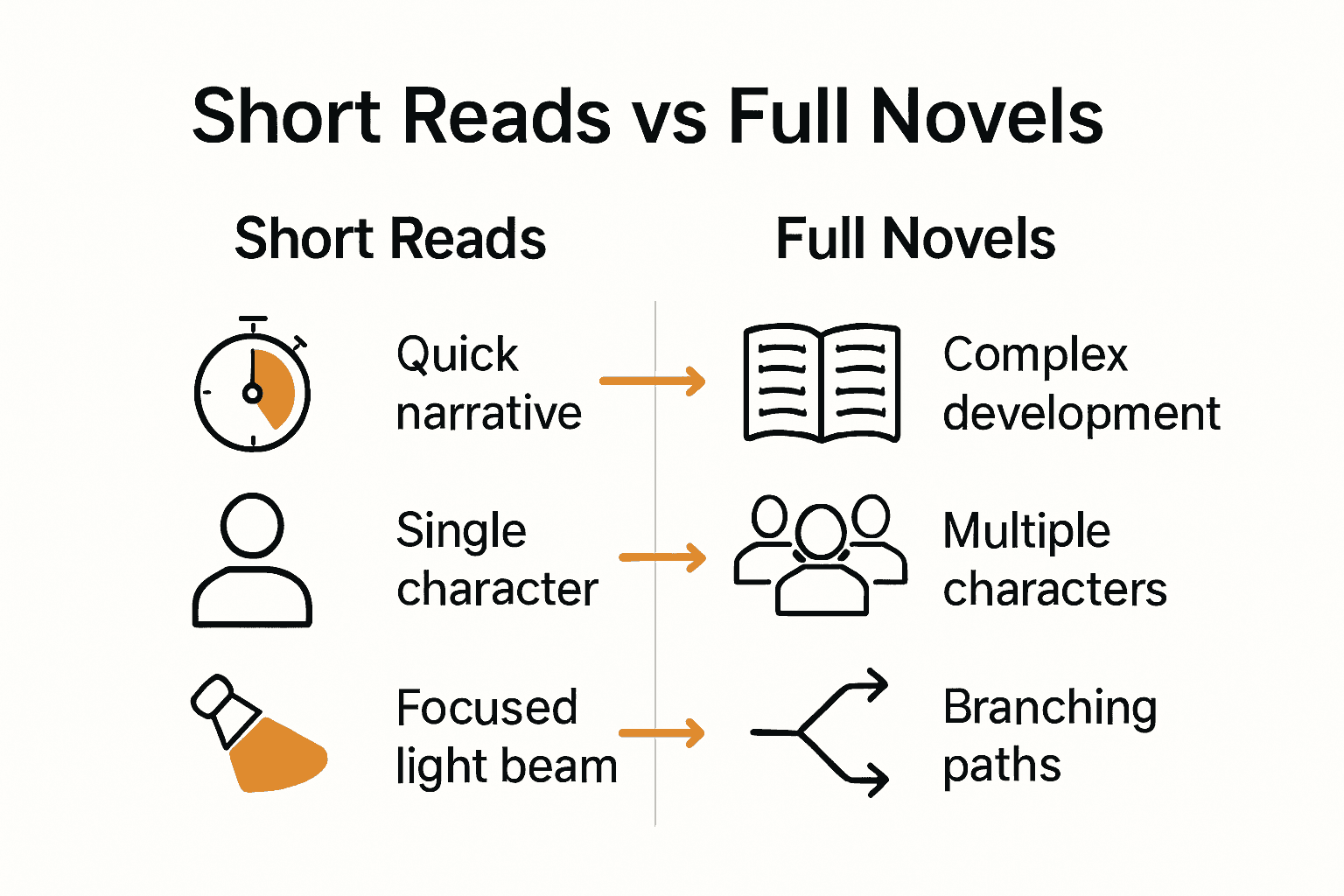 Full novels from TheShortReads.com provide more immersive, comprehensive storytelling that allows readers to deeply explore characters, environments, and intricate narrative arcs.
Genres and Types: Mysteries, Thrillers, and More
The world of short reads and novels is rich with diverse genres that cater to different reader preferences and storytelling styles. According to AS Authors, mystery and thriller genres offer a fascinating array of subgenres that capture readers’ imaginations with unique narrative approaches.
Mystery Genres encompass several compelling subgenres:
- Noir Fiction: Dark, atmospheric stories with morally complex characters
- Locked Room Mysteries: Seemingly impossible crime scenarios that challenge logical reasoning
- Cozy Mysteries: Gentle narratives featuring amateur sleuths in small communities
- Hard-Boiled Mysteries: Gritty urban settings with tough, realistic detective protagonists
As research from English Studies reveals, Thriller Genres offer equally diverse storytelling experiences:
- Psychological Thrillers: Deep explorations of characters’ mental landscapes
- Espionage Thrillers: High-stakes spy narratives with international intrigue
- Political Thrillers: Dramatic stories involving governmental conspiracies
- Legal Thrillers: Intense courtroom and legal system narratives
For readers seeking a comprehensive understanding of these intricate genres, Mystery Fiction Terminology Guide provides deeper insights into the nuanced world of mystery and thriller narratives. Each genre offers a unique lens through which complex human experiences are explored, making them perfect for readers who enjoy compact, intense storytelling experiences.
Key Benefits and Appeal for Modern Readers
In today’s fast-paced world, readers are increasingly seeking literary experiences that fit their dynamic lifestyles. According to research from RSIS International, short reads have emerged as the perfect solution for modern readers seeking meaningful narratives in compact formats.
Key Benefits of Short Reads:
- Time Efficiency: Complete stories in a single sitting
- Immediate Gratification: Quick narrative resolution
- Accessibility: Perfect for commuters and busy professionals
- Diverse Storytelling: Intense, focused narrative experiences
Research from Eric Education Files highlights additional advantages, noting that short novels provide significant benefits beyond entertainment. They offer:
- Vocabulary Development: Introduction of new words in context
- Sustained Narrative Engagement: Maintaining reader interest
- Motivational Reading Experience: Encouraging continued literary exploration
Understanding the Benefits of Short Reads reveals that these compact narratives are more than just quick reads. They represent a sophisticated literary form that caters to contemporary reading habits, offering rich storytelling experiences without demanding extensive time commitments. Modern readers can now enjoy complex narratives, character developments, and thematic explorations in formats that seamlessly integrate with their busy lifestyles.
Misconceptions About Short and Long Fiction
The literary world is rife with misunderstandings about the nature and value of short reads and full-length novels. According to Eric Education Research, one of the most persistent misconceptions is that short stories are simply condensed versions of novels.
Common Misconceptions About Short Fiction:
- Myth: Short stories lack complexity
- Reality: Concentrated narrative depth
- Myth: They are just incomplete novel drafts
- Reality: Distinct narrative art form with unique structure
Research from RSIS International challenges another widespread belief, revealing that short stories are not shallow or less meaningful simply because of their brevity. In fact, they are meticulously crafted to:
- Deliver profound themes in minimal space
- Create intense emotional experiences
- Provide complete narrative arcs
- Engage readers with precision and impact
What is Flash Fiction? demonstrates that these compact narratives are sophisticated literary forms, capable of conveying complex ideas and emotions with remarkable efficiency. Contrary to popular belief, the length of a story does not determine its depth, emotional resonance, or artistic merit. Short fiction demands a different kind of mastery from writers – the ability to distill entire worlds and experiences into a few powerful pages.
Choosing the Right Format for Your Lifestyle
Reading is a personal journey that should seamlessly integrate with your unique lifestyle and time constraints. According to Eric Education Files, choosing between short reads and full novels is about finding the perfect literary experience that matches your available time and reading preferences.
Lifestyle Reading Profiles:
- The Commuter Reader: Short stories during transit
- The Weekend Warrior: Full novels during leisure time
- The Busy Professional: Novellas between work commitments
- The Constant Learner: Mix of formats for diverse experiences
Research from RSIS International highlights that reading formats are not one-size-fits-all. Different formats offer unique advantages:
- Short Stories: Quick, impactful reading sessions
- Novels: Deep, immersive narrative experiences
- Novellas: Balanced storytelling length
Short Reads vs Novels Guide reveals that modern readers have unprecedented flexibility in crafting their reading experience. Whether you have 15 minutes or several hours, there’s a literary format designed to fit your schedule, mood, and intellectual curiosity. The key is understanding your personal reading rhythm and choosing formats that enhance, rather than interrupt, your daily life.
Discover Stories That Fit Your Life
Struggling to find the perfect read that matches your busy schedule and craving for intense, immersive stories Understand the challenge of balancing time with rich storytelling We know you want quick, meaningful narratives that still deliver complex characters and gripping plots Whether you prefer cozy mysteries or psychological thrillers the challenge of picking between short reads and full novels can feel overwhelming
Explore a world of short read books that capture every thrilling moment from action-packed novellas to intricate murder mysteries Our collection at TheShortReads.com offers a variety of formats and genres that fit your lifestyle and keep you hooked The article highlighted how short reads provide immediate gratification while still embracing depth – now you can experience that firsthand with expertly crafted stories designed for readers like you
Dive into categories such as psychological thriller short reads and mystery fiction short reads crafted to trigger emotions and deliver powerful narratives in a fraction of the time you thought possible
Don’t wait to transform your reading habit Find your next favorite short read today and enjoy the perfect story no matter how much time you have Visit TheShortReads.com now and start your literary adventure with a thrilling, concise, and rewarding experience
Frequently Asked Questions
What is a short read?
A short read is a concise narrative typically ranging between 3,500 to 7,500 words, designed to be consumed in a single sitting, focusing on a single plot or event with limited characters and a unified theme.
How do short stories differ from full novels?
Short stories are generally shorter, focusing on a single event or theme, while full novels offer a more expansive narrative with multiple sequences, complex character developments, and broader thematic explorations.
What are the benefits of reading short stories?
Short stories provide time efficiency, immediate gratification, and accessibility, making them ideal for busy readers. They also help in vocabulary development and sustain narrative engagement.
Are short reads as valuable as full-length novels?
Yes, short reads are a distinct narrative art form that can deliver profound themes and intense emotional experiences despite their brevity. They are meticulously crafted to engage readers deeply in a compact format.
Recommended
- Short Reads vs Novels: Complete Guide for Readers – TheShortReads.com
- Understanding the Benefits of Short Reads – TheShortReads.com
- Best Short Books – TheShortReads.com
- What is Flash Fiction? Understanding This Unique Story Form – TheShortReads.com

