
Tag Archives for " cozy mystery "
Mystery Fiction Writing Guide: Step-by-Step to Success

Most american readers crave stories that keep them guessing until the very last page. Crafting a mystery that stands out is no easy task, especially when more than 80 percent of manuscripts never make it past the first draft. Whether you are new to writing or fine-tuning your craft, understanding how to define a unique concept, shape intriguing characters, and layer suspenseful twists can transform your mystery into an unforgettable experience.
Table of Contents
- Step 1: Define Your Unique Mystery Concept
- Step 2: Develop Intriguing Characters And Motives
- Step 3: Structure Your Plot For Suspense And Pacing
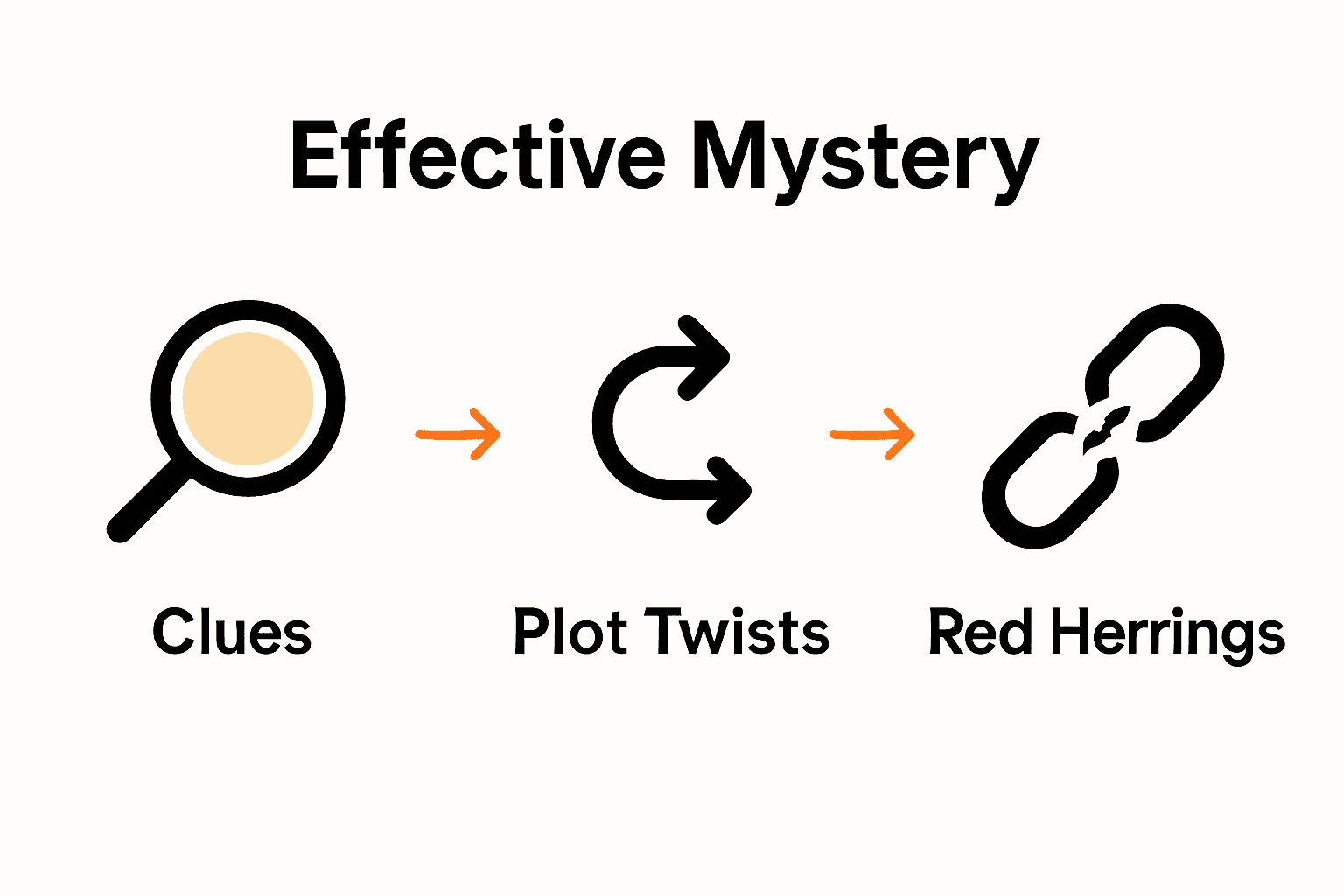
- Step 4: Incorporate Clues, Twists, And Red Herrings
- Step 5: Polish And Review Your Finished Manuscript
Quick Summary
| Essential Insight | Clear Explanation |
|---|---|
| 1. Define a Unique Mystery Concept | Establish a fresh central question or crime that sets your story apart from typical narratives. |
| 2. Develop Intriguing Characters | Create multidimensional characters with complex motivations and personal stakes that drive the mystery forward. |
| 3. Structure for Suspense and Pacing | Build a plot with strategic pacing and plot points that maintain tension and engagement throughout the story. |
| 4. Incorporate Clues and Twists | Plant clues and red herrings that challenge readers while keeping them guessing about the true outcome. |
| 5. Polish and Review Your Manuscript | Conduct a thorough evaluation and seek feedback to ensure a polished, seamless narrative before finalizing your mystery. |
Step 1: Define your unique mystery concept
Creating a compelling mystery starts with developing a concept that sets your story apart from countless other narratives. According to ReadWriteThink, the foundation of an engaging mystery lies in carefully defining the central problem or puzzle that will drive your narrative.
To craft a unique mystery concept, begin by brainstorming an intriguing central question or crime that feels fresh and unexpected. Consider what makes your story different: perhaps an unusual setting, an unconventional protagonist, or a twist on traditional detective narratives. As ProgrammingLibrarian suggests, the key is developing an original storyline with compelling character motives that will keep readers guessing.
Your concept should include three critical elements: a central mystery that demands resolution, characters with complex motivations, and enough initial intrigue to hook your readers from the first page. Think about the unique perspective or angle you can bring to the mystery genre that will make readers lean in and say “I’ve never seen a story quite like this before.”
One practical tip: write down your core concept in a single sentence. If you can’t explain the essence of your mystery concisely, you might need to refine your idea further. This exercise will help you clarify the unique heart of your story and ensure your concept has the potential to sustain a full narrative.
Step 2: Develop intriguing characters and motives
Crafting compelling characters is the heartbeat of any memorable mystery narrative. Novlr suggests a powerful approach to character development by defining three critical elements: goal, motivation, and conflict. These components transform characters from mere placeholders into living breathing personalities that drive your story forward.
Start by creating multidimensional characters with complex internal landscapes. Your protagonist should have clear objectives that go beyond solving the mystery their personal desires and vulnerabilities must intersect with the central narrative. Consider crafting characters with hidden depths hidden agendas or conflicting motivations that make readers question their true intentions. What secrets might they be hiding? What personal stakes are embedded in their quest?
To build truly intriguing characters explore their backstories psychological triggers and emotional vulnerabilities. Each character should possess unique traits that make them unpredictable yet believable. Create characters with the potential for surprise who can unexpectedly shift the narrative trajectory. Think beyond stereotypical detective or victim archetypes and imagine characters whose motivations are nuanced and morally ambiguous.
One practical strategy is to write detailed character profiles that extend beyond surface level descriptions. Dive deep into their fears dreams and unresolved conflicts. Ask yourself what transformative experiences have shaped their worldview and how these experiences might influence their actions in your mystery. The most memorable characters are those who feel authentic complex and capable of surprising both the reader and themselves.

Step 3: Structure your plot for suspense and pacing
ReadWriteThink highlights the critical structure of a mystery story as a carefully orchestrated journey through problem introduction investigation and resolution. Crafting a compelling plot requires strategic pacing that keeps readers on the edge of their seats while revealing information at precisely the right moments.
To build suspense effectively begin by establishing a strong narrative framework with deliberate plot points that gradually unveil critical information. Your story should create a sense of constant tension where each chapter introduces new questions or unexpected twists. Understand the intricate role of suspense as more than just a storytelling technique it is the psychological thread that pulls readers deeper into your narrative.
According to Toledo Library creating a powerful hook is essential to maintaining reader engagement. This means your opening should immediately introduce a compelling mystery or conflict that demands resolution. Consider alternating between moments of high intensity and quieter reflective scenes to create a rhythmic narrative pulse that prevents reader fatigue.
One practical strategy is to map out your plot points like a series of carefully placed dominoes. Each revelation should trigger the next creating a cascade of suspense that propels the story forward. Pay attention to your story’s tempo some chapters might move quickly with rapid revelations while others build slow burning tension that allows psychological depth to emerge. The most memorable mysteries are those that balance external action with internal character transformation.
Step 4: Incorporate clues, twists, and red herrings
ReadWriteThink reveals that masterful mystery writing hinges on strategically planting clues and misdirections that challenge readers critical thinking skills. The art of creating an engaging mystery lies in carefully balancing information revelation with strategic deception.
Start by developing a complex web of potential suspects and motivations. Each clue should serve a dual purpose revealing something about the characters while simultaneously creating additional questions. Explore the nuanced world of psychological red herrings to understand how subtle narrative misdirections can keep readers guessing. Your goal is to create an intricate puzzle where every piece seems potentially significant yet ultimately misleading.
According to WritersLife, maintaining narrative urgency is crucial. This means your twists should feel both surprising and inevitable when revealed. Consider introducing clues that appear insignificant initially but become critically important later. The most compelling mysteries make readers feel simultaneously misled and enlightened when the truth emerges.
One practical strategy is to create a detailed timeline of your plot twists. Map out exactly when and how each clue will be introduced ensuring they build toward a satisfying yet unexpected resolution. Remember that great red herrings are not random distractions but carefully constructed narrative elements that reveal deeper psychological complexities within your characters and story.
Step 5: Polish and review your finished manuscript
ReadWriteThink provides a comprehensive Mystery Writing Rubric that serves as an essential roadmap for final manuscript evaluation. The process of polishing your mystery manuscript goes beyond simple proofreading it requires a strategic and methodical approach to ensuring every element of your story meets professional standards.
Begin with a comprehensive structural review. Evaluate your manuscript using a detailed checklist that examines plot consistency character development and narrative flow. Pay special attention to the resolution of your mystery plot. Does each clue connect logically? Are character motivations consistent? Are there any unresolved plot threads or unexplained narrative gaps that might confuse readers?
Consider engaging multiple perspectives during your review process. Seek feedback from beta readers who are familiar with the mystery genre and can provide objective insights. Some writers find it helpful to read the manuscript aloud or use text to speech software to catch awkward phrasing or dialogue that does not sound natural. Your goal is to create a manuscript that feels seamless polished and compelling from the first page to the final reveal.
One practical strategy is to create a separate editing document where you track potential revisions. This allows you to make notes without immediately altering your original manuscript. Remember that great mysteries are often refined through multiple rounds of careful editing. The difference between a good mystery and an exceptional one frequently lies in the meticulous attention to detail during the final polishing stages.
Elevate Your Mystery Writing with Real Examples and Inspiration
Struggling to build suspense or craft intricate plots that keep readers guessing The “Mystery Fiction Writing Guide Step-by-Step to Success” reveals how important it is to define unique concepts develop rich characters and master pacing. If you want to see these techniques in action explore our collections of mystery fiction short reads. Each story expertly weaves clues twists and psychological depth to inspire your own writing journey.

Unlock the power of immersive storytelling now and transform your ideas into captivating mysteries. Browse our The Weekend Mystery Bundle to get access to a variety of genres including cozy mysteries and detective short reads to spark creativity. Dive deep into professional-level suspense and character complexity by reading some of the best short reads available. Take the next step toward writing success today by visiting The Weekend Mystery Bundle and experience stories that set the standard for mystery fiction.
Frequently Asked Questions
How do I define a unique mystery concept for my story?
To define a unique mystery concept, brainstorm an intriguing central question or crime that feels fresh. Write your core concept in a single sentence to clarify and refine the essence of your story.
What should I include when developing my characters?
When developing characters, focus on their goals, motivations, and conflicts. Create detailed character profiles that explore their backstories and emotional vulnerabilities to make them multidimensional and compelling.
How can I structure my plot to maintain suspense?
Structure your plot by establishing a strong narrative framework with deliberate plot points that reveal critical information gradually. Map out your plot points like dominoes, ensuring each revelation triggers the next to keep readers engaged.
What strategies should I use for incorporating clues and red herrings?
Incorporate clues and red herrings by creating a complex web of potential suspects and motivations. Ensure each clue reveals something about the characters while also creating additional questions to challenge the reader.
How do I polish and review my finished manuscript?
To polish your manuscript, conduct a comprehensive structural review, focusing on plot consistency and character development. Use a detailed checklist and seek feedback from beta readers to capture any awkward phrasing or unresolved plot threads, refining your work until it feels seamless and compelling.
Recommended
- Short Mystery Writing Tips for Captivating Tales – TheShortReads.com
- Mystery Fiction Terminology: Complete Guide for Readers – TheShortReads.com
- Mystery Fiction – TheShortReads.com
- Understanding Mystery Fiction Terminology Explained – TheShortReads.com


Mystery Fiction Terminology: Complete Guide for Readers

Over 80 percent of american readers find themselves puzzled by the unique language that fills mystery fiction stories. Understanding this specialized terminology matters because it shapes every twist, clue, and character you encounter in a detective novel. Whether you are a long-time fan or just starting to explore this genre, knowing these key terms brings every plot and clue into sharper focus. This guide unlocks the secrets behind the most important words in mystery fiction so every story becomes richer and more rewarding.
Table of Contents
- Mystery Fiction Terminology Defined Clearly
- Major Subgenres and Related Terminology
- Key Plot Devices and Character Archetypes
- Iconic Clues, Red Herrings, and Tropes
- Common Mistakes and Misused Terms
Key Takeaways
| Point | Details |
|---|---|
| Understanding Terminology | Mystery fiction has specific terminology such as detective, red herring, and MacGuffin that helps readers appreciate its complexity. |
| Subgenre Diversity | Major subgenres include detective fiction, cozy mystery, and true crime, each offering unique narrative styles and themes. |
| Character Archetypes | Common character types like the brilliant detective and the unreliable narrator enrich mystery storytelling by providing varied perspectives. |
| Common Misconceptions | Terminology in mystery fiction is often misused, making it essential for readers and scholars to understand the distinctions between subgenres. |
Mystery Fiction Terminology Defined Clearly
Mystery fiction is a captivating literary genre that transforms complex criminal puzzles into compelling narratives. According to Wikipedia, mystery fiction is characterized by an event, typically a crime, that remains enigmatic until the story’s conclusion, often involving a detective who unravels the mystery through logical reasoning.
Mystery fiction encompasses several distinctive terminology elements that help readers navigate and understand the intricate world of detective and crime narratives. These specialized terms provide insight into the genre’s narrative structures, character archetypes, and storytelling techniques.
Key terminology in mystery fiction includes several important categories:
- Detective: The primary investigator who systematically solves the central crime or puzzle
- Red Herring: A misleading clue intentionally designed to distract readers from the actual solution
- MacGuffin: An object or goal that drives the plot forward but may not have intrinsic significance
- Unreliable Narrator: A storyteller whose credibility is compromised, adding complexity to the narrative
For readers eager to explore more about the nuanced world of mystery storytelling, check out our guide on understanding mystery fiction terminology.
Major Subgenres and Related Terminology
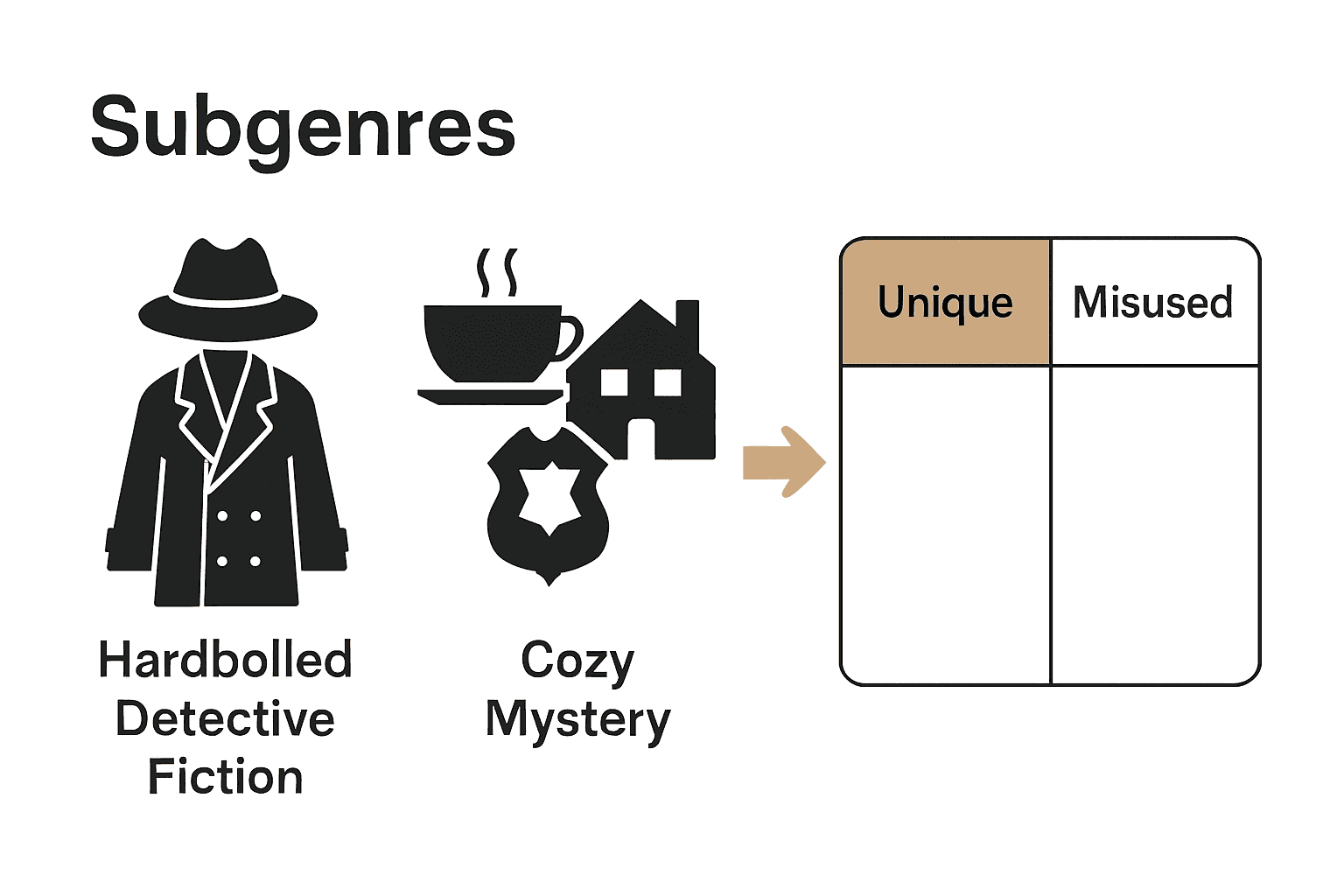
Mystery fiction is a diverse literary landscape with multiple compelling subgenres. According to Wikipedia, major subgenres include detective fiction, true crime, cozy mystery, and locked-room mystery, each presenting unique narrative approaches and specialized terminology.
Detective Fiction represents the classic investigative narrative where a protagonist systematically uncovers criminal mysteries. This subgenre typically features a central investigator who uses logic, deduction, and keen observation to solve complex cases. Characters in detective fiction often follow specific archetypes: the brilliant lone detective, the methodical police investigator, or the amateur sleuth with extraordinary perception.
Other significant mystery subgenres include:
- Cozy Mystery: Gentle narratives set in small communities, featuring amateur detectives and minimal graphic violence
- Locked-Room Mystery: Intricate puzzles where a crime occurs in an apparently impossible scenario
- True Crime: Narratives based on actual criminal events, blending journalistic reporting with storytelling techniques
- Police Procedural: Stories focusing on systematic law enforcement investigation methods
As noted by LibGuides, mystery fiction subgenres are distinguished by unique themes and narrative styles, offering readers diverse approaches to exploring criminal intrigue.
IMAGE:descriptive_key_1] For readers interested in diving deeper into mystery storytelling, our [guide on understanding mystery fiction terminology provides comprehensive insights.
Key Plot Devices and Character Archetypes
Mystery fiction relies on intricate plot devices and memorable character archetypes to engage readers and create compelling narratives. According to Wikipedia, classic mystery novels like those by Ellery Queen exemplify the ‘fair play’ mystery approach, where readers receive all critical clues alongside the detective, transforming the reading experience into an intellectual challenge.
Character archetypes form the backbone of mystery storytelling, each bringing unique perspectives and investigative approaches. The primary investigative characters typically include:
- The Brilliant Lone Detective: Highly intelligent, often eccentric, who solves cases through exceptional deductive reasoning
- The Methodical Police Investigator: Systematic, procedural, following strict investigative protocols
- The Amateur Sleuth: Typically an outsider with keen observational skills who stumbles into solving mysteries
- The Flawed Protagonist: A complex character with personal challenges that both hinder and enhance their investigative abilities
In an innovative narrative twist, Wikipedia highlights the inverted detective story or ‘howcatchem’ approach, where the perpetrator is revealed at the story’s beginning. This technique shifts focus from ‘whodunit’ to ‘how will they be caught,’ creating a unique psychological exploration of crime and detection.
For readers intrigued by the psychological underpinnings of mystery narratives, our guide on character psychology offers deeper insights into the complex world of fictional investigators and their motivations.
Iconic Clues, Red Herrings, and Tropes
Mystery fiction thrives on the intricate dance of clues, misdirections, and narrative conventions that keep readers guessing. According to Wikipedia, the genre skillfully employs red herrings and complex clues to mislead readers, creating suspense and engaging them in the detective’s challenging journey to uncover the truth.
Red herrings represent one of the most compelling narrative devices in mystery storytelling. These deliberately misleading clues are strategically placed to:
- Distract readers from the actual solution
- Create additional narrative tension
- Challenge the protagonist’s investigative process
- Maintain reader engagement through uncertainty
Traditional mystery tropes have evolved dramatically over time. Wikipedia highlights an innovative approach with inverted detective stories, which subvert conventional narrative expectations by presenting the crime and perpetrator upfront. This technique transforms the narrative from a ‘whodunit’ to a fascinating exploration of investigative methodology and psychological motivation.
Readers fascinated by the nuanced world of narrative misdirection can explore more about these intricate storytelling techniques in our guide on red herrings, which delves deeper into the art of crafting compelling mystery narratives.
Common Mistakes and Misused Terms
Mystery fiction terminology is a nuanced landscape where precise definitions matter significantly. According to ALA Journals, certain subgenres like cozy mysteries are frequently undervalued or misclassified, creating challenges in literary scholarship and reader understanding.
Some of the most common terminology mistakes in mystery fiction include:
- Hardboiled vs. Detective Fiction: Often incorrectly used interchangeably
- Cozy Mystery vs. Traditional Mystery: Frequently confused despite distinct characteristics
- Thriller vs. Mystery: Misunderstood as synonymous genres
- Police Procedural vs. Detective Fiction: Subtle but important distinctions often overlooked
Bodhi Journals highlights the critical need for precise definitions, especially in academic and literary contexts. The conflation of hardboiled and detective fiction represents a prime example of how imprecise terminology can muddy our understanding of literary genres. Readers and scholars alike must pay careful attention to the nuanced differences between seemingly similar mystery subgenres.
For readers seeking to deepen their understanding of these complex distinctions, our guide on subtle literary classifications offers comprehensive insights into the intricate world of mystery fiction terminology.
Unlock the Mystery with Engaging Short Reads Tailored for You
Struggling to keep track of mystery fiction terminology like red herrings, cozy mysteries, and inverted detective stories can make enjoying the genre frustrating. If you love diving into complex puzzles or crave captivating stories featuring amateur sleuths and brilliant detectives but find traditional novels too time-consuming, our collection of mystery fiction short reads is designed just for you. Experience thrilling narratives that respect your busy schedule while immersing you in the exact subgenres and archetypes you enjoy.
Discover the perfect blend of intrigue and clarity with our Weekend Mystery Bundle. Featuring a carefully curated selection of cozy mystery short reads, murder mystery novellas, and detective short reads, you will embrace your passion for mystery fiction without getting lost in confusing terms or overwhelming plots. Don’t wait to transform your reading experience. Explore our collection now at theShortReads.com and decode mysteries effortlessly.
Frequently Asked Questions
What is mystery fiction?
Mystery fiction is a literary genre that revolves around an enigmatic event, typically a crime, that remains unsolved until the story’s conclusion. It often features a detective who uses logical reasoning to unravel the mystery.
What are common terminology used in mystery fiction?
Key terms in mystery fiction include ‘detective’ (the investigator), ‘red herring’ (misleading clues), ‘MacGuffin’ (a plot-driving object), and ‘unreliable narrator’ (a storyteller with questionable credibility).
What are the major subgenres of mystery fiction?
Major subgenres of mystery fiction include detective fiction, cozy mystery, locked-room mystery, true crime, and police procedural, each offering unique storytelling styles and themes.
How do red herrings function in mystery storytelling?
Red herrings are deliberately misleading clues designed to distract readers from the actual solution. They create tension and engage readers by maintaining uncertainty about the outcome.
Recommended
- Understanding Mystery Fiction Terminology Explained – TheShortReads.com
- Mystery Fiction – TheShortReads.com
- Short Mystery Writing Tips for Captivating Tales – TheShortReads.com
- 7 Smart Ways to Discover Mystery Fiction for Men – TheShortReads.com

