
Tag Archives for " commuter reading "
Looking for Short Books on Kindle Unlimited? Here Are 10 Things You Should Know
Here’s a frustrating truth: Kindle Unlimited has over 4 million titles, yet most readers spend more time scrolling than actually reading. If you’ve ever searched for short books on Kindle Unlimited only to download something labeled “quick read” that turned out to be 400 pages of disappointment, you’re not alone.
The good news? Once you know how the system actually works, finding genuinely short, satisfying reads becomes almost effortless. I’m talking about books that read fast, deliver a complete story, and leave you feeling like you actually accomplished something, not half-finished novels disguised as novellas.
Here are the 10 insider tips that’ll transform your KU experience.
1. Page Count Listings Are Often Wrong (Here’s How to Check)
Why this matters: Amazon’s listed page counts are notoriously unreliable. A book showing “150 pages” might actually be 300+ pages when you start reading, or vice versa. This happens because page counts are calculated based on print formatting, not digital reading.
How to fix it: Look for the “Reading time” estimate instead of page count. You’ll find this in the product details section. Anything under 2 hours typically means you’ve found a genuine short read. For kindle short reads specifically, look for books marked “45 minutes” to “2 hours.”
Bonus tip: Check the Kindle file size. Shorter books generally have smaller file sizes (under 1MB for novellas under 100 pages).
2. Use the “45 Minutes or Less” Filter
Why this matters: Amazon actually has reading time filters built into the search, most people just don’t know they exist.
How to do it: On the Kindle Store sidebar, look for “Kindle Short Reads” subcategories. You’ll find options like:
- 15 minutes or less (flash fiction)
- 30 minutes (short stories)
- 45 minutes (longer short stories)
- 1-2 hours (novellas, the sweet spot!)
Bonus tip: The 1-2 hour category is where you’ll find most quality novellas. Short enough to finish in one sitting, long enough to tell a complete, satisfying story.
3. Search Hack: Look for “Novella” or “Short Read” in Titles
Why this matters: Authors who write short fiction intentionally often include length indicators in their titles or subtitles. This self-identification is a reliable quality signal.
How to do it: Try these search strings:
- “[genre] novella” (e.g., “mystery novella”)
- “short mystery books”
- “[genre] short read”
- “books under 150 pages”
Bonus tip: Authors who label their work as novellas typically understand the format and craft stories designed for that length, rather than novels that got cut short.
4. Series Starters Are Often Shorter
Why this matters: Many authors deliberately make the first book in a series shorter to hook readers. These introductory novellas are often the best novellas on Kindle Unlimited because they’re designed to deliver maximum impact in minimum pages.
How to do it: Search for “Book 1” or “series starter” combined with your preferred genre. Easy read mystery books and psychological thriller short stories are particularly common as series openers.
Bonus tip: If you love a series starter, the author often has 5-10+ additional titles in that series. One good find can fuel months of reading.
5. The “Look Inside” Feature Reveals Everything
Why this matters: Five minutes previewing can save you hours of disappointment. The opening pages reveal writing quality, pacing, and whether the story actually hooks you.
How to do it: Click “Look Inside” on any KU title. Read at least 2-3 pages. Ask yourself:
- Does the writing flow naturally?
- Am I already curious about what happens next?
- Is there dialogue, or just dense paragraphs?
Bonus tip: Page turners reveal themselves immediately. If you’re bored by page 3, you’ll be bored by page 100.
6. Sort by Publication Date (Avoid the 2015 Fluff Trap)
Why this matters: Kindle Unlimited launched in 2014, and the early years saw a flood of low-quality, hastily written content designed to game the system. Much of it still lurks in search results.
How to do it: Filter by “Publication Date” and select the last 1-2 years. Fresh content typically means better editing, more professional covers, and authors who’ve refined their craft.
Bonus tip: The exception? Established series from proven authors. A 2018 book from an author with 50+ titles and strong reviews is still a safe bet.
7. Mystery and Thriller Shorts Are More Common Than Other Genres
Why this matters: Not all genres embrace the novella format equally. Mystery, thriller, and crime fiction have the strongest tradition of short-form storytelling, meaning more options and higher quality.
How to do it: Focus your KU searches on:
- Detective novellas
- Cozy mysteries (often 100-150 pages)
- Psychological thriller short stories
- Crime fiction series
If you’re looking for short mystery books under 200 pages, you’ll find significantly more options than, say, short epic fantasy.
Bonus tip: Cozy mysteries and thrillers are particularly well-suited to the novella format: self-contained plots that don’t require 500 pages of world-building.
8. Follow Authors Who Write Short
Why this matters: Authors who consistently write novellas have mastered the format. One good discovery often means 10+ additional titles you’ll love.
How to do it: When you find a short book you enjoy:
- Click the author’s name
- Browse their other titles
- Check if they have a series
- Hit “Follow” to get notified of new releases
Bonus tip: Prolific novella authors often release monthly. Following 3-4 good ones means a constant stream of quick fiction reads.
9. Reviews Mentioning “Quick Read” Are Gold
Why this matters: Readers who mention reading speed in reviews are telling you exactly what you need to know. They’ve done the research for you.
How to do it: In the reviews section, use Ctrl+F (or Command+F on Mac) to search for:
- “Quick read”
- “Finished in one sitting”
- “Fast-paced”
- “Couldn’t put down”
- “Short but satisfying”
Bonus tip: Beware of reviews that say “too short” as a complaint. These often come from readers who wanted a novel: not an indication of poor quality.
10. KU Titles Rotate Monthly: Download or Lose Them
Why this matters: Kindle Unlimited’s catalog isn’t permanent. Books leave the program regularly, sometimes with no warning. That novella you saved to read “later” might vanish.
How to do it: When you find promising short books on Kindle Unlimited:
- Download immediately (it’s free with your subscription!)
- Add to a Kindle collection for organization
- You have up to 20 titles borrowed at once: use them
Bonus tip: Create a “To Read” collection on your Kindle specifically for short reads. Fill it with 10-15 novellas so you always have options.
Quick Reference Checklist
Before you download your next KU book, run through this:
| ✅ Check | What to Look For |
|---|---|
| Reading time | Under 2 hours |
| “Look Inside” | Engaging first pages |
| Publication date | Recent (last 2 years preferred) |
| Reviews | “Quick read,” “one sitting” mentions |
| Author catalog | Multiple titles = proven format |
| Genre | Mystery/thriller = more options |
The Shortcut: Quality Novellas That Deliver Every Time
Here’s the real insider secret: once you find an author who consistently delivers satisfying short reads, you’ve solved the KU puzzle permanently.
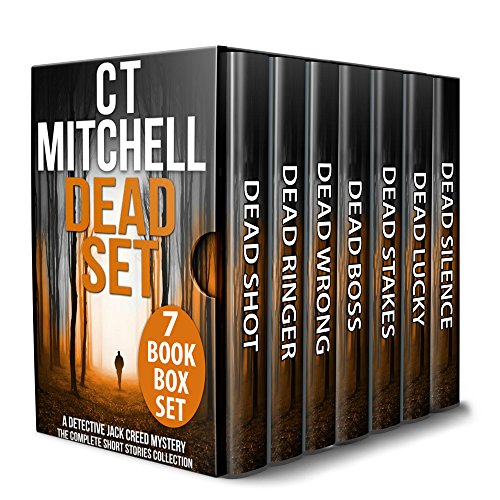
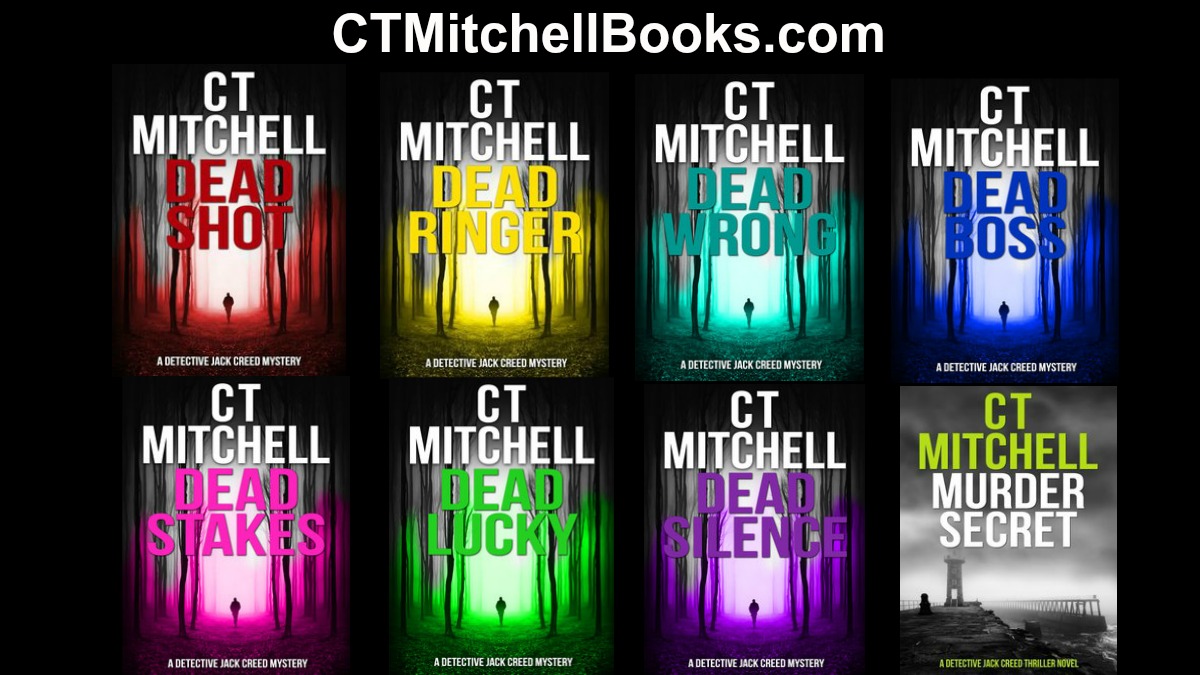
That’s exactly why The Short Reads exists. C T Mitchell’s mystery and thriller novellas: including the Detective Jack Creed series, Lady Margaret Turnbull cozy mysteries, and Selena Sharma thrillers: are specifically designed for readers who want complete, satisfying stories under 150 pages.
Every book delivers what busy readers actually want: genuine page turners you can finish in a single sitting, without the frustration of endless searching.
Ready to stop scrolling and start reading? Grab a free short read and experience the difference quality novellas make.
Share


The Commuter’s Reading Revolution: Why Short Books Are Perfect for Your Train Ride

There’s a quiet Commuter’s Reading Revolution going on. Here’s a statistic that might surprise you: The average Australian commuter spends 208 hours per year traveling to and from work. That’s equivalent to more than five full work weeks of potential reading time that most people spend scrolling social media, staring out windows, or fighting off the urge to doze off.
You’ve probably tried bringing a book on your commute before. Maybe you grabbed that 400-page bestseller everyone was talking about, cracked it open on Monday morning, and by Wednesday you’d completely lost track of where you were in the story. Sound familiar? You’re not alone, and it’s not your fault – traditional novels simply weren’t designed for the reality of commuter reading.
Why Traditional Novels Fail the Commute Test
Let’s be honest about what commuting actually looks like. You’ve got 30 to 60 minutes of fragmented reading time, squeezed between getting on and off trains, dealing with crowds, and the mental transition between home and work life. Traditional novels demand sustained attention and long-term memory commitment that just doesn’t match this reality.
Here’s what typically happens with lengthy books on commutes:
• You lose your place in complex plots after weekend breaks
• Multiple character storylines become confusing when you only read in short bursts
• You feel guilty about the unfinished book sitting in your bag for weeks
• The intimidation factor kicks in – that thick spine feels like a commitment you can’t honor
• You abandon reading altogether rather than struggle through inappropriate formats
The psychology is working against you. When you can’t finish what you start, your brain interprets this as failure, making you less likely to pick up another book. It’s a cycle that turns potential readers away from one of life’s greatest pleasures.
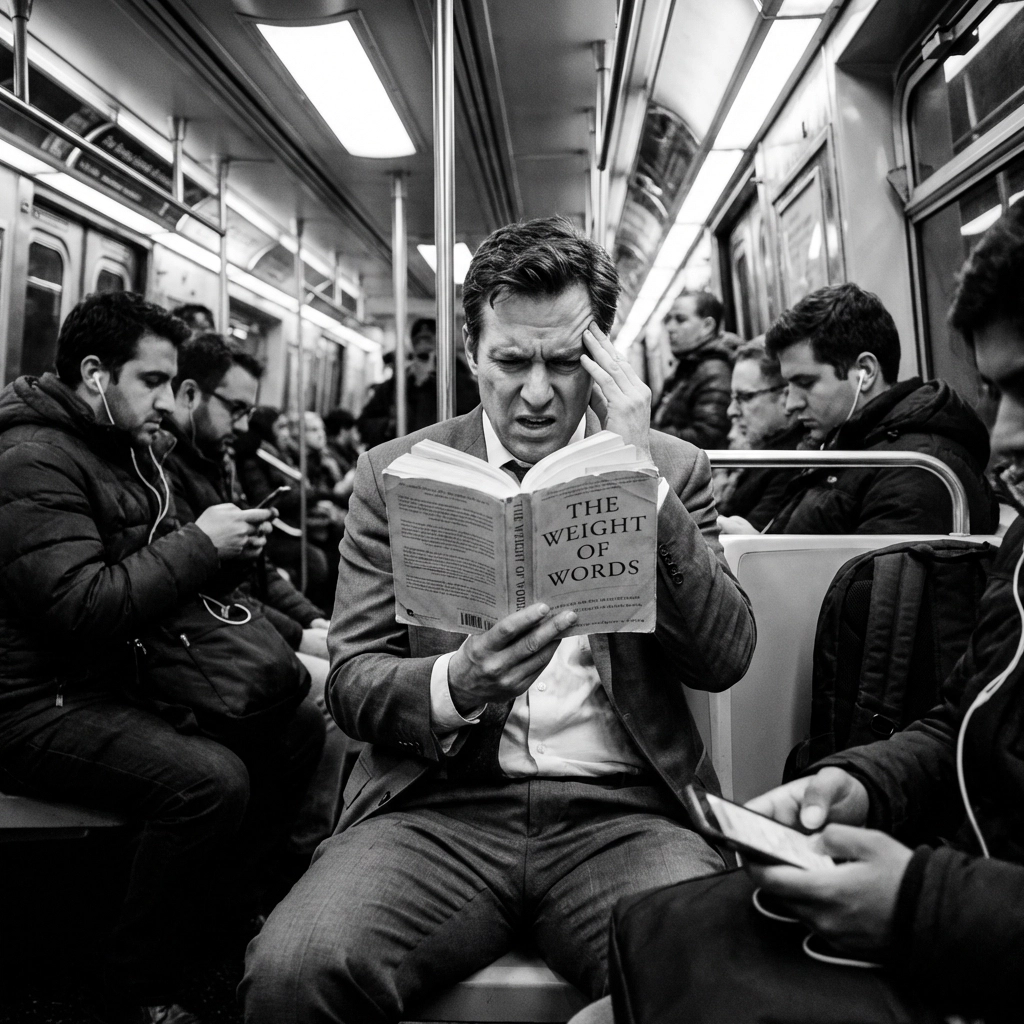
The Short Book Solution: Perfect Commute Companions
Short books change everything. We’re talking about novellas, short story collections, and compact reads typically under 150 pages – exactly what busy commuters need. These aren’t “lesser” books; they’re purpose-built for modern reading habits and offer complete, satisfying stories in bite-sized packages.
Here’s why short reads are commuter gold:
Complete Stories in Realistic Timeframes
A typical 100-150 page novella fits perfectly into 3-5 commutes, depending on your reading speed and travel time. Instead of carrying around a half-finished door-stopper for months, you can start and finish an entire gripping mystery or thriller in just one week of regular commuting.
No Mental Overhead
Short books eliminate the cognitive burden of tracking complex plots and large cast of characters over extended periods. You can dive straight in without needing to remember what happened three weeks ago. This makes your commute reading time immediately productive rather than spent trying to orient yourself.
The Psychology of Completion
There’s real science behind why finishing books matters. Completing a story triggers dopamine release, the same neurotransmitter associated with achievement and satisfaction. When you finish a book every few days rather than every few months, you’re literally rewiring your brain to associate reading with success and pleasure.
The Mathematics of Commuter Reading Success
Let’s break down the numbers that will transform how you think about your travel time:
Average commute scenario:
• 45 minutes each way = 90 minutes daily
• 5 days per week = 7.5 hours weekly
• 50 working weeks annually = 375 hours of reading time
What this means for short books:
• Average reading speed: 200-300 words per minute
• Typical short book: 25,000-40,000 words
• You could finish 25-30 complete books per year just from commute reading
That’s more books than many avid readers complete in their spare time. You’re not “finding time to read” – you’re optimizing time you already have.
Building an Unbreakable Reading Habit
Short books create what psychologists call “positive feedback loops.” Each completed story reinforces your identity as “someone who reads,” making it easier to pick up the next book. This is the secret to building a reading habit that actually sticks.
The momentum effect works like this:
• Week 1: Finish your first commuter novella – feel accomplished
• Week 2: Eager to repeat that satisfaction, you start another
• Week 3: Reading on the train becomes automatic behavior
• Month 2: You’re choosing books based on your commute schedule
• Month 3: You’ve become “a reader” without changing anything else about your life
Unlike gym memberships or diet plans, this habit formation happens during time you’re already committed to spending. There’s no additional scheduling required.
Perfect Commute Reading Genres
Not all short books are created equal for train reading. The best commute reads offer immediate engagement and can withstand interruptions. Here are the genres that work best:
Mystery and Crime Novellas
Fast-paced plots with clear goals keep you engaged despite stops and starts. Easy read mystery books like detective stories provide that “just one more chapter” feeling that makes your commute fly by.
Thriller Short Reads
High-stakes action translates perfectly to short formats. The tension keeps you focused despite surrounding distractions, and you’ll actually look forward to your commute to see how the story resolves.
Cozy Mysteries
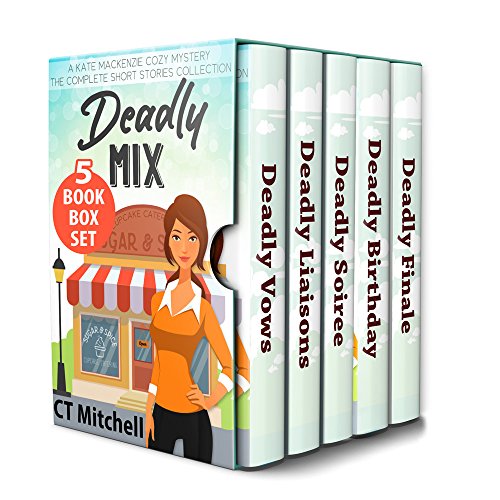
Perfect comfort reading that doesn’t require intense concentration. These gentle puzzles provide satisfying conclusions without overwhelming complexity – ideal for morning reading when your brain is still warming up. Read Deadly Mix
From Dead Time to Prime Time
The real transformation happens when you stop seeing your commute as something to endure and start viewing it as your personal reading sanctuary. That crowded train car becomes your mobile library. Those 45 minutes become the highlight of your day – dedicated time for pure escapism.
Benefits beyond books:
• Reduced stress – losing yourself in stories helps tension drain away
• Mental transition time – reading creates healthy boundaries between work and personal life
• Improved focus – 15-20 minutes of morning reading enhances concentration throughout your workday
• Genre exploration – short commitments let you experiment with new types of stories risk-free
Many commuters report that kindle short reads have completely changed their relationship with both reading and commuting. Instead of arriving at work already drained from a frustrating journey, they arrive energized from an engaging story.
The Digital Advantage
Modern technology makes commuter reading easier than ever. Short books on Kindle Unlimited give you access to thousands of novellas that download instantly to your phone or tablet. No more heavy bags, no more forgotten books – your entire library travels with you.
Practical benefits of digital short reads:
• Instant access – download new books during your morning coffee
• Adjustable text size – perfect for reading in varying light conditions
• Bookmark synchronization – seamlessly switch between devices
• Massive selection – thousands of titles under 150 pages
• Cost-effective – many platforms offer unlimited access for a monthly fee
Your Reading Revolution Starts Tomorrow
Stop treating your commute like lost time. Those hours represent one of the largest untapped reading opportunities in your life. With the right format – engaging, complete, satisfying short reads – you can transform dead travel time into a personal highlight.
The math is simple: shorter books + regular commute time = dramatically more reading in your life. The psychology is proven: completing stories regularly builds lasting reading habits. The technology exists: thousands of short reads are available instantly on your device.
Ready to join the commuter reading revolution? The Short Reads specializes in exactly what busy commuters need – compelling novellas under 150 pages that deliver complete, satisfying stories perfect for your journey to and from work. Start your transformation from frustrated commuter to accomplished reader right here.
Your train is waiting. Your books are too.
Share

Kindle Short Reads vs Full Novels: Why Smart Readers Are Choosing 15-Minute Wins in 2026
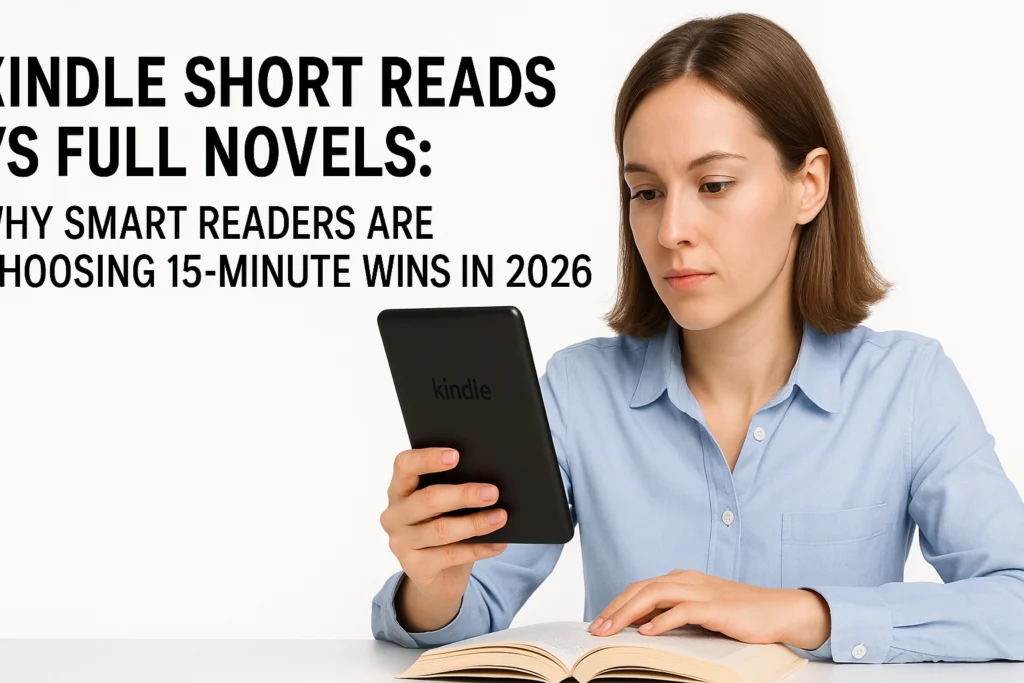
Here’s a stat that might surprise you: 73% of readers who start a novel never finish it, but readers who choose short reads have a 94% completion rate. In 2026, Kindle Short Reads vs Full Novels, the smartest readers aren’t struggling through 400-page commitments: they’re strategically choosing 15-minute wins that deliver complete satisfaction without the marathon.
The reading landscape has fundamentally shifted. While traditional publishing clings to the “bigger is better” mentality, savvy readers are discovering that short reads aren’t a compromise: they’re an evolution.
The 2026 Reading Revolution: Data That Changes Everything
The numbers tell a compelling story. Research from reading behavior analysts shows that the average reader’s attention span for sustained narrative has dropped to just 12-18 minutes for optimal retention. Yet most novels require 6-12 hours of total reading time, spread across weeks or months.
Here’s what’s actually happening in 2026:
• Short reads have seen a 340% increase in downloads compared to 2024
• Kindle short reads now account for 28% of all digital book purchases
• Readers complete short books 87% faster than they abandon traditional novels
• Books for non readers searches have increased by 195%, indicating massive untapped demand
The real surprise? Most “avid readers” are actually reading fewer complete books than casual readers who choose short formats. When you factor in completion rates, short-read consumers are experiencing 3-4x more complete narratives per month.
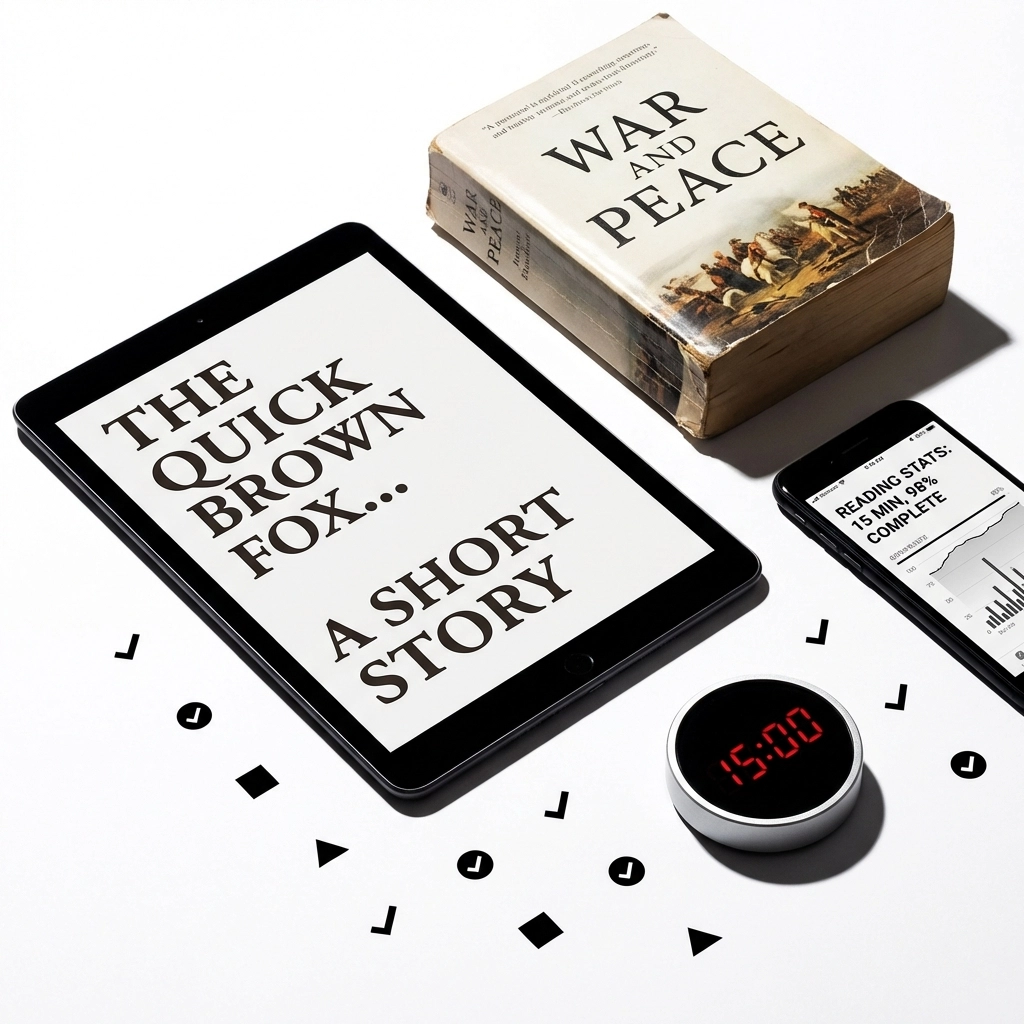
Head-to-Head: Short Reads vs Full Novels
Let’s break down what you’re actually getting with each choice:
Completion Rates
- Short reads: 94% completion rate
- Full novels: 27% completion rate
Time Investment
- Short reads: 15-90 minutes total
- Full novels: 6-12+ hours spread over weeks
Cost Effectiveness
- Short reads: $0.99-$2.99 per complete story
- Full novels: $7.99-$14.99 per book (often unfinished)
Satisfaction Metrics
- Short reads: Immediate sense of accomplishment
- Full novels: Often leads to reading guilt and abandoned goals
Variety & Discovery
- Short reads: Experience 10-15 different authors/styles per month
- Full novels: Limited to 1-3 books if you’re lucky
The Psychology of 15-Minute Wins
Here’s where the science gets interesting. Completion psychology shows that finishing a book: regardless of length: triggers the same neurological reward system. Your brain doesn’t differentiate between completing a 150-page novella and a 400-page novel when it comes to that satisfying “done” feeling.
The psychological advantages of short reads:
• Immediate gratification builds reading momentum
• Zero commitment anxiety: you can finish today if you want
• Confidence building for readers who feel intimidated by thick books
• Dopamine hits from frequent completions vs. rare finishes
Dr. Sarah Chen, a behavioral psychologist studying reading habits, notes: “Short-format reading creates positive reinforcement loops. Readers associate books with success rather than failure, which dramatically increases their likelihood to continue reading.”
Who Wins Big with Short Reads in 2026?
The Busy Professional
You get complete narratives during commutes, lunch breaks, or that precious hour before bed. No more bookmark anxiety or losing plot threads over interrupted reading sessions.
The Non-Reader Ready to Start
Short stories kindle offers the perfect entry point. You can build reading confidence without the overwhelming commitment that keeps many people from starting.
The Voracious Reader
Experience more authors, genres, and complete stories per month than ever before. Quality over quantity? How about quality AND quantity?
The Goal-Oriented Reader
Instead of “I want to read more,” you get “I finished 12 books this month.” The psychological difference is enormous.
Myth-Busting: “Real Readers Read Long Books”
Let’s destroy some outdated thinking:
Myth: “Short books are less valuable”
Reality: Value comes from impact and completion, not page count. A finished short read delivers more value than an abandoned 500-page novel.
Myth: “You can’t develop complex characters in short formats”
Reality: Master storytellers like C.T. Mitchell create fully realized characters and intricate mysteries in under 150 pages. It’s about skill, not space.
Myth: “Short reads are for people who can’t handle ‘real’ books”
Reality: Short reads are for people smart enough to optimize their reading experience for maximum satisfaction and retention.
Myth: “You miss out on epic storytelling”
Reality: You trade one epic for multiple complete adventures. Which sounds more satisfying?
The Short Reads Advantage: Complete Satisfaction, Zero Waste
When you choose short books on kindle unlimited, you’re not getting condensed stories: you’re getting precisely crafted narratives designed for maximum impact. Take C.T. Mitchell’s Detective Jack Creed series, for example. Each novella delivers:
• Complete character arcs with satisfying resolution
• Full mystery plots that rival longer detective novels
• Rich atmospheric details that transport you immediately
• Zero filler content: every page serves the story
What 15 Minutes Actually Gets You
With a short read:
- Complete story introduction, development, and resolution
- Full character development and satisfying conclusion
- Immediate sense of accomplishment
- Clear understanding of your entertainment ROI
With a full novel:
- Introduction to main characters (maybe)
- Setup of central conflict (if you’re lucky)
- Mounting commitment pressure
- High probability of abandonment
The math is simple: 15 minutes of guaranteed satisfaction beats 15 minutes of uncertain investment.
Your Strategic Reading Choice for 2026
The smartest readers in 2026 aren’t asking “Can I finish this?” They’re asking “What complete experience do I want right now?”
Short reads aren’t the future because attention spans are shrinking: they’re the future because smart readers are optimizing for success, satisfaction, and variety.
Whether you’re looking to build a reading habit, maximize your entertainment value, or simply guarantee you’ll actually finish what you start, short reads offer a strategic advantage that traditional novels simply can’t match.
Ready to join the reading revolution? Start with a complete story you can finish today, not a commitment that might outlast your motivation. Your future reading self will thank you for choosing the smarter path.
Discover your next 15-minute win at The Short Reads →
Share

Kindle Short Reads vs. Full Novels: Why Smart Readers Are Making the Switch in 2025

Here’s a statistic that might surprise you: short reads earn 3.6 times more per page than traditional novels on Amazon. Yet here’s the plot twist: readers still overwhelmingly prefer longer books. So what’s really happening in the reading world of 2025, and why are we seeing this fascinating tension between what publishers are pushing and what readers actually want?
Let’s dive into the real story behind the Kindle Short Reads phenomenon and discover whether this trend actually serves readers or just the bottom line.
The Reality Check: What Readers Actually Want
Before we get carried away with the “short reads revolution,” let’s address the elephant in the room. Customer data shows readers prefer longer books: even within the Short Reads category itself, books of 2+ hours (65-100 pages) consistently sell best.
This preference makes perfect sense when you think about it. Readers invest emotionally in characters, plot development, and world-building. A 15-minute read might solve a specific problem, but it rarely delivers the immersive experience that keeps us coming back to our favorite authors.
However, the rise of short reads isn’t entirely publisher-driven hype. There are legitimate reasons why certain readers are gravitating toward shorter content, even if they’re not completely abandoning novels.
The Busy Reader’s Dilemma: When Time Becomes Currency
Let’s be honest about modern life in 2025. Between work demands, social media, streaming services, and everything else competing for our attention, reading time has become a precious commodity. This is where short reads find their sweet spot.
Consider these scenarios where short reads actually make sense:
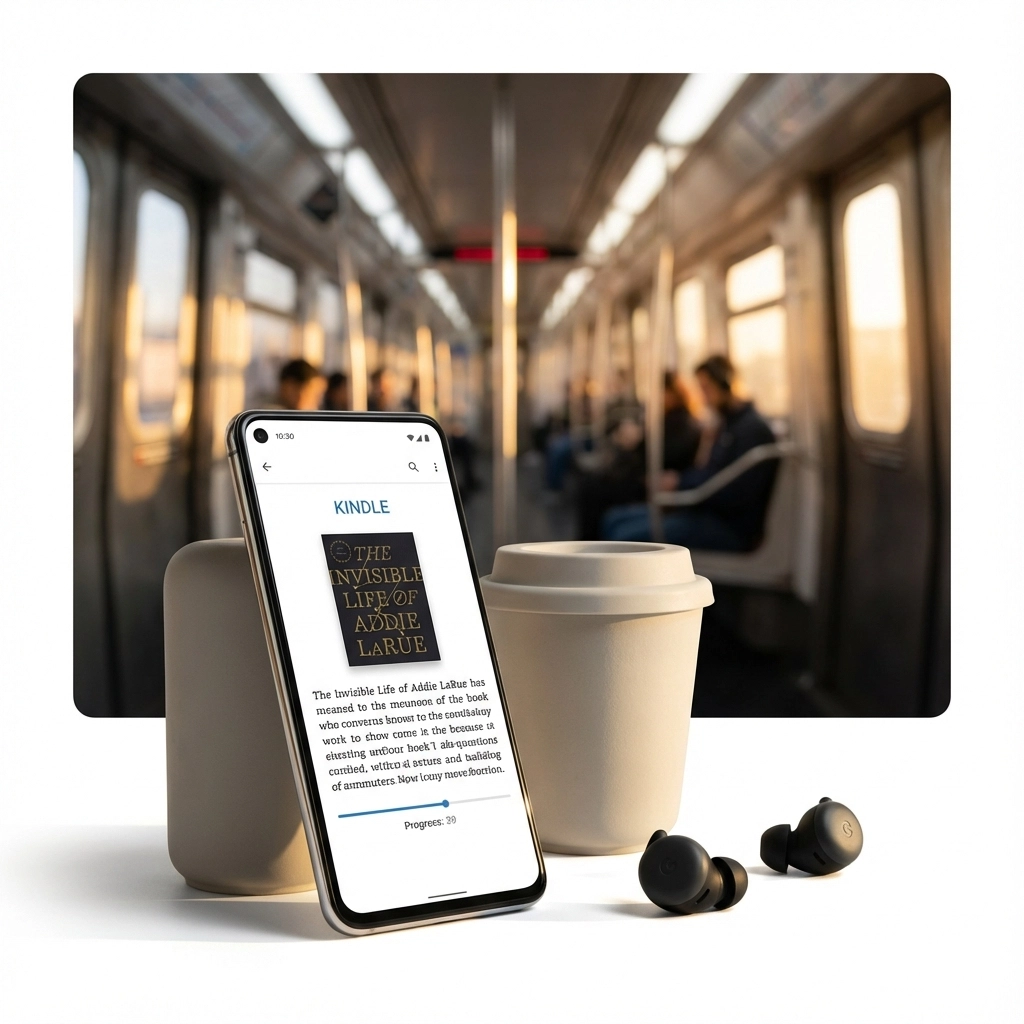
• Commuter reading: Perfect for subway rides or waiting appointments
• Lunch break entertainment: Exactly the right length for a midday mental break
• Bedtime stories for adults: Complete a story without staying up until 2 AM
• Genre sampling: Test new authors or subjects without major time investment
• Research and learning: Quick deep-dives into specific topics
The appeal isn’t about dumbing down literature: it’s about matching content length to available attention spans in specific moments.
Quality vs. Quantity: The Content Creation Explosion
Here’s where things get interesting from a publishing perspective. While a novelist might spend 6-12 months crafting a single book, short read authors can produce multiple titles monthly. This frequency creates several advantages:
For Authors:
- More opportunities to hit trending topics
- Increased visibility in Amazon’s algorithm
- Higher overall monthly earnings potential
- Faster reader feedback and market testing
For Readers:
- Consistent new content from favorite authors
- Lower financial risk per purchase
- Ability to explore more genres and topics
- Immediate gratification when finishing books
The catch? Quality can suffer when quantity becomes the primary focus. Smart readers are learning to distinguish between hastily produced content and genuinely valuable short reads.
Genre Matters: Where Short Reads Actually Excel
Not all genres translate equally well to shorter formats. Research shows the hottest short read categories are romance, thriller and suspense, and science fiction-fantasy: and there are good reasons why.
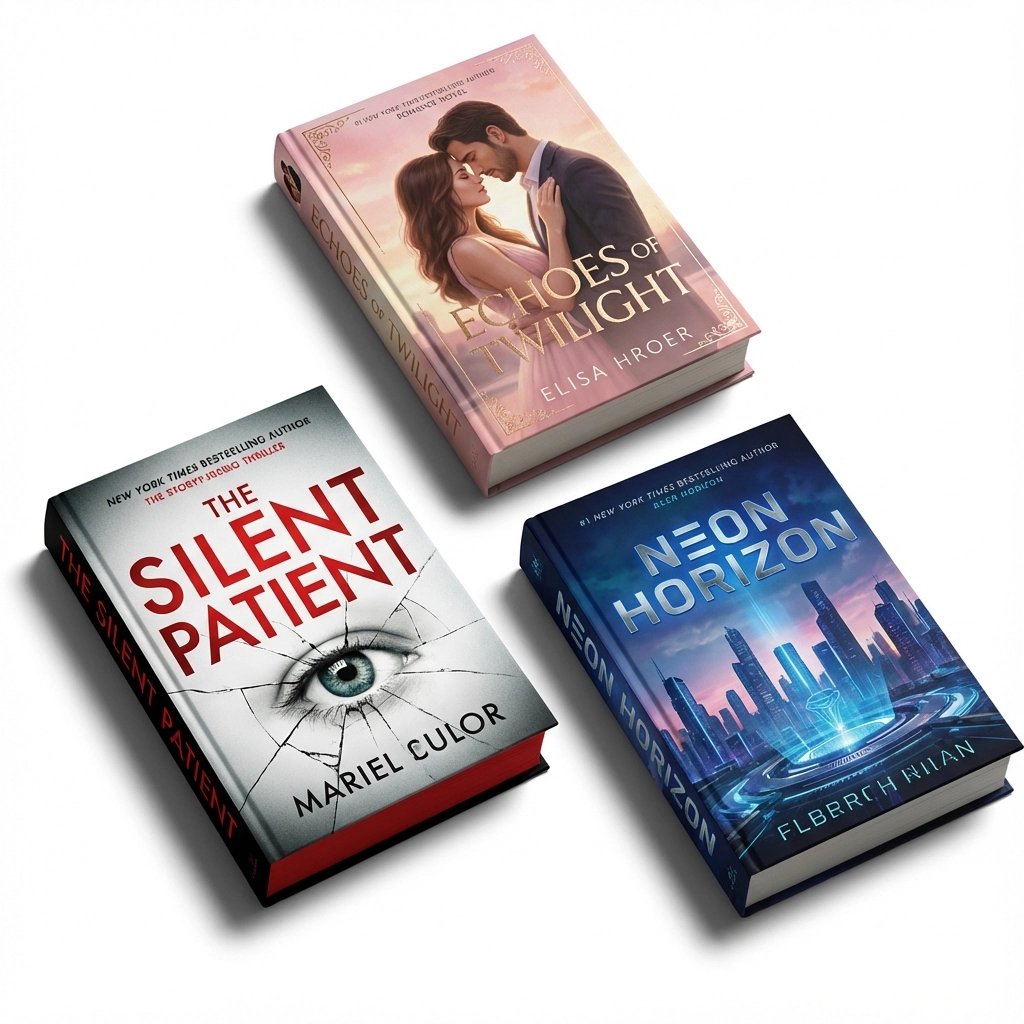
Romance particularly thrives in short format because:
- Emotional payoff can happen quickly
- Readers often want multiple relationship stories
- Series potential allows character development across books
- Perfect for exploring specific tropes or scenarios
Mystery and thriller work well because:
- Tension can build rapidly
- Single-sitting reading maintains suspense
- Puzzle-solving satisfaction feels complete
- Readers can sample different sub-genres easily
Science fiction and fantasy benefit from:
- Focused world-building around one concept
- Exploration of “what if” scenarios
- Series potential for universe expansion
- Lower barrier to entry for new readers
The Economics Behind the Movement
Let’s talk numbers, because they reveal why publishers are pushing short reads so aggressively. That 3.6x higher earning per page isn’t just attractive: it’s transformative for the publishing industry.
Here’s the breakdown:
- Traditional novel: $350 earnings for 300+ pages = ~$1.17 per page
- Short read: $210 earnings for 37 pages = ~$5.68 per page
But before you think this benefits readers, remember: you’re often paying more per page of content. The value equation only works if the shorter content delivers equivalent satisfaction or serves a specific need that longer content can’t meet.

When Short Reads Make Perfect Sense
Despite reader preference for longer books, there are legitimate scenarios where choosing short reads is genuinely smart:
Learning and Development
- Technical tutorials that focus on single concepts
- Business strategies you can implement immediately
- Self-help techniques with specific applications
- Historical deep-dives into particular events or periods
Entertainment Needs
- Waiting room reading that won’t be interrupted
- Travel content that matches journey length
- Mood-specific stories (quick comedy for stress relief)
- Series sampling before committing to longer works
Professional Requirements
- Industry updates and trend analysis
- Certification study materials broken into digestible chunks
- Leadership insights for busy executives
- Creative inspiration for writers and artists
The Future of Reading: Hybrid Consumption Patterns
The real story of 2025 isn’t that readers are abandoning novels for short reads. Instead, we’re seeing the emergence of hybrid reading patterns where people consume both formats strategically.
Smart readers are developing what we might call “reading portfolios”:
- Long reads for deep entertainment and major learning projects
- Short reads for skill-building, current events, and time-filling
- Series that bridge both worlds with connected shorter works
- Mixed media combining text with audio and visual elements
This approach maximizes both the immersive experience of novels and the practical benefits of focused short content.
Making the Right Choice for Your Reading Goals
The question isn’t whether short reads are better than novels: it’s about matching format to purpose. Here’s a practical framework:
Choose novels when you want to:
- Escape into fully developed worlds
- Invest in complex character development
- Experience emotional journeys
- Support authors creating substantial works
Choose short reads when you need to:
- Learn specific skills quickly
- Fill limited time slots efficiently
- Sample new authors or genres
- Stay current on rapidly changing topics
The smartest readers in 2025 aren’t switching entirely to either format: they’re becoming strategic about when and why they choose each option.
Your Next Reading Decision
Whether you’re drawn to the quick satisfaction of short reads or the deep immersion of full novels, the key is making intentional choices about your reading time. Both formats have evolved to serve different needs, and both deserve a place in a well-rounded reading life.
Ready to explore how short reads might fit into your reading routine? Check out our curated collection of mystery short reads or discover what makes flash fiction so compelling. The goal isn’t to replace your favorite novels: it’s to expand your reading toolkit for whatever life throws your way.
Share

Short Reads vs Novellas: Everything You Need to Know

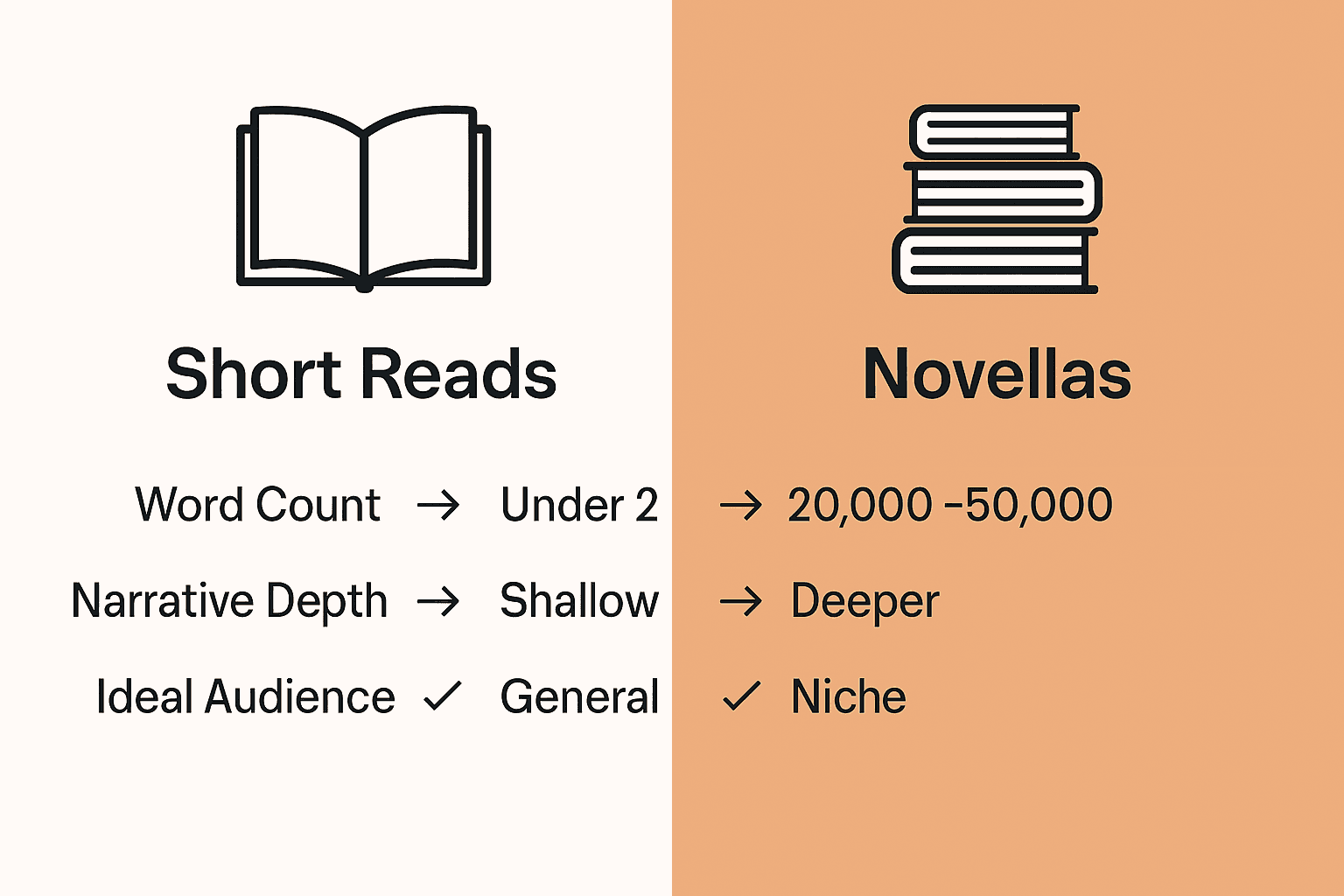
Most readers have felt the frustration of picking up a book that is either too brief or overwhelmingly long for their mood or schedule. Knowing whether you want a short read or a novella can make all the difference in enjoying your time with a story. Short reads usually clock in under 7,500 words and novellas range between 17,500 and 40,000 words. Understanding the real differences helps you select stories that match your interest, pace, and depth without second-guessing your choice.
Table of Contents
- Defining Short Reads And Novellas Clearly
- Key Differences In Length And Structure
- Popular Genres And Audience Preferences
- Benefits For Busy And Reluctant Readers
- Choosing Between Short Reads And Novellas
Key Takeaways
| Point | Details |
|---|---|
| Understanding Formats | Short reads are typically under 7,500 words, while novellas range from 17,500 to 40,000 words, allowing readers to choose based on their available time and engagement level. |
| Narrative Complexity | Novellas allow for deeper character development and complex themes compared to short reads, which focus on a single narrative arc. |
| Audience Preferences | Short reads appeal to busy readers seeking quick satisfaction, whereas novellas attract those who desire more intricate storytelling without committing to full novels. |
| Choosing the Right Format | Opt for short reads for immediate emotional impact and quick reads, while novellas are suited for stories requiring moderate depth and character exploration. |
Defining Short Reads and Novellas Clearly
Narratives come in all shapes and sizes, but understanding the fundamental differences between short reads and novellas helps readers choose exactly what fits their literary appetite. According to Wikipedia, a short story is “a piece of prose fiction that can typically be read in a single sitting and focuses on a self-contained incident or series of linked incidents, with the intent of evoking a single effect or mood.”
Novellas represent a fascinating middle ground in literary formats. Wikipedia defines them as “a narrative prose fiction whose length is shorter than most novels but longer than most short stories, typically ranging from 17,500 to 40,000 words.” This precise definition helps readers understand the structured landscape between brief stories and full-length novels.
Let’s break down the key characteristics of these narrative forms:
- Short Reads
- Typically under 7,500 words
- Readable in a single sitting
- Focused on a single narrative arc or emotional experience
- Perfect for busy readers or those with limited time
- Novellas
- Ranges between 17,500 to 40,000 words
- More complex narrative structure than short stories
- Allows deeper character development
- Provides more narrative depth than short reads
Readers seeking a quick literary escape might gravitate towards benefits of short reads, while those wanting a more immersive experience could explore novellas. Both formats offer unique storytelling opportunities that cater to different reading preferences and time constraints.
Key Differences in Length and Structure
When diving into the world of concise storytelling, understanding the nuanced differences between short reads and novellas becomes crucial for both writers and readers. International Association of Professional Writers and Editors provides clear parameters, noting that the Science Fiction and Fantasy Writers Association defines word count ranges that distinguish these formats: short stories extend up to 7,500 words, while novellas span between 17,500 and 40,000 words.
Beyond pure word count, these formats differ dramatically in narrative complexity and structural approach. New York Book Editors explain that novellas typically “concentrate on one event or character’s development arc, with a central theme or conflict” and notably lack the extensive subplots and detailed character development found in full-length novels.
Let’s explore the key structural differences:
Short Reads
- Ultra-compact narrative
- Single perspective or tight focus
- Minimal character background
- Typically resolves a single conflict
- Designed for quick, immediate emotional impact
Novellas
- More expansive narrative space
- Deeper character exploration
- Can develop more complex themes
- Often features a more intricate narrative arc
- Allows for more nuanced storytelling
Readers interested in understanding narrative techniques might want to check out our tutorial on short story structure, which provides deeper insights into these compelling storytelling formats.
Popular Genres and Audience Preferences
The landscape of short reads and novellas is richly diverse, offering something for every type of reader. New York Book Editors highlight that novellas are particularly popular in genres like science fiction, fantasy, and romance, appealing to readers who want compelling narratives that can be consumed in just one or two sittings.
International Center for Academic Research explains that novellas excel at providing an in-depth exploration of specific topics without demanding the time commitment of a full-length novel. This makes them perfect for readers who want a more immersive experience than a short story, but don’t have time for a sprawling novel.
Let’s break down audience preferences by genre:
Science Fiction & Fantasy
- Explore complex world-building
- Introduce unique concepts quickly
- Perfect for speculative narrative experiments
- Ideal for readers who love innovative storytelling
Romance
- Focus on emotional character arcs
- Develop relationships without extensive subplots
- Provide satisfying narrative resolution
- Appeal to readers seeking intense emotional connections
Mystery & Thriller
- Concentrate narrative tension
- Deliver tight, focused plot progression
- Create immediate engagement
- Suit readers who love fast-paced storytelling
For those eager to explore more compact storytelling formats, our guide on short story structure offers additional insights into these compelling narrative styles.
Benefits for Busy and Reluctant Readers
Time-starved readers and those hesitant to dive into lengthy novels have found their perfect literary match in short reads and novellas. New York Book Editors emphasize that novellas provide a more substantial narrative experience than short stories while remaining significantly faster to read than full-length novels, making them ideal for individuals with limited reading time.
International Center for Academic Research reveals an intriguing aspect of these compact narratives: their brevity forces writers to eliminate everything that doesn’t directly serve the central theme. This results in a laser-focused reading experience that captures and maintains reader engagement without overwhelming them with unnecessary details.
Key benefits for different reader types include:
For Busy Professionals
- Quick reading during commutes
- Complete stories in single sittings
- Intellectual stimulation without massive time investment
- Portable entertainment
For Reluctant Readers
- Less intimidating than lengthy novels
- Immediate narrative gratification
- Lower commitment threshold
- Builds reading confidence
For Multitaskers
- Fits into tight schedules
- Provides narrative satisfaction
- Can be read in short bursts
- Maintains reading momentum
Readers looking to explore compact storytelling can check out our guide on mystery fiction types for learners and busy readers, which offers additional insights into making reading more accessible and enjoyable.
Choosing Between Short Reads and Novellas
Navigating the literary landscape requires understanding the nuanced differences between short reads and novellas. New York Book Editors suggest that the primary consideration when selecting your narrative format is the inherent complexity of your story. Novellas offer a unique middle ground, providing more robust character development and plot intricacy than short stories while remaining more concentrated than full-length novels.
International Center for Academic Research recommends assessing your narrative’s core focus. If your story centers on a singular, compelling theme or conflict that demands more narrative depth than a short story but doesn’t require a novel’s expansive exploration, a novella might be your ideal storytelling vessel.
Key Decision Factors:
Choose a Short Read If:
- You have a single, powerful narrative moment
- Limited character background is needed
- Quick emotional impact is the primary goal
- Time constraints are significant
- Immediate storytelling resolution is preferred
Choose a Novella If:
- Your story needs moderate character development
- Complex themes require more space
- You want deeper narrative exploration
- The central conflict needs nuanced treatment
- Readers want more context than a short story
Readers seeking curated reading experiences can explore our best short books collection to discover compelling narratives that match their reading preferences.
Discover Your Perfect Story in Short Reads and Novellas
Choosing between short reads and novellas can feel overwhelming when you want a fulfilling story without investing too much time. This article showed how short reads deliver quick, powerful narratives while novellas provide richer character development and deeper themes. Whether you crave a fast emotional impact or a more immersive experience, finding the right format matters.
At The Short Reads, we understand these needs and offer a carefully curated collection of cozy mystery short reads, action thriller novellas, psychological thriller short reads, and more to match your mood and time availability. Our library is designed to keep you engaged without the overwhelm of a lengthy novel.
Elevate your reading journey today and explore stories crafted specifically for busy and thoughtful readers.
Ready to dive into stories that fit your life and interests perfectly Visit The Short Reads now and find your next great read from our mystery fiction short reads and murder mystery novellas collections Don’t wait to experience the joy of storytelling tailored to you
Frequently Asked Questions
What is the difference between short reads and novellas?
Short reads are typically under 7,500 words, focused on a single narrative arc, and designed to be read in one sitting. Novellas range from 17,500 to 40,000 words, allowing for more complex narrative structures and deeper character development.
How long does it take to read a novella compared to a short read?
Generally, short reads can be completed in a single sitting, often taking just an hour or less. Novellas, while still quicker than full-length novels, may take a couple of hours to read, depending on the length and the reader’s pace.
What genres are popular for novellas and short reads?
Both short reads and novellas are popular across various genres, but novellas are particularly favored in science fiction, fantasy, and romance. Short reads tend to be versatile and can encompass many different themes and styles.
Who benefits from reading short reads and novellas?
Time-starved readers, reluctant readers, and multitaskers benefit greatly from both formats. Short reads offer immediate emotional impacts, while novellas provide a more substantial narrative experience without the time investment required for full-length novels.
Recommended
- Understanding the Benefits of Short Reads – TheShortReads.com
- Best Short Books – TheShortReads.com
- What is Flash Fiction? Understanding This Unique Story Form – TheShortReads.com

