
Tag Archives for " ChatGPT said: mystery fiction "
Mystery Fiction Terminology: Complete Guide for Readers

Over 80 percent of american readers find themselves puzzled by the unique language that fills mystery fiction stories. Understanding this specialized terminology matters because it shapes every twist, clue, and character you encounter in a detective novel. Whether you are a long-time fan or just starting to explore this genre, knowing these key terms brings every plot and clue into sharper focus. This guide unlocks the secrets behind the most important words in mystery fiction so every story becomes richer and more rewarding.
Table of Contents
- Mystery Fiction Terminology Defined Clearly
- Major Subgenres and Related Terminology
- Key Plot Devices and Character Archetypes
- Iconic Clues, Red Herrings, and Tropes
- Common Mistakes and Misused Terms
Key Takeaways
| Point | Details |
|---|---|
| Understanding Terminology | Mystery fiction has specific terminology such as detective, red herring, and MacGuffin that helps readers appreciate its complexity. |
| Subgenre Diversity | Major subgenres include detective fiction, cozy mystery, and true crime, each offering unique narrative styles and themes. |
| Character Archetypes | Common character types like the brilliant detective and the unreliable narrator enrich mystery storytelling by providing varied perspectives. |
| Common Misconceptions | Terminology in mystery fiction is often misused, making it essential for readers and scholars to understand the distinctions between subgenres. |
Mystery Fiction Terminology Defined Clearly
Mystery fiction is a captivating literary genre that transforms complex criminal puzzles into compelling narratives. According to Wikipedia, mystery fiction is characterized by an event, typically a crime, that remains enigmatic until the story’s conclusion, often involving a detective who unravels the mystery through logical reasoning.
Mystery fiction encompasses several distinctive terminology elements that help readers navigate and understand the intricate world of detective and crime narratives. These specialized terms provide insight into the genre’s narrative structures, character archetypes, and storytelling techniques.
Key terminology in mystery fiction includes several important categories:
- Detective: The primary investigator who systematically solves the central crime or puzzle
- Red Herring: A misleading clue intentionally designed to distract readers from the actual solution
- MacGuffin: An object or goal that drives the plot forward but may not have intrinsic significance
- Unreliable Narrator: A storyteller whose credibility is compromised, adding complexity to the narrative
For readers eager to explore more about the nuanced world of mystery storytelling, check out our guide on understanding mystery fiction terminology.
Major Subgenres and Related Terminology
Mystery fiction is a diverse literary landscape with multiple compelling subgenres. According to Wikipedia, major subgenres include detective fiction, true crime, cozy mystery, and locked-room mystery, each presenting unique narrative approaches and specialized terminology.
Detective Fiction represents the classic investigative narrative where a protagonist systematically uncovers criminal mysteries. This subgenre typically features a central investigator who uses logic, deduction, and keen observation to solve complex cases. Characters in detective fiction often follow specific archetypes: the brilliant lone detective, the methodical police investigator, or the amateur sleuth with extraordinary perception.
Other significant mystery subgenres include:
- Cozy Mystery: Gentle narratives set in small communities, featuring amateur detectives and minimal graphic violence
- Locked-Room Mystery: Intricate puzzles where a crime occurs in an apparently impossible scenario
- True Crime: Narratives based on actual criminal events, blending journalistic reporting with storytelling techniques
- Police Procedural: Stories focusing on systematic law enforcement investigation methods
As noted by LibGuides, mystery fiction subgenres are distinguished by unique themes and narrative styles, offering readers diverse approaches to exploring criminal intrigue.
IMAGE:descriptive_key_1] For readers interested in diving deeper into mystery storytelling, our [guide on understanding mystery fiction terminology provides comprehensive insights.
Key Plot Devices and Character Archetypes
Mystery fiction relies on intricate plot devices and memorable character archetypes to engage readers and create compelling narratives. According to Wikipedia, classic mystery novels like those by Ellery Queen exemplify the ‘fair play’ mystery approach, where readers receive all critical clues alongside the detective, transforming the reading experience into an intellectual challenge.
Character archetypes form the backbone of mystery storytelling, each bringing unique perspectives and investigative approaches. The primary investigative characters typically include:
- The Brilliant Lone Detective: Highly intelligent, often eccentric, who solves cases through exceptional deductive reasoning
- The Methodical Police Investigator: Systematic, procedural, following strict investigative protocols
- The Amateur Sleuth: Typically an outsider with keen observational skills who stumbles into solving mysteries
- The Flawed Protagonist: A complex character with personal challenges that both hinder and enhance their investigative abilities
In an innovative narrative twist, Wikipedia highlights the inverted detective story or ‘howcatchem’ approach, where the perpetrator is revealed at the story’s beginning. This technique shifts focus from ‘whodunit’ to ‘how will they be caught,’ creating a unique psychological exploration of crime and detection.
For readers intrigued by the psychological underpinnings of mystery narratives, our guide on character psychology offers deeper insights into the complex world of fictional investigators and their motivations.
Iconic Clues, Red Herrings, and Tropes
Mystery fiction thrives on the intricate dance of clues, misdirections, and narrative conventions that keep readers guessing. According to Wikipedia, the genre skillfully employs red herrings and complex clues to mislead readers, creating suspense and engaging them in the detective’s challenging journey to uncover the truth.
Red herrings represent one of the most compelling narrative devices in mystery storytelling. These deliberately misleading clues are strategically placed to:
- Distract readers from the actual solution
- Create additional narrative tension
- Challenge the protagonist’s investigative process
- Maintain reader engagement through uncertainty
Traditional mystery tropes have evolved dramatically over time. Wikipedia highlights an innovative approach with inverted detective stories, which subvert conventional narrative expectations by presenting the crime and perpetrator upfront. This technique transforms the narrative from a ‘whodunit’ to a fascinating exploration of investigative methodology and psychological motivation.
Readers fascinated by the nuanced world of narrative misdirection can explore more about these intricate storytelling techniques in our guide on red herrings, which delves deeper into the art of crafting compelling mystery narratives.
Common Mistakes and Misused Terms
Mystery fiction terminology is a nuanced landscape where precise definitions matter significantly. According to ALA Journals, certain subgenres like cozy mysteries are frequently undervalued or misclassified, creating challenges in literary scholarship and reader understanding.
Some of the most common terminology mistakes in mystery fiction include:
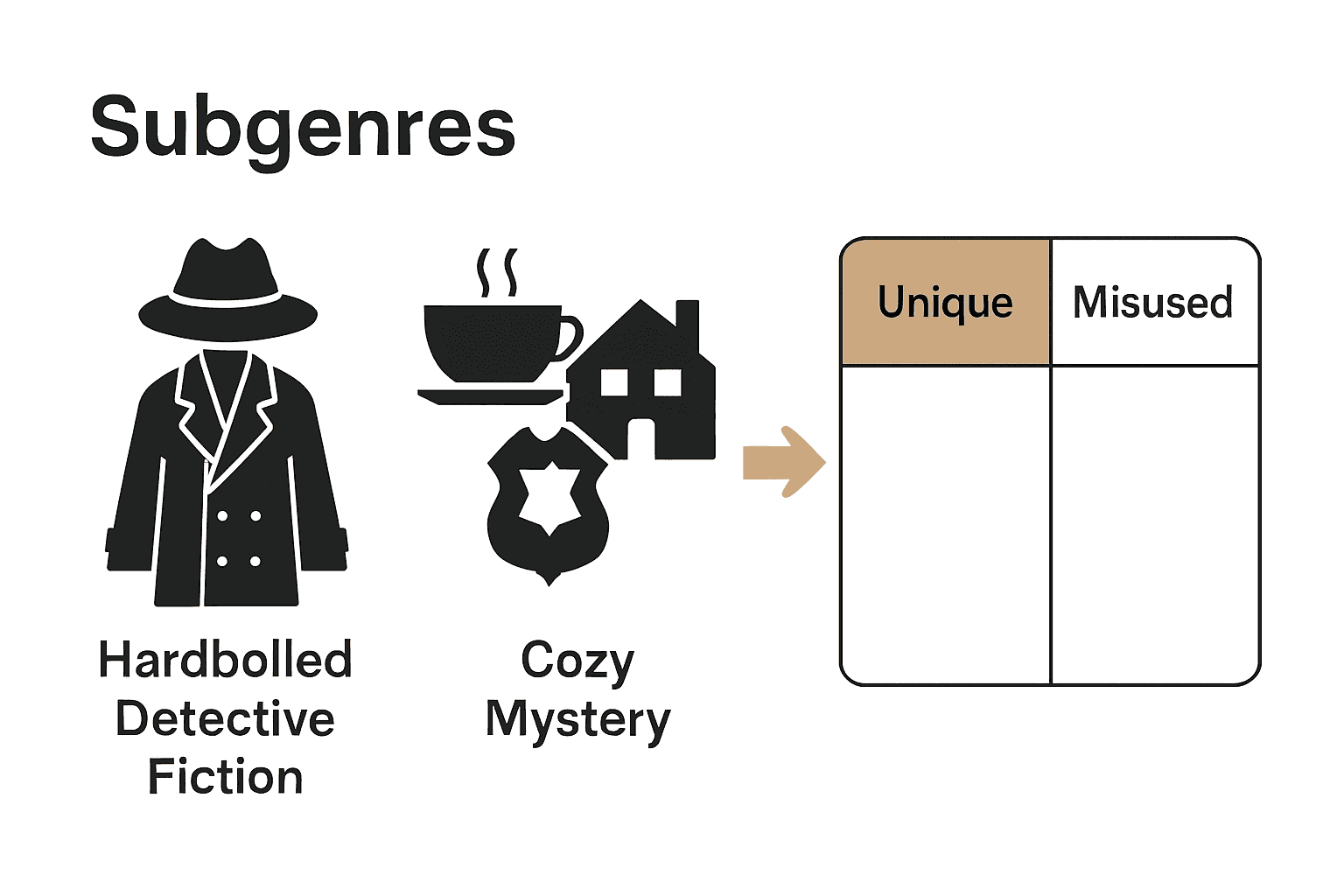
- Hardboiled vs. Detective Fiction: Often incorrectly used interchangeably
- Cozy Mystery vs. Traditional Mystery: Frequently confused despite distinct characteristics
- Thriller vs. Mystery: Misunderstood as synonymous genres
- Police Procedural vs. Detective Fiction: Subtle but important distinctions often overlooked
Bodhi Journals highlights the critical need for precise definitions, especially in academic and literary contexts. The conflation of hardboiled and detective fiction represents a prime example of how imprecise terminology can muddy our understanding of literary genres. Readers and scholars alike must pay careful attention to the nuanced differences between seemingly similar mystery subgenres.
For readers seeking to deepen their understanding of these complex distinctions, our guide on subtle literary classifications offers comprehensive insights into the intricate world of mystery fiction terminology.
Unlock the Mystery with Engaging Short Reads Tailored for You
Struggling to keep track of mystery fiction terminology like red herrings, cozy mysteries, and inverted detective stories can make enjoying the genre frustrating. If you love diving into complex puzzles or crave captivating stories featuring amateur sleuths and brilliant detectives but find traditional novels too time-consuming, our collection of mystery fiction short reads is designed just for you. Experience thrilling narratives that respect your busy schedule while immersing you in the exact subgenres and archetypes you enjoy.

Discover the perfect blend of intrigue and clarity with our Weekend Mystery Bundle. Featuring a carefully curated selection of cozy mystery short reads, murder mystery novellas, and detective short reads, you will embrace your passion for mystery fiction without getting lost in confusing terms or overwhelming plots. Don’t wait to transform your reading experience. Explore our collection now at theShortReads.com and decode mysteries effortlessly.
Frequently Asked Questions
What is mystery fiction?
Mystery fiction is a literary genre that revolves around an enigmatic event, typically a crime, that remains unsolved until the story’s conclusion. It often features a detective who uses logical reasoning to unravel the mystery.
What are common terminology used in mystery fiction?
Key terms in mystery fiction include ‘detective’ (the investigator), ‘red herring’ (misleading clues), ‘MacGuffin’ (a plot-driving object), and ‘unreliable narrator’ (a storyteller with questionable credibility).
What are the major subgenres of mystery fiction?
Major subgenres of mystery fiction include detective fiction, cozy mystery, locked-room mystery, true crime, and police procedural, each offering unique storytelling styles and themes.
How do red herrings function in mystery storytelling?
Red herrings are deliberately misleading clues designed to distract readers from the actual solution. They create tension and engage readers by maintaining uncertainty about the outcome.
Recommended
- Understanding Mystery Fiction Terminology Explained – TheShortReads.com
- Mystery Fiction – TheShortReads.com
- Short Mystery Writing Tips for Captivating Tales – TheShortReads.com
- 7 Smart Ways to Discover Mystery Fiction for Men – TheShortReads.com


7 Smart Ways to Discover Mystery Fiction for Men

Over 60 percent of busy readers say they are drawn to stories that keep them hooked without eating up their entire weekend. Mystery fiction stands out because it offers suspenseful escapes in every format, from quick novellas to intricate detective sagas. Whether you want a fast-paced adventure or an immersive puzzle to solve, there is a perfect mystery waiting for you. Discover practical ways to enjoy gripping mysteries that fit your lifestyle and reading taste.
Table of Contents
- 1. Try Short Mystery Novellas For Quick Reads
- 2. Explore Genres: Action, Cozy, And Detective Stories
- 3. Use Online Platforms For Easy Access
- 4. Pick Books With Strong Male Leads
- 5. Join Book Clubs For Shared Experiences
- 6. Choose Books With Simple, Fast-Paced Plots
- 7. Seek Recommendations From Mystery Lovers
Quick Summary
| Takeaway | Explanation |
|---|---|
| 1. Choose Short Mysteries for Quick Reads | Short novellas under 300 pages can be read in one weekend, offering thrilling entertainment in less time. |
| 2. Explore Different Mystery Subgenres | Discover variations like cozy, action, and detective stories to match your reading preferences and interests. |
| 3. Use Online Resources for Easy Access | Platforms like OverDrive and Project Gutenberg allow borrowing or accessing a wide variety of mystery novels digitally. |
| 4. Join Book Clubs for Enhanced Experiences | Participate in book clubs to share insights and discover new authors, enriching your mystery reading journey. |
| 5. Seek Personalized Recommendations | Engage with fellow readers online or in person for tailored mystery book suggestions based on specific interests. |
1. Try Short Mystery Novellas for Quick Reads
Want to dive into mystery fiction without committing weeks to a massive novel? Short mystery novellas are your perfect solution. These compact stories pack intense narratives and gripping plots into manageable page counts, making them ideal for busy readers seeking thrilling entertainment.
According to Bustle, there are excellent mystery novels under 300 pages that can be devoured in a single weekend. Books like “The Other Side of Everything” by Lauren Doyle Owens and “The Chalk Man” by C.J. Tudor demonstrate how short novels can deliver complex storytelling without demanding excessive time.
Why choose short mystery novellas? They offer several compelling advantages:
- Time Efficiency: Read a complete story in just a few hours
- Intense Storytelling: Compact narratives with concentrated suspense
- Perfect for Beginners: Less intimidating entry point into mystery fiction
- Weekend Reading: Finish an entire thrilling narrative in one sitting
To get started, look for novellas around 200 to 300 pages with strong narrative hooks. Check online recommendation lists, bookstore mystery sections, or top picks from TheShortReads.com for curated suggestions that match your interests.
Pro tip: Start with award-winning or critically acclaimed shorter mystery novels to ensure high quality storytelling. Your weekend reading just got a lot more exciting.
2. Explore Genres: Action, Cozy, and Detective Stories
Mystery fiction is not a one-size-fits-all genre. Different subgenres offer unique reading experiences tailored to your specific interests and preferences. From high-octane action stories to charming small-town mysteries, understanding these categories can help you find exactly the reading adventure you crave.
According to Wikipedia, detective fiction encompasses a rich landscape of narrative styles and storytelling approaches. This genre offers readers multiple entry points into mysterious worlds with varying levels of complexity and excitement.
Subgenres to Explore:
- Cozy Mysteries: Gentle, low-violence stories typically set in small towns with amateur sleuths. As Wikipedia explains, these mysteries focus more on puzzle solving than graphic details.
- Action Mysteries: Fast paced narratives with high stakes and intense plot developments
- Detective Stories: Traditional narratives following professional or amateur investigators solving complex cases
To find your perfect mystery subgenre, experiment with different styles. Visit local bookstores, browse mystery fiction types for learners, and read sample chapters. Pay attention to the narrative style, pacing, and character dynamics that most appeal to you.
Pro tip: Start with shorter novels in each subgenre to quickly determine your preferred mystery style without investing too much time. Your perfect mystery adventure awaits.
3. Use Online Platforms for Easy Access
Modern technology has transformed how we discover and consume mystery fiction. Online platforms provide unprecedented access to thousands of mystery novels without leaving your home, making reading more convenient than ever before.
OverDrive offers an incredible solution for readers by partnering with libraries worldwide. This digital platform allows you to borrow ebooks and audiobooks through your local library membership, giving you instant access to a vast selection of mystery novels right from your digital device.
Digital Reading Resources:
- Project Gutenberg: Free digital library with classic mystery works
- OverDrive: Library partnership platform for digital book borrowing
- Kindle Unlimited: Subscription service with extensive mystery collections
- Local Library Digital Platforms: Free book borrowing through online systems
Project Gutenberg provides an exceptional resource for readers interested in classic mystery fiction. Their collection includes complete works by legendary authors like Arthur Conan Doyle, offering free digital downloads of entire Sherlock Holmes series and other timeless mystery novels.
To get started, download these apps on your smartphone or tablet. Create accounts with your local library credentials or explore free platforms. Pro tip: Many libraries offer digital memberships that provide free access to extensive mystery fiction collections.
4. Pick Books with Strong Male Leads
If you are looking to dive into mystery fiction that resonates with male readers, focusing on books with compelling male protagonists can transform your reading experience. Strong male leads offer unique perspectives and engaging narratives that capture complex character dynamics.
Take the Nameless Detective series by Bill Pronzini, which Wikipedia highlights as a prime example of a gripping male investigative narrative. Set in San Francisco, this long running series showcases a private investigator navigating intricate mystery landscapes with depth and authenticity.
What Makes a Strong Male Lead:
- Complex Psychological Depth: Characters with nuanced inner worlds
- Professional Expertise: Protagonists skilled in investigation or related fields
- Moral Complexity: Characters who wrestle with ethical challenges
- Personal Growth: Leads who evolve through their investigative experiences
Contemporary mysteries like Richard Osman’s “The Man Who Died Twice”) demonstrate how modern male protagonists can be multidimensional. The novel features a former MI6 agent entangled in an intricate case involving stolen diamonds and international criminal networks, showcasing intelligence and strategic thinking.
To find your ideal mystery novel, explore book reviews, ask for recommendations at local bookstores, and sample different series. Focus on protagonists that intrigue you beyond surface level action.
5. Join Book Clubs for Shared Experiences
Book clubs offer more than just reading recommendations. They provide a dynamic social environment where mystery fiction enthusiasts can dive deep into complex narratives, share insights, and expand their literary horizons.
Benefits of Mystery Fiction Book Clubs:
- Discover New Authors: Members introduce books you might never find alone
- Deeper Understanding: Group discussions reveal hidden plot nuances
- Social Connection: Meet like-minded mystery fiction enthusiasts
- Accountability: Regular meetups keep you consistently reading
Whether online or in person, book clubs create opportunities to explore mystery fiction from multiple perspectives. You will encounter diverse interpretations of storylines, character motivations, and narrative techniques that enhance your reading experience.
To get started, explore local library book clubs, online reading platforms like Goodreads, or community centers that host genre specific groups. Check out our shop for potential mystery fiction recommendations you can suggest to your book club.
Pro tip: Look for book clubs specifically focused on mystery or thriller genres to ensure more targeted and engaging discussions. Your next great reading adventure might just begin with a group conversation.
6. Choose Books with Simple, Fast-Paced Plots
Not all mystery readers want complex literary puzzles. For those seeking quick entertainment, fast-paced plots with straightforward narratives can provide an exciting reading experience without demanding excessive mental energy.
Wikipedia highlights Rex Stout’s ‘Trouble in Triplicate’ as a prime example of concise storytelling. This collection of Nero Wolfe novellas demonstrates how compelling mysteries can unfold rapidly, keeping readers engaged through streamlined narratives.
Characteristics of Fast-Paced Mystery Novels:
- Clear Story Progression: Linear plots with minimal digressions
- Quick Character Development: Immediate understanding of key personalities
- Minimal Backstory: Focus on present action and immediate conflict
- Rapid Plot Resolution: Mysteries solved within compact narratives
Modern readers appreciate stories that respect their time. Short reads from our recommended list offer perfect alternatives for busy individuals wanting engaging mysteries without lengthy commitments.
Pro tip: Look for novellas or short mystery collections that promise direct storytelling. Authors like Rex Stout excel at creating intricate yet accessible stories that unfold quickly and maintain high entertainment value.
7. Seek Recommendations from Mystery Lovers
Some of the best mystery fiction discoveries happen through conversations with passionate readers who live and breathe the genre. Fellow enthusiasts can offer personalized recommendations that algorithms and generic lists simply cannot match.
LibraryThing hosts incredible online communities like the Mystery Lovers group where dedicated fans share their most compelling reads. These platforms provide interactive spaces where you can dive deep into nuanced book discussions and uncover hidden literary gems.
Ways to Connect with Mystery Fiction Enthusiasts:
- Online Reading Communities: LibraryThing, Goodreads discussion groups
- Local Library Book Clubs: In person mystery fiction meetups
- Reddit Mystery Fiction Subreddits: Passionate reader discussions
- Social Media Mystery Reader Groups: Facebook and Twitter communities
For more curated suggestions, explore mystery fiction short stories that can quickly introduce you to new authors and styles. Many mystery lovers are eager to share their favorite reads and can help you navigate the vast world of detective and thriller narratives.
Pro tip: Always ask specific questions about plot styles, pacing, and character development when seeking recommendations. The more details you provide about your reading preferences, the more targeted the suggestions will be.
This table summarizes key strategies and benefits of engaging with mystery fiction through various formats and methods discussed in the article.
| Topic | Description | Benefits |
|---|---|---|
| Short Mystery Novellas | Compact stories with intense narratives; examples include “The Other Side of Everything” and “The Chalk Man”. | Quick reads, efficient storytelling, ideal for busy readers. |
| Explore Genres | Includes cozy, action, and detective stories; each offers unique reading experiences. | Tailored reading adventures, exposure to various storytelling styles. |
| Online Platforms | Access thousands of mystery novels via digital resources like OverDrive, Project Gutenberg, and Kindle Unlimited. | Convenient access, vast selection, borrow books digitally. |
| Strong Male Leads | Focus on books with compelling male protagonists, such as the “Nameless Detective” series. | Engaging narratives, complex characters, unique perspectives. |
| Book Clubs | Join groups for shared reading experiences and discussions. | Discover new authors, gain deeper understanding, social connection. |
| Fast-Paced Plots | Choose books with straightforward narratives; examples like Rex Stout’s “Trouble in Triplicate”. | Quick entertainment, minimal mental energy required. |
| Recommendations | Connect with mystery fiction enthusiasts for personalized suggestions. | Discover hidden gems, targeted reading based on preferences. |
Discover Your Perfect Mystery Read Today
If you are looking to overcome the challenge of finding engaging mystery fiction tailored just for men you are not alone. Many readers struggle with picking the right subgenre or finding books with strong male leads that fit their busy lifestyles. This article highlighted key goals like choosing short mystery novellas for quick reads exploring cozy or action-packed styles and engaging with communities for personalized recommendations. At TheShortReads.com we understand how important it is to connect you with fast paced mysteries or thoughtful detective stories that fit your unique taste and time constraints.
Explore our collection of mystery fiction short reads where you will find handpicked cozy mysteries and action thriller novellas designed to deliver suspense and satisfaction in a minimum amount of time. Whether you want to dive into psychological thrillers or gripping murder mystery novellas find exactly what you need to jumpstart your next reading adventure. Join fellow fans who get the perfect blend of storytelling and pacing without the wait.
Ready to uncover your next favorite mystery? Start browsing now and take advantage of expertly curated short reads that respect your time and excite your imagination.

Unlock thrilling mysteries crafted for busy readers. Visit TheShortReads.com and choose your next captivating read today.
Frequently Asked Questions
What are the best ways to discover short mystery novellas for men?
Short mystery novellas are great for busy readers looking for quick, engaging stories. Look for novellas around 200 to 300 pages, especially from award-winning authors, and consider checking online recommendations or curated lists for tailored options.
How do I explore different subgenres of mystery fiction effectively?
To explore mystery fiction subgenres, read sample chapters from action mysteries, cozy mysteries, and detective stories. Experiment with different styles to see which ones resonate with you, and start with shorter novels to gauge your interest without a long-term commitment.
What are the benefits of joining a mystery fiction book club for men?
Joining a mystery fiction book club allows you to deepen your understanding of stories and characters while connecting with fellow enthusiasts. To get started, seek out local meets or online groups focused on mystery genres to enhance your reading experience and discover new titles.
How can I find recommendations from other mystery fiction lovers?
Connect with other mystery fiction enthusiasts through online reading communities, social media groups, or local library events. Engage in discussions and ask specific questions about mystery novels to receive tailored recommendations that match your interests.
What should I consider when choosing books with strong male leads?
When selecting mystery books with strong male leads, focus on characters with complex psychological depth and relatable moral dilemmas. Look for novels that showcase character development and situational challenges, which will enhance your reading experience.
How can I locate fast-paced mystery novels?
To find fast-paced mystery novels, look for books that feature concise storytelling and linear plots. Seek out novellas or collections that promise quick reads, ensuring you can enjoy engaging narratives without lengthy commitments.
Recommended
- Mystery Fiction – TheShortReads.com
- 6 Must-Know Mystery Short Stories Examples for Everyone – TheShortReads.com
- Understanding Mystery Fiction Terminology Explained – TheShortReads.com
- 7 Mystery Fiction Types for Learners and Busy Readers – TheShortReads.com

