Self Help
Best Short Self Help Books That Actually Work (2026)
![[HERO] Best Short Self Help Books That Actually Work (2026)](https://cdn.marblism.com/KX7t-A1Q_bA.webp)
Did you know that the average non-fiction book contains roughly 80% padding? It’s a staggering statistic, but once you hear it, you can’t unsee it. Most authors take a brilliant, thirty-page insight and stretch it into a 350-page marathon to justify a hardcover price point. The result? You spend eight hours of your life chasing a concept you could have mastered over a morning coffee.
At The Short Reads, we believe your time is your most valuable asset. If a book respects your time enough to be short, it usually respects your intelligence enough to be direct. In 2026, the trend has shifted: we are moving away from “shelf-help” (books that sit unread on a shelf) toward active-help.
The following books weren’t chosen just because they are thin; they were chosen because they use their length honestly. They say what they have to say, give you the tools, and then get out of your way.
The Efficiency Breakdown: Why Shorter is Better
Before we dive into the list, let’s look at why brevity wins in the self-help space. According to recent reading behavior studies, a 150-page book you finish and apply is 10x more valuable than a 400-page tome you abandon at chapter four.
1. Mastering Your Output: Productivity Without the Burnout
You might think productivity is about “hustle,” but the most effective thinkers in 2026 argue the opposite. True productivity is about intentionality.
Essentialism by Greg McKeown | 260 pages
The Essentialist’s question is not “How do I fit more in?” but “What is the most important thing?” At 260 pages, you can read this in a single weekend. It’s the perfect toolkit for anyone who feels “busy but not productive.” It helps you find the “essential few” and ruthlessly eliminate the “trivial many.”
Deep Work by Cal Newport | 296 pages
Newport argues that the ability to focus without distraction on cognitively demanding tasks is a “superpower” in our modern economy. He distinguishes “deep work” from “shallow work” (the email-driven, meeting-heavy fluff that fills our days). The first half makes the case; the second half provides the rules.
Feel Good Productivity by Ali Abdaal
New for 2026 recommendations, Abdaal’s work shifts the focus from discipline to joy. He argues that we are most productive when we feel good, reframing tasks as “play” rather than “work.” It’s a kinder, evidence-based approach that is particularly useful if you’ve recently experienced burnout.
2. The Mental Toolkit: Mindset and Philosophy
Mindset books address how you think rather than what you do. If your mental models are flawed, no amount of “hacks” will save you.
Man’s Search for Meaning by Viktor Frankl | 154 pages
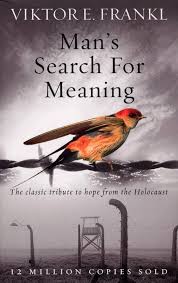
Frankl, a psychiatrist and Holocaust survivor, provides one of the most powerful foundations for any self-improvement journey. The real surprise? The question of what makes life worth living is the foundation of every productivity framework. If you don’t know your why, your how doesn’t matter. At 154 pages, it is a haunting, beautiful, and ultimately practical guide to finding meaning in any circumstance.
The Obstacle Is the Way by Ryan Holiday | 224 pages
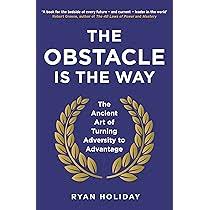
Holiday draws on Stoic philosophy to show how the very thing blocking your path can become the path. It’s a mental toolkit for turning adversity into advantage. If you want a short read that introduces practical philosophy without the academic jargon, start here.
Letters to a Young Poet by Rainer Maria Rilke | 128 pages
Not conventional self-help, but perhaps more useful for it. Rilke writes about living with uncertainty and “sitting with the questions.” It’s a short, profound look at doing work that comes from necessity rather than ambition.
3. The Science of Behavior: Habit Formation
The field of behavior change has been transformed by neuroscience. We now know that identity-based change is the only kind that sticks.
- Atomic Habits by James Clear (320 pages): The gold standard. Clear’s four laws: make it obvious, attractive, easy, and satisfying: provide a plug-and-play system for life.
- The Power of Habit by Charles Duhigg (371 pages): A bit longer, but essential for understanding the neurological “cue-routine-reward” loop.
- Mind Drama by Donna Jackson Nakazawa: A 2026 standout that offers practical ways to interrupt repetitive thought loops that hijack your brain.
The real surprise? Most people fail at habits not because of a lack of willpower, but because their environment is designed for failure. These books show you how to redesign your world so success becomes the default.
4. Connection: Relationships and Communication
A book about relationships that is built purely on personal anecdote is a memoir. The books below are more useful because they are built on evidence and social psychology.
How to Win Friends and Influence People by Dale Carnegie | 291 pages
Published in 1936 and still selling millions of copies for a reason. Carnegie’s principles: like becoming genuinely interested in others: are ethically sound and practically effective. It’s the most durably useful relationships book in existence.
We Should All Be Feminists by Chimamanda Ngozi Adichie | 64 pages
The shortest entry on this list and one of the most precisely argued. It’s a 45-minute read that stays with you for years. It’s fundamental to any honest discussion of how gender shapes our connections.
The Art of Communicating by Thich Nhat Hanh | 176 pages
A masterclass in “presence.” Most communication failures are failures of listening. Hanh provides a framework for speaking from understanding rather than emotion.
How to Actually Use a Short Self-Help Book
You might think that reading more books is the goal. It isn’t. The goal is transformation. Because short books are easy to finish, they allow for a specific type of study:
- The First Pass: Read it quickly to understand the central framework.
- The Implementation Gap: Pick one insight and apply it for 48 hours.
- The Reread: Return to the key chapters now that you have real-world context.
A 150-page book you read twice is infinitely more powerful than a 400-page book you abandoned at page 200. If you are looking for more bingeable options, check out our mystery collection or our box sets for a different kind of quick-finish satisfaction.
Final Thoughts: The Philosophy of “Enough”
Self-help books are tools, not solutions. A book about deep work is not deep work. Reading about habits is not a habit. The best books: the ones on this page: acknowledge their own limits. They provide the map, but they don’t pretend to walk the path for you.
In 2026, we are finally embracing the idea of “enough.” You don’t need a thousand pages of case studies to understand that doing less, but better, will change your life. You just need the courage to put the book down and start doing the work.
What’s your next move?
- If you’re short on time, browse our Short Books for Busy People.
- If you want to dive into fiction that feels just as fast, try a Jack Kennedy thriller.
- Ready to start your collection? Visit The Short Reads Bookstore.
The best book is the one you actually finish. Pick a short one, read it today, and change one thing tomorrow. That is how growth actually happens.