How to Build a Reading Habit
That Actually Sticks
Most reading habit advice starts in the wrong place. It gives you a target: 52 books a year, 30 minutes a day | and assumes the problem is motivation. If you just wanted it enough, you’d already be doing it. The real surprise? Motivation is rarely the issue.
The actual problem is almost never motivation: it’s friction. Reading is competing with a phone that is engineered by some of the best designers in the world to hold your attention. A book sits passively on a table | the phone wins by default unless you change something structural.
This guide is about changing those structures. Not through willpower | through small decisions that make reading the easier choice. It’s also deliberately honest about what doesn’t work, because there is a significant amount of reading habit advice that sounds good and produces guilt rather than books. At The Short Reads, we believe that becoming a reader shouldn’t feel like a second job.
Why Reading Habits Fail
Before the practical steps, it’s worth understanding the common failure modes: because if you’ve tried to read more before and stopped, one of these is almost certainly what happened.
Too ambitious too fast. Starting a 500-page novel when you haven’t read regularly in years is the literary equivalent of signing up for a marathon the week you decide to start running. The commitment is too large for the habit to survive its first difficult week. The book stalls around page 80 and sits on the nightstand as a small monument to intentions that didn’t quite hold.
Wrong time of day. Reading before bed sounds logical | winding down, no screens. But for people who are tired by 10pm, the book becomes a sleep aid rather than an experience. You read three pages, lose the thread, and wake up having retained nothing. The habit never takes because the experience of reading is always half-asleep.
Wrong book. This is the most underdiagnosed cause of failed reading habits. A book that doesn’t hold you is not a book you’ll read consistently. There’s a temptation to choose something worthy | a Booker winner, a classic, something you feel you should have read by now. But a book you’re finishing out of obligation is not building a reading habit. It’s building a reading obligation.
No consistent trigger. Habits attach to other habits. Running after coffee. Stretching after a shower. Without a consistent trigger | a time, a place, a prior action that reading reliably follows | reading remains an intention rather than a behaviour. You think about it but don’t do it.
Treating a missed day as failure. Missing one day doesn’t break a habit. Deciding that missing one day means the habit is broken | and stopping | does. The research on habit formation consistently shows that occasional misses don’t affect long-term habit strength. What matters is resuming quickly, not maintaining a perfect streak.

How to Actually Build the Habit
1. Start with the shortest book that genuinely interests you
Not the shortest book that seems appropriately serious. Not the one that’s been on your list longest. The shortest book that you are actually curious about right now.
Length is not a measure of quality. Short books are the right entry point for a habit that doesn’t yet exist. Finishing a short book quickly produces two things that are essential to habit formation: the satisfaction of completion, and evidence that you are someone who finishes books.
2. Find your trigger
A reading habit needs to attach itself to something that already happens reliably in your day. Common triggers that work:
Morning coffee or tea reading while you drink it, before anything else competes for attention
The commute on public transport, the phone goes in the bag and the book comes out
Lunch break 20 minutes of reading before or after eating
After work, before dinner a decompression window that reading fills better than scrolling
Before sleep this works if you’re not exhausted; it doesn’t work if you’re falling asleep by page three

3. Remove the friction
Friction is the distance between you and the book. The smaller that distance, the more often reading wins against the alternatives.
Physical book Keep it somewhere visible and accessible | on your desk, on the kitchen table, on your pillow. Not on the bookshelf with the spines facing out, which is where books go to be decorative rather than read.
E-reader: Charge it the night before. Keep it next to your bed, or in your bag. A Kindle with a dead battery is a book you won’t read tonight.
Phone: The single most effective structural change most people can make is leaving their phone in another room during their reading window. Not switching it to silent | in another room. Out of reach is out of mind in a way that on-the-table-face-down never quite is.
4. Start smaller than feels meaningful
Five pages a day. That’s it. Not a chapter. Not 20 minutes. Five pages.
Five pages a day is 1,825 pages a year roughly eight to ten books. That is more than the average adult reads. But more importantly, five pages is achievable on the busiest, most exhausted day. It takes less than five minutes. There is no day so full that five pages is genuinely impossible.
5. Give a book 50 pages before you quit it
The first 20 pages of almost any book are harder than the middle. You’re learning a new world, a new voice, a new set of characters. This is true of books you will eventually love.
50 pages is a fair trial. Not 10, which is too early, and not 200, which is too much investment in something that isn’t working. If you’re not engaged by page 50, the book is not wrong | that book is wrong for you right now. Put it down without guilt and try something else. This is editorial judgment, not failure.
6. Don’t aim for a number
52 books a year. A book a week. A book a month. Reading targets sound motivating and produce the opposite effect for most people: anxiety when life intervenes and guilt when the target slips. The only number that matters in the early stages of a reading habit is one: the one book you’re reading right now.
What to Read to Start
The best starting book is the shortest one that genuinely interests you. If you’re not sure where to start, these are the books that most consistently work as habit starters:
For gripping fiction: And Then There Were None by Agatha Christie | 264 pages. The puzzle is constructed perfectly and the pages turn themselves.
For warm, easy fiction: The No. 1 Ladies’ Detective Agency by Alexander McCall Smith (226 pages). Genuinely difficult to put down.
For short literary fiction: Foster by Claire Keegan (88 pages). One of the finest short novels written in English in the last twenty years.
For non-fiction: Man’s Search for Meaning by Viktor Frankl (154 pages). Gripping memoir followed by accessible philosophy.
For mystery: Murder at the Manor by CT Mitchell (200 pages). Short chapters, immediate pace, and a satisfying resolution. The structure is perfectly suited to habit-building reading.
For the absolute shortest start: We Should All Be Feminists by Chimamanda Ngozi Adichie | 64 pages. Read it in 45 minutes. The satisfaction of finishing something is the point.
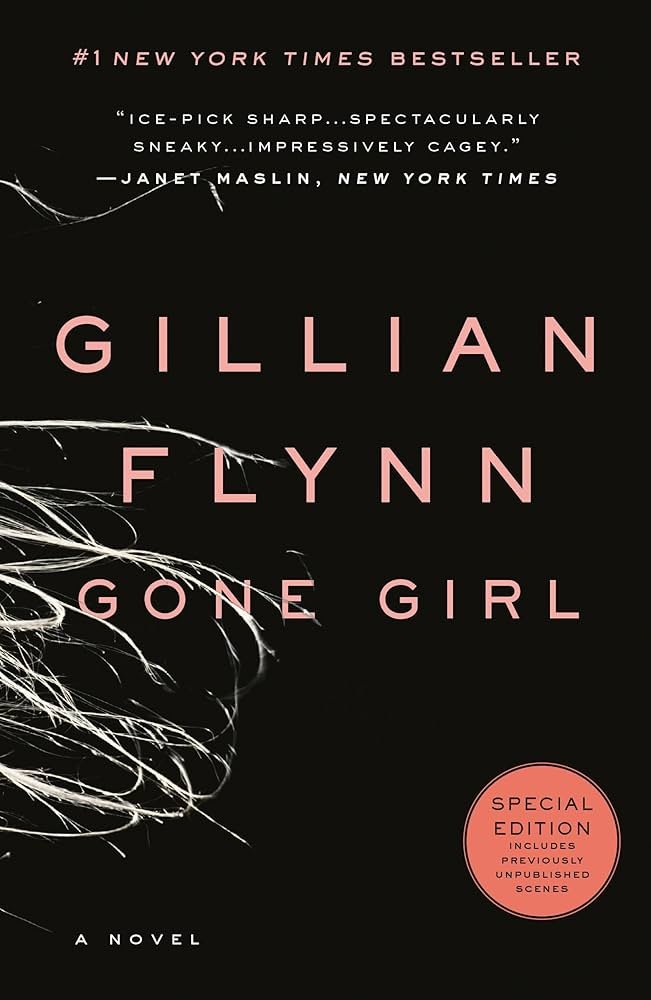
Gone Girl by Gillian Flynn
(422 pages)
LONGER PICK
Another honest longer inclusion: Gone Girl is 422 pages but reads in the tempo of a 200-page book because Flynn’s dual-narrator structure makes you physically unable to stop. On their fifth wedding anniversary, Nick Dunne’s wife Amy disappears. What follows is one of the most formally inventive crime novels of the 21st century. If you want to understand why psychological thrillers became the dominant force in commercial fiction over the last fifteen years, this is where it started.

2026 Breakthroughs: New Short Reads to Watch
As we move through 2026, several new titles have emerged that perfect the “one-sitting” requirement. Research into recent publishing trends shows that major authors are returning to the novella format to combat digital fatigue.
1. The Final Score by Don Winslow: A masterful collection of six short novels. Winslow has always had a deft touch with shorter forms, and the title story about a master thief facing the end of his road is a masterclass in pacing.
2. The Murder at World’s End by Ross Montgomery: Released in early 2026, this is the epitome of the modern cozy. It features a fun, locked-room mystery with plenty of amateur sleuthing that feels fresh yet traditional.
3. The Best Mystery Stories of the Year 2026 (Edited by Tess Gerritsen): If you cannot decide on one author, this anthology curates the absolute best short mystery fiction of the year. It is the perfect entry point for discovering new voices in the genre.
Short Mysteries for Specific Moods
When you want something warm and funny
The No. 1 Ladies’ Detective Agency by Alexander McCall Smith (226 pages): Precious Ramotswe establishes Botswana’s only female detective agency and takes on cases that are less about violence and more about human nature. McCall Smith writes with such genuine affection for his characters and setting that the book works as an antidote to almost any kind of stress.
When you want something clever and slightly unsettling
And Then There Were None by Agatha Christie (264 pages): ten strangers on an island, one by one. The most commercially successful mystery novel ever written, and still the most perfectly constructed. Christie’s prose is frictionless: you don’t notice the quality of the writing because it never slows you down.
When you want something literary that happens to be a thriller
The Hound of the Baskervilles by Arthur Conan Doyle (256 pages): a family curse, a spectral hellhound, and the fog-wreathed landscape of Dartmoor. Conan Doyle was not always a spare writer but the Sherlock Holmes novels are lean by his standards, and Baskervilles is the best of them.