Horror
Best Short Horror Books to Read in One Sitting (2026)
![[HERO] Best Short Horror Books to Read in One Sitting (2026)](https://cdn.marblism.com/Ut-aMhWXBI-.webp)
You might think that to truly lose yourself in a story, you need five hundred pages of world building and intricate character backstories. The real surprise? Data from early 2026 suggests that over 70 percent of horror readers now prefer the novella format over full length novels when they want a truly visceral experience. There is a specific, jagged power in a story that begins, peaks, and ends before you have time to look away from the page.
Horror is the genre that has always understood the novella. Where other genres use length to build worlds or develop characters across time, horror uses it to sustain dread: and dread is harder to sustain at 600 pages than at 150. The longer a horror novel runs, the more opportunities there are for the fear to dissipate, for the reader to adjust, to the wrongness to become familiar.
Short horror does not give you time to adjust. It arrives with something wrong already in place and escalates without relief until the ending: which in the best short horror is not a resolution but a deepening.
The monster is never fully explained. The door does not close cleanly. You put the book down in a different state than you picked it up. This is the core appeal of the role of novellas in fiction. The books on this page are all under 250 pages. Most are under 200.
We have organized them by subgenre because the kind of horror you want matters: cosmic horror produces a different experience than psychological horror, which is different again from supernatural.
Why Horror Works Better When It Is Brief
The psychology of fear relies on the unknown. In a long novel, the author is often forced to explain the mechanics of their monster or the history of their haunted house to keep the plot moving. This explanation is the enemy of terror. By keeping the narrative tight, these authors ensure that the reader remains in a state of high alert. You can find more about how this compares to other formats in our short reads vs novels guide.
Cosmic Horror: The Terror of the Infinite
Cosmic horror is the subgenre built on a single, vertiginous idea: that the universe is indifferent to human existence, that there are forces operating at scales beyond human comprehension, and that encountering them does not produce a story with a hero and a resolution but rather a shattering of the self.
H.P. Lovecraft invented the modern form of cosmic horror, and his influence is everywhere in the genre: but so are his considerable moral failures, which more recent writers have addressed directly and productively.
The Ballad of Black Tom by Victor LaValle | 149 pages | COSMIC HORROR
Set in 1920s Harlem, Charles Thomas Tester is a street musician and small time hustler who becomes entangled in an occult plot with cosmic dimensions. LaValle wrote this novella explicitly as a response to Lovecraft’s ‘The Horror at Red Hook’: taking the same supernatural premise and telling it from the perspective of a Black man in the Harlem that Lovecraft rendered as threat.
The result is cosmic horror that earns its dread honestly, without the racism that corrupts its source material. It won the Bram Stoker and British Fantasy Awards. At 149 pages, it is one of the most important short horror works of the past decade: an argument for what the genre can do when it examines its own assumptions.
Annihilation by Jeff VanderMeer | 195 pages | COSMIC HORROR
The twelfth expedition into Area X involves a biologist, a surveyor, a psychologist, and an anthropologist crossing the border into a coastal wilderness that has been sealed off from the rest of the world for decades.
What they find resists description and categorization. VanderMeer withholds explanation entirely: Area X is never rationalized, the biologist’s narration is unreliable, and the horror is the incomprehensibility itself rather than any specific threat.
Filmed by Alex Garland in 2018, this 195 page book is the tightest of the Southern Reach trilogy and arguably the only one that needs to be read: the sequels expand without necessarily improving the core mystery.
The Strange Case of Dr Jekyll and Mr Hyde by Robert Louis Stevenson | 141 pages | CLASSIC COSMIC HORROR ADJACENT
A London lawyer investigates the relationship between the respectable Dr Jekyll and the violent, repellent Mr Hyde.
Stevenson published this in 1886 and the solution: that they are the same person: is now so culturally embedded that reading it requires an act of imagination to recover the original shock. What does not date is the horror of Hyde himself: not a monster from outside but the worst of Jekyll given form and freedom. This is the most enduring short horror novel in the English language.
These 141 pages are something the reader already half knows but should read anyway for what the adaptations have stripped away.
Psychological Horror: The Enemy Within
Psychological horror locates the threat inside the mind. The monster may be real or may be a symptom; the horror may be external or entirely self generated.
What defines the subgenre is ambiguity: the reader, like the protagonist, cannot be certain of what is actually happening.
The best psychological horror sustains that uncertainty to the end and never resolves it cleanly, because a clean resolution would explain away the thing that made it frightening. Understanding the themes in psychological thrillers can help you appreciate the nuances of these shorter works.
I’m Thinking of Ending Things by Iain Reid | 210 pages | PSYCHOLOGICAL HORROR
A woman is traveling with her boyfriend to meet his parents at their remote farmhouse. Something is wrong, but she cannot identify what.
The journey, the farmhouse, the parents, the boyfriend: all of it is subtly off in ways that accumulate rather than announce themselves. Reid withholds the source of the wrongness until the final pages, and the ending: which divides readers sharply: recontextualizes everything that came before it.
Adapted by Charlie Kaufman for Netflix, this is one of the most purely unsettling psychological horror novels of the past decade. You should read it in one sitting; reading it across multiple sessions softens the effect the sustained dread is designed to produce.
Come Closer by Sara Gran | 194 pages | PSYCHOLOGICAL HORROR
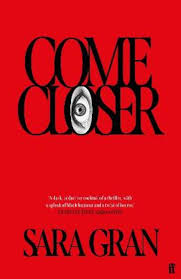
Amanda is a successful architect with a stable marriage. A strange tapping begins in her apartment: her husband cannot hear it. A memo she writes to her boss arrives filled with obscene insults she has no memory of writing. Her behavior becomes erratic.
Gran constructs this novella so that the possession reading and the psychological breakdown reading are equally supported by the text: you finish it uncertain which you believe and uncomfortable either way. At 194 pages, it sits inside a single reading session and produces the kind of quiet dread that psychological horror does better than any other format. It remains one of the most praised short horror novels of the past twenty years.
The Haunting of Hill House by Shirley Jackson | 182 pages | PSYCHOLOGICAL HORROR
Four people gather to study the allegedly supernatural Hill House. Jackson opens with a description of the house’s wrongness: its angles are not quite right, its silence is not like other silences: that has been parsed by critics and writers for sixty years.
Eleanor Vance, the most susceptible of the four, begins to unspool. Jackson never confirms whether the haunting is real or if Eleanor’s psychology is dissolving. At 182 pages, this is the founding text of American psychological horror and the book every haunted house story since has been in conversation with. It is a masterclass in the role of suspense in fiction.
Supernatural Horror: External Threats and Ancient Grudges
Supernatural horror posits a threat that is unambiguously external and beyond natural explanation: a ghost, a demon, a curse, or an entity. Unlike psychological horror, the monster is real. What distinguishes literary supernatural horror from genre pulp is what the monster means: the best supernatural horror uses its creature as a vehicle for examining grief, guilt, history, or faith. The threat is real; it is also always about something else.
The Hellbound Heart by Clive Barker | 164 pages | SUPERNATURAL HORROR
Frank Cotton solves a puzzle box and is taken apart by the Cenobites: creatures from a dimension of extreme sensation who cannot distinguish pleasure from pain.
When his brother and sister in law move into the family house, Frank begins to reconstitute himself using blood. Barker wrote this in 1986 and adapted it into Hellraiser the following year. The novella is darker and more philosophically dense than the film: Barker is examining the price of the pursuit of sensation without limit, using supernatural horror as the frame.
These 164 pages established Barker as the most formally ambitious horror writer of his generation. It is not for the squeamish as it includes graphic content.
Nothing But Blackened Teeth by Cassandra Khaw | 128 pages | SUPERNATURAL HORROR
Five friends gather in a centuries old Japanese mansion: built on the bones of a bride buried alive: to celebrate a wedding. The house is haunted. The ghost wants a groom.
Khaw writes in a prose style that is dense, image heavy, and highly compressed: every sentence is doing work.
At 128 pages, it is one of the shortest entries on this list and one of the most purely stylistic. If you come for story mechanics, you will be frustrated; if you come for atmosphere and prose, you will be rewarded. This is a strong argument for what supernatural horror can do when the writing is treated as seriously as the scares.
Mapping the Interior by Stephen Graham Jones | 112 pages | SUPERNATURAL HORROR
A twelve year old boy living in a trailer on a reservation sees his dead father walking through the house at night in full ceremonial dress.
He begins following the ghost. Jones: author of The Only Good Indians: writes supernatural horror rooted in Indigenous experience and grief.
At 112 pages, this is the shortest sustained horror narrative here and one of the most emotionally precise. The haunting is real and the haunting is about what loss does to a family and a child. A finalist for the Bram Stoker Award, it presents the ghost story as a form for examining inheritance: what fathers pass to sons, wanted and unwanted.
Horror vs Suspense: Where the Genres Differ
Understanding the difference between horror and suspense helps you find the right book for the right mood. While they often overlap, they produce distinct physiological reactions.
- Suspense: The source of the wrongness is often human or ambiguous: a bad marriage, a psychological deterioration, or a secret in the past. The dread is slow and atmospheric. Resolution is possible, even if it does not arrive. Shirley Jackson’s We Have Always Lived in the Castle is a classic example of suspense.
- Horror: The threat is more immediate and often supernatural or extreme. The genre permits: and sometimes requires: a more direct encounter with terror. Resolution is not guaranteed and may make things worse. Barker’s The Hellbound Heart is firmly horror.
Many of the best books in both genres cross the line. Come Closer is psychological horror that reads with the pacing of suspense. Annihilation is horror that operates through the mechanisms of literary suspense. If you are looking to understand more about these differences, you can check out our guide on why suspense matters.
New for 2026: Single Sitting Collections
If you have already worked your way through the classics, the 2026 release calendar has several highlights for short fiction fans.
- The Haunted Houses She Calls Her Own by Gwendolyn Kiste (April 2026): This collection is specifically designed for quick reads. Kiste is a master of modern horror with sharp prose and dense narratives that move at a rapid pace. It is perfect for those who want to enjoy one complete story every night.
- I Know a Place by Nat Cassidy (May 2026): Cassidy’s first short fiction collection features his acclaimed novella “Rest Stop.” Given his track record with works like Mary: An Awakening of Terror, this collection offers multiple stories that can be consumed in various timeframes.
The real benefit of these collections is the ability to experience a complete emotional arc in under thirty minutes. For busy readers, the benefits of short reads are clear: you get the satisfaction of a finished book without the weeks of commitment.
What to Read Next
If this guide sent you somewhere specific, you might enjoy these other curated lists:
- Short Suspense Books: If the psychological end of this page interests you more than the supernatural or cosmic.
- Best Novellas of All Time: For the literary end of horror, including more Jackson and Barker.
- Best Short Books to Read in One Sitting: Our full hub across all genres.
- Short Books to Break a Reading Slump: Annihilation and Mapping the Interior both work well as slump breakers for genre readers.
- Short Sci-Fi Books: If the cosmic horror section sent you toward the speculative end of the genre.
The best short horror novels share one quality: they end before you are ready for them to. The threat is still active. The question is still open. The door is still ajar. That is not a failure of resolution: it is the form understanding that the most frightening thing is not what is shown but what remains just out of sight. Ready to dive into your next nightmare? Pick one from the list and clear your schedule for the next two hours. Just remember to lock the door first.