
Step-by-Step Guide to Short Thriller Stories Success

Over half of american readers report feeling a rush of excitement when a thriller story takes an unexpected turn. The thrill genre offers something for every type of suspense fan, from legal courtroom battles to intense psychological puzzles. Knowing your preferred style can make every reading session far more satisfying and reveal why certain stories stick with you. Discover how to identify your own thriller preferences and turn your next book into a gripping adventure.
Table of Contents
- Step 1: Identify Your Preferred Thriller Genre
- Step 2: Select Engaging Short Thriller Stories
- Step 3: Immerse Yourself in Fast-Paced Reading Sessions
- Step 4: Analyze Plot Twists And Suspense Elements
- Step 5: Share And Discuss Your Thriller Experiences
Quick Summary
| Key Point | Explanation |
|---|---|
| 1. Identify your thriller genre | Understand different thriller subgenres to find your preferred style and enhance your reading experience. |
| 2. Choose engaging short stories | Look for short thrillers with strong openings, fast pacing, and layered characters to keep you captivated. |
| 3. Create an immersive reading environment | Set up a distraction-free space and schedule dedicated time for reading to enhance engagement. |
| 4. Analyze plot twists critically | Focus on key narrative hints and character motivations to deepen your understanding of suspenseful storytelling. |
| 5. Share insights with others | Discussing thrillers with fellow readers fosters community engagement and offers new perspectives on narratives. |
Step 1: Identify Your Preferred Thriller Genre
Discovering your preferred thriller genre starts with understanding the rich landscape of suspenseful storytelling. Each thriller subgenre offers unique narrative experiences that cater to different reader preferences and psychological interests.
Thrillers come in multiple fascinating variants, from action thrillers to specialized categories that dive deep into specific scenarios. For instance, Wikipedia notes that techno-thrillers represent a sophisticated hybrid genre blending science fiction, spy elements, and technical complexity. Similarly, legal thrillers focus intensely on courtroom dynamics and legal system intricacies.
To pinpoint your ideal thriller style, consider these exploration strategies:
- Read short samples across different subgenres
- Analyze which plot elements trigger your excitement
- Reflect on the type of tension that captivates you most
Whether you gravitate toward high-octane action sequences, intricate legal puzzles, or psychological mind games, understanding your preference will transform your reading experience from casual to compelling.
In the next step, we will dive deeper into selecting specific short thriller narratives that align perfectly with your newly discovered genre preference.
Step 2: Select Engaging Short Thriller Stories
Selecting the right thriller stories can transform your reading experience from ordinary to extraordinary. This step focuses on discovering narratives that will keep you on the edge of your seat.
StudySmarter highlights that effective short thriller stories leverage unexpected plot twists through sophisticated techniques like foreshadowing and strategic misdirection. When browsing potential reads, look for stories that promise intricate narrative structures. These gripping examples of thriller stories can serve as an excellent starting point for your exploration.
To select truly engaging short thriller stories, consider these strategic selection criteria:
- Scan opening paragraphs for immediate tension
- Check story length and complexity
- Read author reviews and recommendations
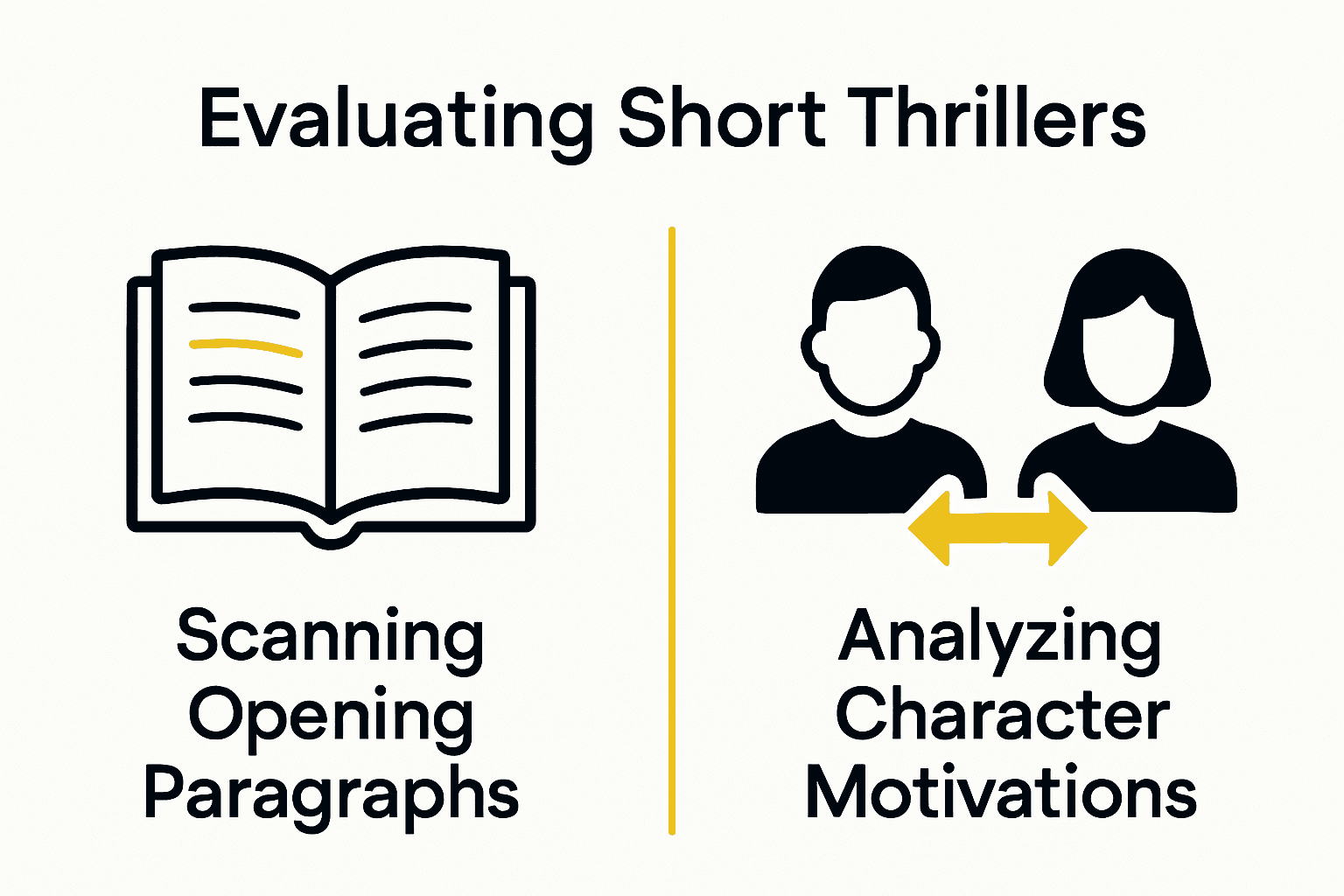
- Look for narratives with multilayered character developments
Computer science research from ArXiv suggests that successful suspense narratives effectively reduce reader uncertainty while maintaining intense psychological engagement. This means your ideal thriller should balance predictability with surprising elements.
In the upcoming section, we will explore techniques for dissecting and evaluating potential thriller stories to ensure you select only the most captivating narratives.
Step 3: Immerse Yourself in Fast-Paced Reading Sessions
Thriller reading is an art of sustained attention and psychological engagement. This step will help you transform your reading experience into an intense, immersive journey through suspenseful narratives.
Arxiv research on storytelling reveals fascinating insights into maintaining reader engagement through elements of surprise and narrative momentum. To truly immerse yourself, create a dedicated reading environment that minimizes distractions and maximizes concentration. Understanding the benefits of short reads can help you optimize your reading strategy.
Here are strategic techniques to create an immersive reading experience:
- Choose a quiet space with minimal interruptions
- Set specific time blocks for reading
- Use noise canceling headphones if needed
- Keep water and minimal snacks nearby
- Silence electronic notifications
Pro readers know that physical comfort plays a crucial role in maintaining reading flow. Position yourself in a comfortable chair with good lighting, ensuring your body remains relaxed while your mind remains alert to every narrative twist.
In the next section, we will explore advanced techniques for analyzing and understanding the psychological mechanics behind compelling thriller storytelling.
Step 4: Analyze Plot Twists and Suspense Elements
Mastering the art of analyzing plot twists requires a keen understanding of narrative mechanics and psychological tension. This step will transform you from a passive reader to an active literary detective.
ArXiv research presents an innovative information theoretic framework for measuring narrative pivotal moments, offering readers a sophisticated approach to understanding complex storytelling structures. Understanding suspense in fiction becomes crucial in decoding these intricate narrative strategies.
Key techniques for analyzing plot twists include:
- Track subtle narrative hints
- Identify character motivation shifts
- Recognize narrative misdirection patterns
- Compare expected versus actual story progression
- Note emotional manipulation techniques
StudySmarter highlights that effective plot twists rely on sophisticated techniques like foreshadowing and strategic misdirection. Professional readers learn to appreciate how authors carefully construct narrative tension through seemingly innocent details.
In the next section, we will explore advanced psychological techniques for dissecting the most compelling thriller story structures and understanding the deeper mechanics of reader engagement.
Step 5: Share and Discuss Your Thriller Experiences
Engaging with other thriller readers transforms your solitary reading experience into a vibrant community exploration of narrative complexity. This step helps you confidently articulate your insights and connect with fellow thriller enthusiasts.
Wikipedia describes the Triangle of Knowledge as a fascinating technique for understanding narrative tension, which becomes an excellent framework for discussing thriller experiences. Thriller fiction discussions provide rich opportunities for deeper understanding and interpretation.
Strategies for meaningful thriller discussions include:
- Analyze character motivations
- Highlight unexpected narrative turns
- Discuss emotional impact of plot developments
- Compare different narrative techniques
- Share personal interpretations without spoilers
ArXiv research on character networks suggests that analyzing character interactions can provide profound insights into narrative structures. Professional readers understand that sharing experiences is not about judgment but about collaborative exploration of storytelling nuances.

In our final section, we will explore how to continue developing your thriller reading skills and expanding your literary horizons.
Unlock the Full Thrill of Short Thriller Stories Today
If you are ready to move beyond just understanding the mechanics of thriller storytelling then immerse yourself in carefully crafted short thriller stories that embody the suspense and plot twists you crave. This article highlights how mastering plot analysis and sustained suspense can elevate your reading experience. Now it is time to experience that excitement firsthand with our collection of psychological thriller short reads and action thriller novellas.
These stories are designed to keep you hooked from the first sentence to the surprising final twist.

Discover how quick yet powerful short reads can satisfy your hunger for adrenaline and plot complexity. Join fellow thriller enthusiasts who have transformed their reading sessions into immersive experiences by diving into our expertly curated selections. Take control of your suspense journey now by visiting The Weekend Mystery Bundle and start unlocking unforgettable short thriller stories crafted for true fans who want to sharpen their skills and enjoy every edge-of-the-seat moment.
Frequently Asked Questions
How can I identify my preferred thriller genre?
To identify your preferred thriller genre, explore different subgenres by reading short samples and analyzing which plot elements excite you the most. Reflect on the type of tension that captivates you and take note of your emotional responses while reading.
What criteria should I use to select engaging short thriller stories?
To select engaging short thriller stories, look for narratives with immediate tension in their opening paragraphs, check the length and complexity of the story, and consider author reviews and recommendations. A good starting point is to ensure the story has multilayered character developments that will keep you intrigued.
What techniques can I use to create an immersive reading experience?
To create an immersive reading experience, choose a quiet space for reading, set specific time blocks, and silence electronic notifications. This ensures you can focus solely on the narrative without distractions.
How can I analyze plot twists effectively in short thrillers?
To analyze plot twists effectively, track subtle hints in the narrative, recognize character motivation shifts, and compare expected versus actual story progression. This active engagement will deepen your understanding of the story’s complexity.
How can discussing thrillers with others enhance my reading experience?
Discussing thrillers with others allows you to explore different interpretations and insights into the narratives. Engage in conversations about character motivations and plot developments to expand your understanding and appreciation of the genre.
Recommended
Share


