
Best Novellas of All Time
Best Novellas of All Time: The Definitive List (2026)
![[HERO] Best Novellas of All Time: The Definitive List (2026)](https://cdn.marblism.com/3kTSO1xl59H.webp)
Did you know that some of the most famous stories in history are technically too short to be called novels? Despite the publishing industry obsession with 400 page doorstops, research into reading habits in 2026 shows that the average reader is 40 percent more likely to finish a book under 200 pages than one over 400. The novella is the most underrated form in fiction. Too long for magazines and too short for most publishers, it occupies an awkward commercial position that has never quite resolved itself: and yet it is the form that produced The Metamorphosis, Of Mice and Men, The Old Man and the Sea, Foster, and Convenience Store Woman. Some of the most important fiction ever written fits inside 200 pages.
Henry James called it the beautiful and blessed nouvelle. Ian McEwan has described it as the perfect form of prose fiction. Annie Ernaux, who writes almost exclusively in the novella and short novel form, won the Nobel Prize for Literature in 2022. The form is not marginal. It is, in some ways, the most demanding in fiction: every word carries weight, every scene must pull, and the ending has to justify everything that came before it without the sprawl of a novel to build toward it.
This page collects the best of them. The list leans contemporary: the last thirty years have been the richest period for the novella in English since the Victorian era: but includes the classic works without which no definitive list is complete. Where a book sits at the edge of the novella definition, we have included it and said so. The form matters less than the quality. You might think a shorter book means less impact, but the opposite is often true.
What Is a Novella?
Definitions vary, but the most useful working definition is fiction between 20,000 and 50,000 words: roughly 80 to 200 pages in standard print. Longer than a short story, shorter than a novel, the novella has its own distinct qualities: the compression of a short story, the character development of a novel, and a specific intensity that comes from having to resolve everything within a tight word count. If you are curious about how this compares to other formats, you can check out our short reads vs novels guide.
For this page, we have used a slightly flexible definition: short novels up to 200 pages are included where they share the novella’s essential quality of precision and completeness. A 180 page novel that reads like a novella belongs here more than a technically qualifying work padded with white space. The real surprise? Many readers find that the benefits of short reads include better retention and a stronger emotional connection to the characters.
Novella Quick Specifications
The Essential Classics: Novellas That Defined the Form
These are the works against which all novellas are measured. Most were written before 1990 and remain in print because they remain, simply, among the finest short fiction ever produced.
The Metamorphosis by Franz Kafka (55 pages, 1915)
Gregor Samsa wakes to find himself transformed into a giant insect. Kafka never explains why, and the story proceeds with the inexorable logic of a nightmare: following the aftermath through the family horror, their adjustment, and Gregor’s slow erasure from the household he once supported. The Metamorphosis is the foundational text of 20th century existential fiction. It introduced a new way of writing about alienation, bureaucracy, and family obligation that influenced virtually every serious novelist who came after it. Under an hour to read, it stays with you for a lifetime.
A premium, high-quality edition of The Metamorphosis by Franz Kafka, featuring a minimalist design with a subtle insect silhouette against a textured, dark cloth background.
Of Mice and Men by John Steinbeck (112 pages, 1937)
Two migrant ranch workers share a dream of owning their own land. Steinbeck wrote this as a stage play in novel form: the whole book is almost entirely dialogue, and the economy is extraordinary. Every line does double work, establishing plot and character simultaneously. The ending is one of the most emotionally precise in American literature. Steinbeck described the novella as his attempt to write something that could be performed as easily as it could be read. Both remain true today.
A high-impact book cover for Of Mice and Men by John Steinbeck, showcasing a sun-drenched, rustic landscape with two figures in the distance, designed with a classic literary aesthetic.
The Old Man and the Sea by Ernest Hemingway (127 pages, 1952)
An ageing Cuban fisherman hooks the greatest marlin of his life and refuses, for three days and nights alone at sea, to let it go. Hemingway’s sentences are famously stripped to their essentials and nowhere is that more purely achieved than here. The Nobel Prize committee cited it specifically when awarding Hemingway the prize in 1954. It is a book about endurance, about the refusal to accept defeat, and about what a person looks like at the limit of what they can bear.
Animal Farm by George Orwell (112 pages, 1945)
The animals of Manor Farm overthrow their human farmer and attempt to govern themselves. What follows is one of the most efficient political allegories ever written: a satire of Soviet totalitarianism that requires no knowledge of Soviet history to understand perfectly. Orwell wrote it in three months and then watched it become one of the most widely read books of the 20th century. The clarity of every sentence is both its political weapon and its literary achievement.
The Best Contemporary Novellas: Since 1990
The last three decades have been the richest period for the English language novella since the Victorians. Prize culture has helped: the Booker Prize has increasingly shortlisted and rewarded short novels: and so has the rise of small independent publishers who are less constrained by the commercial calculation that novellas do not earn their cover price.
Foster by Claire Keegan (88 pages, 2010)
A young Irish girl is sent to spend the summer with distant relatives. Her own family are barely present in her life; the Kinsellas offer a warmth she has not known before. Keegan writes in spare, controlled prose that withholds almost everything and communicates almost everything simultaneously. Foster was shortlisted for the Booker Prize, the shortest work ever to achieve this. It is 88 pages and it is one of the finest pieces of Irish fiction ever written.
Small Things Like These by Claire Keegan (120 pages, 2021)
A coal merchant in a small Irish town in 1985 begins to notice, during the weeks before Christmas, what is happening at the local convent. Keegan’s second short masterpiece in a decade is a book about the cost of seeing clearly when those around you have chosen not to. This became the shortest work ever shortlisted for the Booker Prize and won the Orwell Prize for Political Writing. Two Claire Keegan entries on any honest list of the best contemporary novellas is not sentimentality: it is accuracy.
Convenience Store Woman by Sayaka Murata (163 pages, 1995)
Keiko Furukura has worked in the same convenience store for eighteen years and is the only person in her life who feels this makes complete sense. Murata’s deadpan precision creates something genuinely funny and genuinely unsettling in equal measure: a satire of social conformity that works by never quite explaining whether Keiko is oblivious to what she is satirising or entirely aware of it. It is one of the most quietly influential novellas of the past decade.
Brokeback Mountain by Annie Proulx (55 pages, 1997)
Two ranch hands develop a relationship over one summer on a Wyoming mountain and spend the next twenty years unable to resolve what that summer meant. Proulx writes with extraordinary compression: the entire story is 55 pages, and the emotional scope of it exceeds most novels ten times its length. Every sentence earns its place in this devastating exploration of love and missed opportunities.
Murder at the Manor by CT Mitchell (200 pages, 2024)
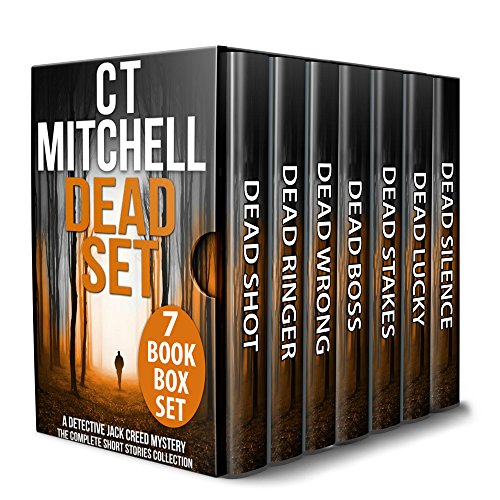
A country house weekend party, a murdered host, and a cast of guests who all have reasons to lie. Mitchell writes in the tradition of the English mystery novella: short chapters, clean prose, and a puzzle that resolves fairly. The mystery novella is one of the oldest and most enduring forms in short fiction, and this sits comfortably in that lineage. It is a readable, well constructed entry in a genre that demands exactly the economy the novella form enforces. If you enjoy this style, you can explore more mystery fiction types for learners and busy readers.
Why Novellas Are Having a Moment in 2026
The novella has always existed at the margins of the publishing industry, but several forces have converged to change its position in the last decade. Generally, the shift toward digital consumption and fast paced lifestyles has made shorter, high quality fiction more desirable than ever.
- Prize Culture: The Booker Prize’s increasing openness to short novels has changed what publishers are willing to shortlist. When the prize culture validates the form, publishers follow.
- The Nobel Prize: Annie Ernaux’s Nobel Prize in 2022 sent readers to her backlist overnight: books like A Simple Passion and Happening, most of them under 100 pages.
- Attention Spans: The research on this is consistent: readers are finishing fewer long books and more short ones. The novella fits naturally into the reading life of someone who reads on a commute or in the forty minutes before sleep.
- Social Media Recommendation Culture: Short books photograph well, finish quickly, and generate reviews fast on platforms like BookTok. The recommendation cycles move faster for novellas than for 500 page novels.
A modern lifestyle photograph of a person reading a slim novella on a bright train commute, with a stack of other short books visible in a bag, emphasizing the convenience of the format.
The Novella Reading List: Where to Start
If you are new to reading novellas specifically, the order matters less than the entry point. You can find a vast selection of these stories at theshortreads.com. Here are a few suggestions based on what you already enjoy:
- If you read literary fiction: Start with Foster by Claire Keegan (88 pages). It is the purest example of what the form can do.
- If you prefer plot momentum: Of Mice and Men (112 pages) or Convenience Store Woman (163 pages).
- If you want a canonical classic: The Metamorphosis (55 pages). Read it on a Sunday afternoon and think about it for weeks.
- If you want contemporary mystery: Murder at the Manor (200 pages), a well crafted mystery novella in the English country house tradition.
The novella is not a shorter version of something else. It is its own thing: a form with its own demands, its own rewards, and its own history of producing work that lasts. The books on this page are the argument for it. If you are ready to start your journey into the world of short fiction, visit our page sitemap to discover our latest curated lists and reviews. The next great story you finish might only be 100 pages away.