
More than 60 percent of audiobook fans say psychological thrillers keep them up at night, drawn in by relentless tension and mind-bending plots. For american readers, the appeal runs deep because these stories invite us to question our assumptions about motive, morality, and perception itself. Whether you crave intense emotion or clever twists, discovering what sets a psychological thriller apart can unlock a whole new level of reading excitement.
| Point | Details |
|---|---|
| Psychological Depth | Psychological thrillers focus on characters’ inner emotional landscapes, presenting complex motivations that drive their actions. |
| Narrative Complexity | These stories blur the lines between reality and perception, engaging readers in unpredictable and immersive journeys. |
| Emotional Engagement | The genre heightens psychological arousal and empathy, allowing readers to explore intense emotional and cognitive challenges. |
| Universal Themes | Psychological thrillers resonate across diverse audiences by tackling profound themes like morality and trauma, fostering introspection. |
Psychological thrillers represent a complex narrative genre that delves deep into the human mind, exploring psychological landscapes far more intricate than traditional suspense stories. According to Wikipedia, these narratives combine elements of thriller and psychological fiction, focusing intently on characters’ mental states, perceptions, and profound struggles to comprehend reality.
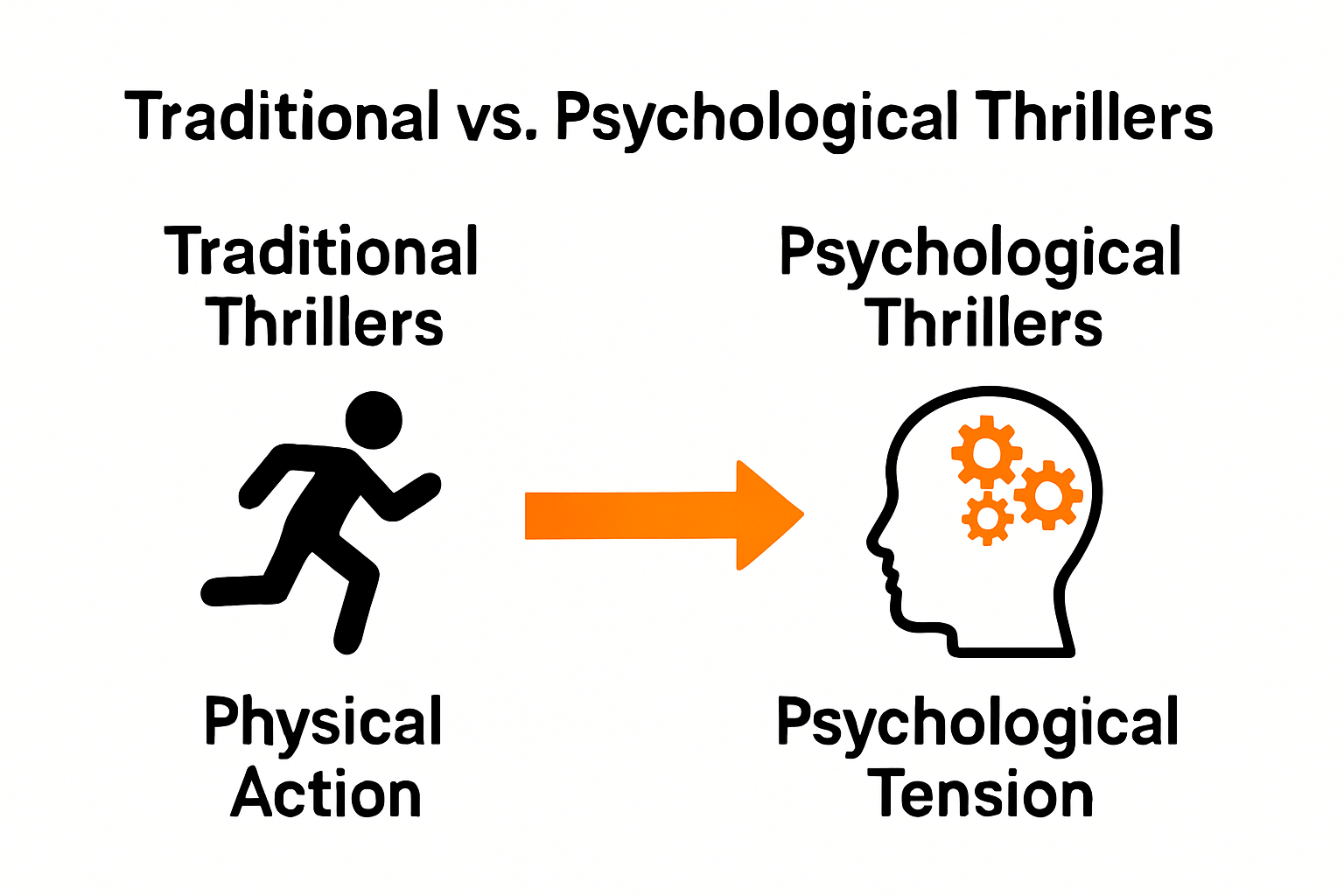
At their core, psychological thrillers distinguish themselves through an intense exploration of characters’ internal worlds. Research from IJNRD reveals that these stories merge horror and thriller genres by examining unstable characters and provocative psychological themes such as morality, dysfunctional relationships, and post-traumatic stress disorder. Unlike standard thriller narratives, psychological thrillers prioritize mental complexity over external action.
Key characteristics of psychological thrillers include:
The genre’s power lies in its ability to transform internal psychological battles into gripping narratives that keep readers perpetually uncertain about characters’ true intentions and mental stability. Learn more about psychological thriller themes in our comprehensive guide.
Psychological thrillers transcend traditional storytelling by creating intricate narrative landscapes that challenge readers’ perceptions and expectations. According to IJNRD research, these narratives are distinguished by their profound focus on characters’ inner worlds, expertly exposing delusions, deep-seated insecurities, and unresolved trauma through sophisticated storytelling techniques.
Narrative complexity emerges as a fundamental hallmark of psychological thrillers. These stories deliberately blur boundaries between reality and perception, creating an atmosphere of constant psychological tension. Unlike conventional thriller genres, psychological thrillers prioritize mental and emotional exploration over physical action, transforming internal psychological conflicts into compelling narrative journeys that keep readers perpetually uncertain and engaged.
Key distinguishing elements of psychological thrillers include:
The most compelling psychological thrillers excel at creating immersive experiences where readers become deeply invested in characters’ mental landscapes. By revealing the intricate psychological mechanisms driving human behavior, these narratives offer more than mere entertainment—they provide profound insights into the complex nature of human consciousness.
 Discover more about hidden psychological motives that drive these fascinating narratives.
Psychological thrillers employ a rich tapestry of narrative techniques that transform storytelling into a deeply psychological exploration. According to IJNRD research, these narratives utilize sophisticated symbolic conventions, such as mirrors representing inner conflicts and strategic color contrasts that illuminate characters’ psychological landscapes.
The narrative arsenal of psychological thrillers includes several distinctive storytelling approaches designed to manipulate reader perception. The infamous femme fatale archetype emerges as a powerful narrative tool, representing a seductive and manipulative character who challenges traditional narrative expectations. These characters often serve as catalysts for psychological tension, creating complex dynamics that challenge readers’ understanding of motivation and moral ambiguity.
Key narrative techniques in psychological thrillers include:
Most compelling psychological thrillers create immersive experiences by blurring boundaries between external events and internal psychological landscapes. By exploring intricate character psychology, these narratives transform storytelling into a profound investigation of human consciousness, challenging readers to question their understanding of perception, reality, and psychological complexity.
Psychological thrillers orchestrate a profound emotional journey that extends far beyond traditional storytelling. According to Vaia, these narratives captivate audiences by exploring the intricate complexities of the human mind, creating tension through strategic uncertainty and psychological deception that taps directly into primal emotional responses.
Emotional engagement emerges as the cornerstone of psychological thriller experiences. Research from IJNRD reveals that these narratives transcend conventional storytelling by immersing readers in gripping psychological landscapes that offer relatable yet intensely provocative experiences. The psychological thriller becomes a complex emotional laboratory, where readers simultaneously experience fear, empathy, confusion, and catharsis.
Key emotional and psychological effects include:
The most compelling psychological thrillers transform reading from a passive experience into an active psychological exploration. By understanding audience perception, these narratives create immersive experiences that challenge readers’ understanding of human nature, morality, and psychological boundaries, leaving lasting emotional impressions that resonate long after the final page.
Psychological thrillers possess a unique ability to transcend traditional storytelling boundaries, attracting readers from remarkably diverse backgrounds. According to Vaia, these narratives engage audiences by stimulating curiosity and analytical skills through unpredictable plot twists and unreliable narrators, encouraging deep personal introspection into complex psychological experiences.
Narrative universality emerges as a critical factor in the genre’s widespread appeal. Research from IJNRD reveals that psychological thrillers resonate across diverse audiences by exploring profound themes like morality, dysfunctional relationships, and psychological trauma. These stories create a unique narrative space where individual experiences intersect with universal human vulnerabilities, making them compelling to readers across different demographics.
Key factors driving widespread audience attraction include:
The most compelling psychological thrillers transform storytelling into a profound exploration of human nature. Exploring the nuanced world of psychological thrillers reveals how these narratives create immersive experiences that simultaneously challenge, entertain, and provide deep insights into the human condition, making them irresistible to readers seeking more than superficial entertainment.
If you have ever found yourself captivated by the deep psychological tension and complex characters that define psychological thrillers you understand the challenge of finding stories that deliver intense mental and emotional engagement in a short time frame. The pain points discussed in the article such as blurred reality hidden motives and unreliable narration resonate with readers seeking immersive narratives that provoke thought and stir deep emotions. Our curated collection of psychological thriller short reads offers precisely this experience by bringing you fast paced yet richly layered stories that dive into the human mind with provocative twists and sophisticated storytelling techniques.

Explore our weekend mystery bundle that includes psychological thriller short reads alongside cozy mysteries and action novellas designed to keep your mind racing and senses sharpened. By reading now you gain immediate access to perfect quick reads that deliver the suspense and emotional intensity you crave. Don’t wait to immerse yourself in narratives that challenge your perception of reality and provide cathartic psychological exploration. Start your thrilling journey today and experience why psychological thrillers remain irresistible. Discover more at The Short Reads and dive into stories that captivate with every page turn.
Psychological thrillers are a narrative genre that blend thriller and psychological fiction, focusing on the mental states, perceptions, and struggles of characters as they confront complex emotional and psychological landscapes.
Psychological thrillers emphasize mental complexity over physical action, exploring characters’ inner worlds, motivations, and blurred lines between perception and reality instead of prioritizing external events and action.
Common themes in psychological thrillers include morality, dysfunctional relationships, trauma, and the exploration of complex character psychology, all of which create tension and suspense throughout the narrative.
Psychological thrillers heighten emotional engagement by immersing readers in complex psychological landscapes, often evoking feelings of fear, empathy, confusion, and catharsis as they navigate the characters’ internal struggles.
Share